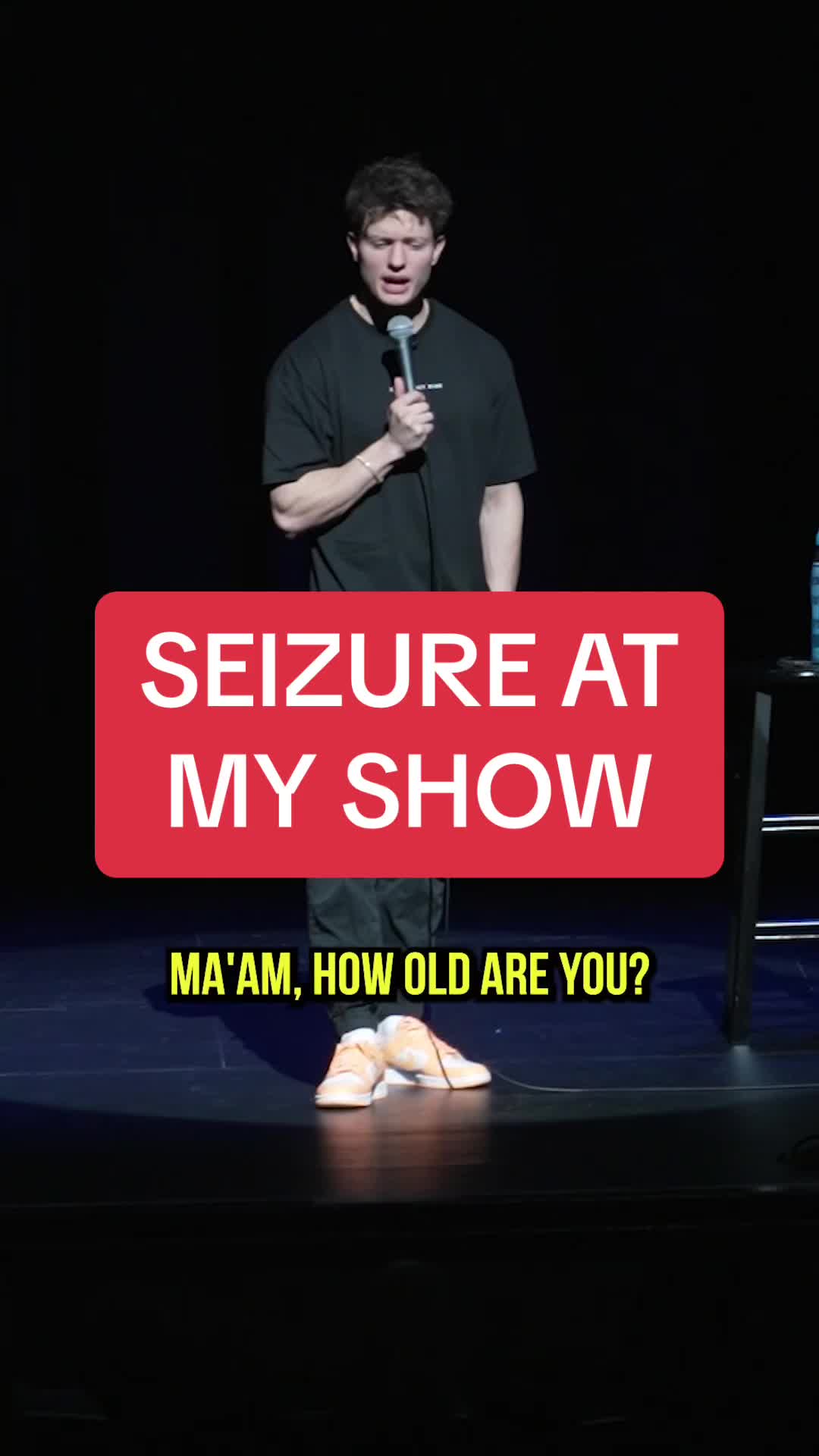
Format anatomy
HOOK · 0s–18s · Emotional tease
The caption and opening words signal genuine concern — 'Thank god she's okay' — priming the viewer for a serious or dramatic story. This emotional ambiguity creates an immediate need-to-know tension that delays the scroll decision.
- Mechanism
- Relief-Framed Curiosity Gap — Stating the resolution before revealing the incident is a classic in medias res trick; the viewer is hooked because they don't yet know what 'she' survived, forcing them to stay for context.
- Key element
- Unresolved Incident Tease
- Avoid
- Telegraphing the joke too early — if the comic tone leaks in the first few seconds the emotional hook collapses
SETUP · 18s–75s · Scene framing
The performer establishes the real-world context — likely a live crowd-work moment where a specific audience member or situation is introduced. This grounds the story and gives the audience the 'who and where' they need to follow the narrative.
- Mechanism
- Social Proof via Live Setting — Positioning the story inside a live stand-up show signals authenticity; unscripted crowd interactions are perceived as inherently higher-stakes and more credible than scripted bits.
- Key element
- Live Audience Anchoring
- Avoid
- Over-explaining the setup — dragging the scene-setting kills the comedic momentum before it starts
BUILD · 75s–165s · Escalating dialogue
The comedian and the crowd member(s) exchange dialogue that progressively raises the comedic stakes. Each exchange layers more absurdity or revelation onto the original setup, deepening viewer investment in how it resolves.
- Mechanism
- Incremental Escalation — Each conversational beat adds a new piece of surprising information, creating a rolling series of micro-payoffs that keep dopamine ticking over and prevent drop-off across the video's long mid-section.
- Key element
- Reactive Improv Layering
- Avoid
- Letting any single exchange run too long without a laugh or surprise beat — silence or dead air in live footage reads as awkward on-screen
TWIST · 165s–255s · Reframe reveal
A piece of information — likely the actual nature of 'she's okay' — recontextualises everything the viewer assumed in the hook. The medical or personal detail that was teased as serious is revealed to have a comedic dimension, flipping the emotional register.
- Mechanism
- Expectation Subversion — The sudden pivot from apparent sincerity to absurdity creates a cognitive surprise spike; the bigger the contrast with the hook's emotional setup, the stronger the laugh and shareability.
- Key element
- Tonal 180 Pivot
- Avoid
- Making the twist so obscure that viewers feel cheated rather than delighted — the reframe must feel earned by the setup
PAYOFF · 255s–340s · Crowd reaction mirror
The comedian rides the laugh generated by the twist, likely amplifying it with callbacks, audience reaction shots, or improvisational riffs that cement the comedic climax. The 'medical' angle hinted at in the hashtags probably pays off fully here.
- Mechanism
- Shared Laughter Contagion — Live audience laughter functions as a social cue that validates the viewer's own amusement — hearing others laugh makes the moment feel bigger and increases the impulse to share.
- Key element
- Live Audience Echo
- Avoid
- Over-milking the bit past its laugh peak — comedic timing collapses if the riff extends beyond the crowd's energy
OUTRO · 340s–381s · Direct address close
The performer wraps the story beat with a closing line or audience acknowledgement, likely returning a warm tone that mirrors the 'thank god she's okay' emotional bookend from the hook, reinforcing likability and leaving the viewer on a positive feeling.
- Mechanism
- Emotional Bookend — Closing by echoing the hook's emotional language creates narrative circularity — the viewer feels a satisfying sense of completion which increases positive association with the creator and nudges saves and follows.
- Key element
- Callback Close
- Avoid
- Ending too abruptly after the laugh — a cold cut after the punchline wastes the goodwill built over the full runtime