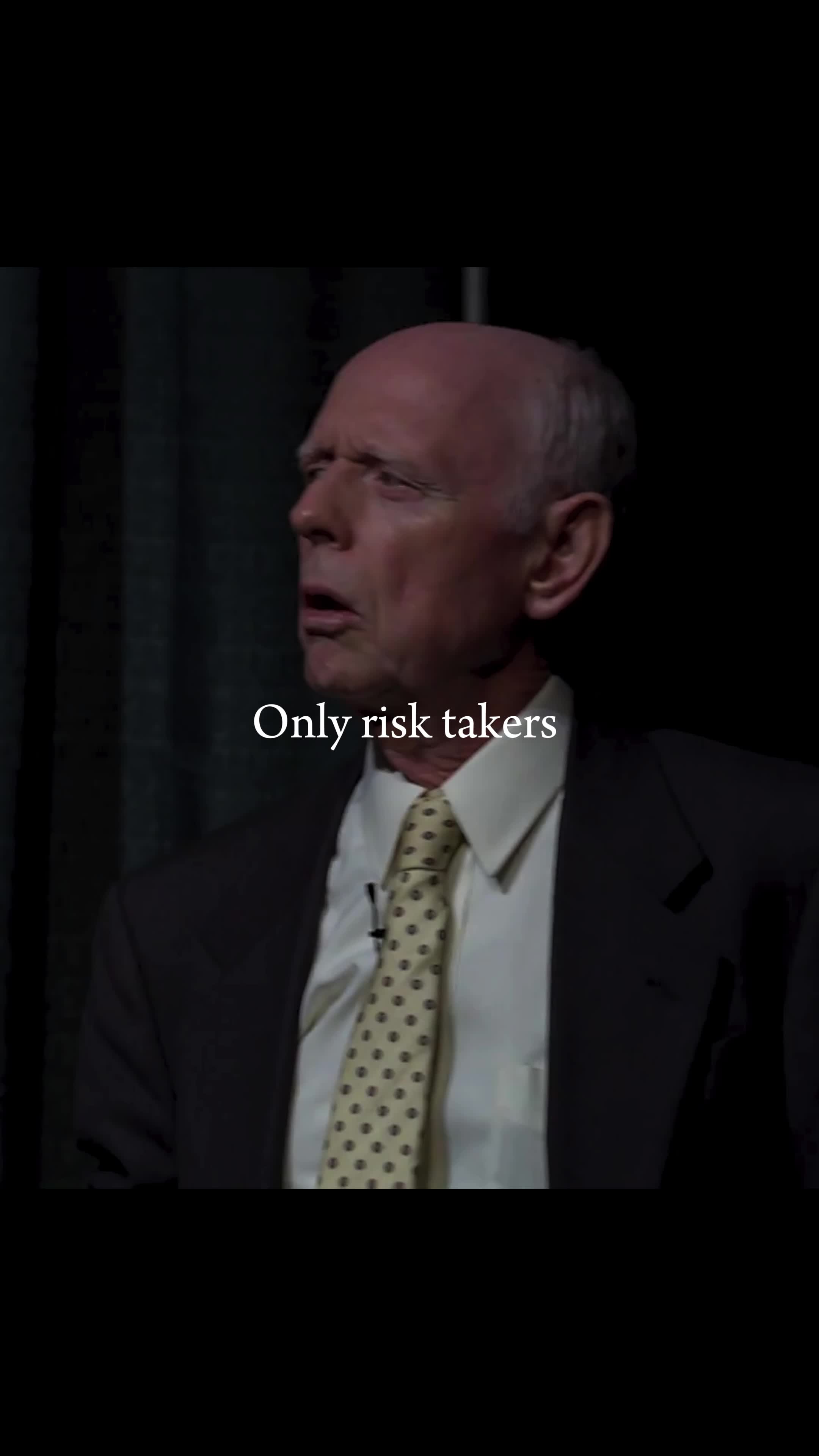
Format anatomy
HOOK · 0s–6s · Direct address
The creator delivers the bold claim directly to camera — 'Want to win? Do what everyone else is afraid to do' — using second-person framing to personally implicate the viewer and trigger an identity challenge. The question format forces a micro-commitment before the argument is even made.
- Mechanism
- Contrarian Identity Hook — Framing the hook as a dare activates the viewer's self-image as someone who wants to be exceptional; scrolling past would feel like admitting cowardice, which suppresses the swipe-away reflex.
- Key element
- Second-person dare with embedded self-selection
- Avoid
- Vague bravado — the claim must feel actionable or it reads as empty motivation and loses credibility immediately
REVEAL · 6s–12s · Problem reframe
The creator unpacks what 'what everyone else is afraid to do' actually means in context — likely naming a specific uncomfortable action in ecommerce or dropshipping (e.g. running ads with real spend, cold outreach, testing fast). This beat converts the abstract dare into a concrete fear most viewers recognise in themselves.
- Mechanism
- Fear Externalisation — Naming the specific fear the audience already holds makes the creator appear perceptive and trustworthy, while repositioning that fear as a widespread — and therefore beatable — obstacle rather than a personal flaw.
- Key element
- Naming the specific uncomfortable action others avoid
- Avoid
- Staying abstract — failing to name the fear concretely kills relatability and turns the reveal into more vague motivational content
PROOF · 12s–17s · Lived example
The creator provides a first-person or observed example grounding the claim — a result achieved, a moment they took the uncomfortable action, or a contrast between those who acted and those who hesitated. This beat serves as the credibility anchor for the bold opening claim.
- Mechanism
- Anecdotal Social Proof — A brief personal or witnessed case study bypasses skepticism by making the outcome feel real and replicable rather than theoretical, which is especially critical in the high-noise entrepreneur niche.
- Key element
- Concrete outcome tied to the specific uncomfortable action named in the reveal
- Avoid
- Vague or unverifiable claims — in the ecommerce niche, proof without specificity is dismissed as typical guru content
PAYOFF · 17s–23s · Call to action
The creator closes by collapsing the argument into a simple, repeatable instruction — do the thing others won't — and implicitly or explicitly invites the viewer to comment, follow, or act. The aspirational emotion peaks here as the viewer is handed permission and a clear next step.
- Mechanism
- Permission-Based Close — Ending with an empowering directive rather than a hard sell converts aspirational emotion into forward momentum, making the viewer feel agency rather than pressure, which drives follows and saves more reliably than a direct pitch.
- Key element
- Restatement of the contrarian principle as a personal permission slip