How to Spot a TikTok Dual-High Before It Peaks (Real Teardown)

One giant view count tells you nothing. A Dual-High — high on both the creator and the niche baseline — is the only signal that the format itself won. Here is how to read it.
Most creators chase the wrong number. A TikTok crosses a million views, it lands on some "viral videos" roundup, and everyone rushes to copy it — the topic, the sound, the caption. Their version does 4,000 views and they blame the algorithm. The miss happens upstream: a raw view count cannot tell you whether the format won or the creator's existing audience did. A TikTok Dual-High settles that question. It only fires when a video beats two independent baselines at once — the creator's own median and the niche median — which is the entire difference between a lucky post and a format you can actually reuse.
This playbook shows you how to read one before it peaks: what the two baselines are, why a single big number lies, a real 2.9M-view teardown from the ViralVault index, and the four checks that separate a repeatable format from a fluke.
Table of contents
- What a TikTok Dual-High actually is
- Why one big number lies to you
- Teardown of a real 2.9M-view Dual-High
- How to spot a Dual-High before it peaks
- Frequently Asked Questions
What a TikTok Dual-High actually is
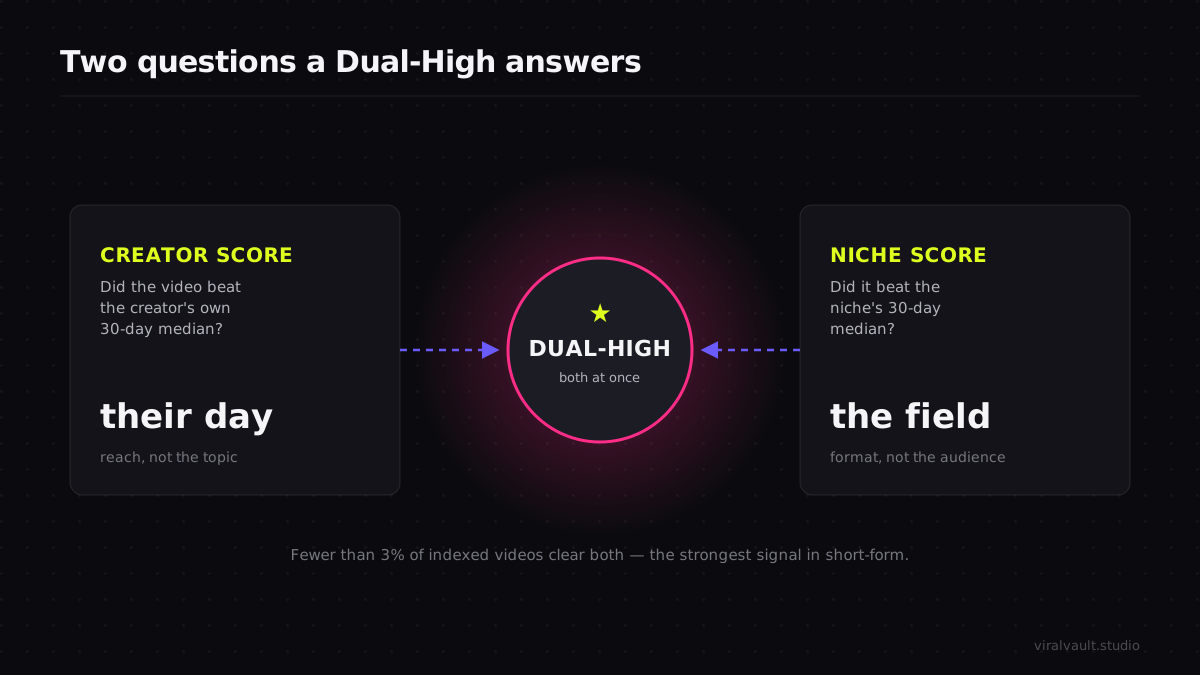
Every video in ViralVault carries a two-part TikTok outlier score, not a single figure. The first half is the Creator Score — the video's views measured against that creator's own 30-day median. The second half is the Niche Score — the same views measured against the median for the whole niche. Both are expressed as a multiple: 5x means five times the baseline.
That gap — creator baseline vs niche baseline — is the whole point. A 2M-view video from an 80K-follower creator and a 2M-view video from a 2M-follower creator look identical on a leaderboard. They are not the same event. One smashed through its own ceiling; the other was a Tuesday. Splitting the score in two is what tells them apart.
A Dual-High is the rare case where both halves fire at once: the video beat the creator's normal day and beat the category. Across the 23,000+ videos indexed in ViralVault, 1,400+ have cleared both baselines. That scarcity is exactly why it is the strongest signal in short-form — when both baselines break together, the structure did the work, not the follower count.
Why one big number lies to you
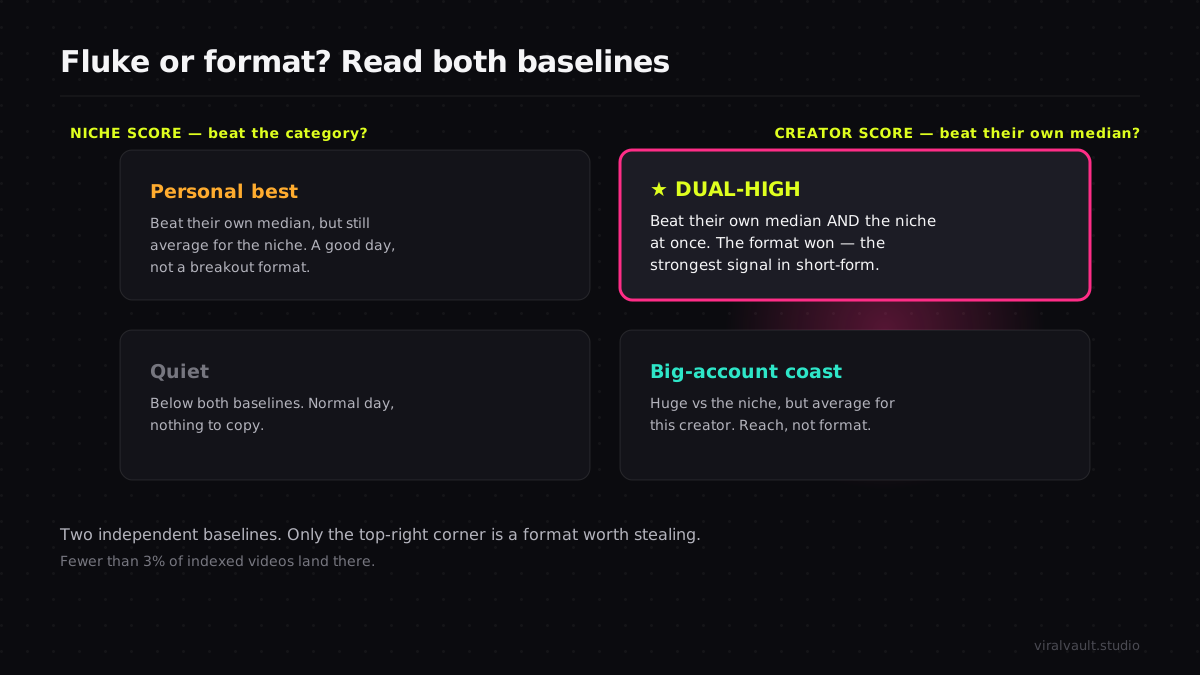
Views collapse two different things into one figure: how far a video traveled, and how unusual that was for whoever posted it. A dual-baseline outlier score keeps them separate, and the moment you do, four outcomes appear instead of one.
Picture a grid — Creator Score on one axis, Niche Score on the other. Low on both is a quiet day, nothing to copy. High on the Creator Score but low on the Niche Score is a personal best: the creator beat themselves, but the video is still average for the niche. Low on the Creator Score but high on the Niche Score is a big account coasting — huge versus the category, ordinary for them. Only the top-right corner, high on both, is a repeatable viral TikTok format. That is the Dual-High.
Copying a video from the wrong corner is why most "steal this format" advice fails. Reproduce a big-account coast and you inherit none of the reach, because the reach came from the audience, not the structure. The grid tells you which videos are safe to learn from.
See both scores on every video with ViralVault's free plan — 20 scored searches a day, no card.
Teardown of a real 2.9M-view Dual-High
Here is a live one from the index. The creator @haydengarlock posted a 34-second talking-head listicle in the Sales niche, opening on the line "3 boring businesses that make a lot more than you think." It pulled roughly 2.9M views, about 99,700 saves, and 59,800 shares.
On views alone that is just another big video. Split the score and it earns Dual-High status:
| Baseline | What it measures | This video |
|---|---|---|
| Creator Score | Views vs the creator's own 30-day median (~111K) | ~26x above their normal day |
| Niche Score | Views vs the Sales niche median | ~69x above the category |
Both baselines broke, hard. So the interesting question is not "why did this go viral" — it is what structure carried it, because that is the part you can reuse. The hook names a concrete, counterintuitive promise ("boring businesses" that quietly out-earn flashy ones) and puts a number on it in the first two seconds. The list format sets an expectation of three payoffs, which pulls the viewer to the end. And the save count — nearly 100,000 — is the tell: people bookmark specifics they intend to act on, and a save-heavy video keeps resurfacing on the For You feed long after the initial push. TikTok's own For You System guidance points to signals like completion and shares as core ranking inputs — exactly the behaviors this structure is built to maximize.
None of that depends on Hayden's face or following. A curiosity-gap listicle hook, a concrete number early, and a save-worthy payoff transfer to almost any niche. That is what makes it a format instead of a moment.
ViralVault tip: Filter the Format Feed to Dual-High only and you skip the fluke posts entirely — every video left has already cleared both baselines, so you are only ever studying structures the data has proven.
How to spot a Dual-High before it peaks
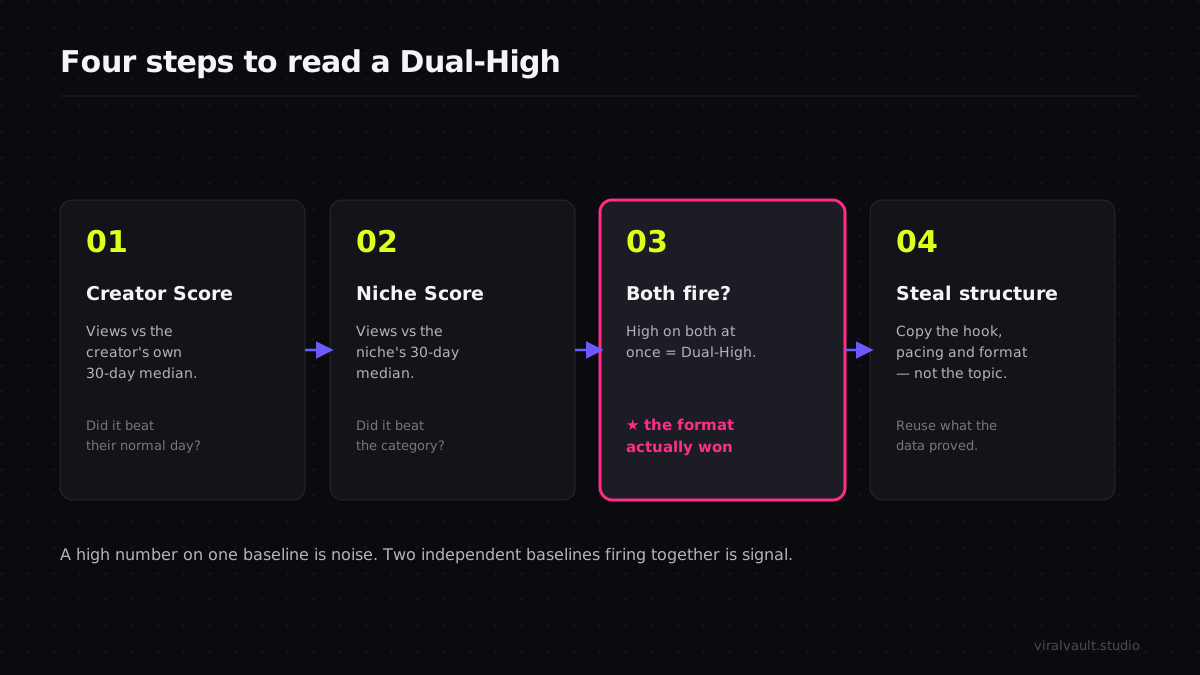
You can run the same read on any video in under a minute. Four checks, in order.
Step 1: Pull the creator's own median
Start with the creator, not the view count. Look at their typical 30-day median views. A video doing 5x or more above that line cleared the Creator Score — it beat their normal day. If the creator has no track record yet, treat the Creator Score as unknown rather than assuming the video is special; a first big hit is not yet a pattern.
Step 2: Pull the niche median
Now measure the same video against the niche median — the middle of the pack for that category over the last 30 days. Clearing 3x or more here means the video beat the field, not just the creator. Niche medians vary wildly, so a 500K-view video can be a monster in one niche and average in another. Always compare like to like.
Step 3: Confirm both baselines fire at once
This is the whole test. A high Creator Score alone is a personal best. A high Niche Score alone is often a large account coasting. Only when both clear their thresholds together do you have a Dual-High — the signal that the format itself, not the audience or a single lucky push, drove the result. If one baseline is missing, it is not a Dual-High, no matter how big the view count looks.
Step 4: Reverse-engineer the format, not the topic
Once a video passes, ignore the subject and extract the structure: the hook pattern, the length, the pacing, where the payoff lands, and what earns the save. Those are the transferable parts. Rebuild that skeleton in your own niche and you are copying what the data proved, instead of chasing a topic that already saturated the feed.
Frequently Asked Questions
Q: What is a TikTok Dual-High? A: A Dual-High is a video that scores high on both the Creator Score and the Niche Score at the same time — it beat the creator's own median views and the niche median views together. Across ViralVault's index 1,400+ videos have cleared both, which is why it is treated as the strongest single signal that a format is breaking out.
Q: Why not just sort by view count? A: Raw views blend reach with how unusual the result was for that creator. A 2M-view video from a 2M-follower account can be an ordinary day, while a 2M-view video from an 80K-follower account is a genuine breakout. Splitting the score into a creator baseline and a niche baseline separates the two so you copy formats that actually travel.
Q: How many videos do I need before a Creator Score means anything? A: A creator needs a real posting history — several videos over the recent window — before their median is stable enough to trust. A single first hit sets no baseline, so ViralVault leaves the Creator Score pending rather than inventing one. The Niche Score still works from day one.
Q: Can I see Dual-Highs without checking each video by hand? A: Yes. ViralVault scores every indexed video automatically and lets you filter straight to Dual-Highs, so you skip the manual math. The free plan shows the Niche Score on every video and 3 searches a day; paid plans add the Creator Score everywhere plus the Dual-High filter.
Steal the next Dual-High before your niche does
A viral roundup tells you what already peaked. Reading the two baselines tells you why — and whether the structure will survive being copied. Run the four checks, keep only the videos that clear both lines, and rebuild the format rather than the topic. That is how a TikTok Dual-High turns from a screenshot into a repeatable playbook, and it is why the receipts beat the roundups every time. Start scoring your niche free — 3 searches a day, both baselines on every video, no card.