The TikTok Algorithm in 2026: What the Data Actually Shows
Everyone has a theory about the TikTok algorithm. We read 23,000+ videos across 7,800+ creators instead. Here's what actually correlates with reach in 2026 — and what doesn't.
Everyone has a theory about the TikTok algorithm, and almost none of them come with receipts. One week it is watch time, the next it is shares, the next it is some secret penalty for editing in CapCut. The theories change faster than the feed does, because most of them start from a single video that worked and reason backward. A more honest answer to how to grow on TikTok with trending topics starts from the opposite end: not one video, but a large, dated set of them, measured the same way against the same baselines. That is what we have. The ViralVault index tracks 23,000+ videos across 7,800+ creators and rescores them daily, which means we can ask what consistently separates a video that travels from one that stalls — and answer it with patterns, not vibes. One disclaimer up front, and it matters: this is correlation from our index, not a readout of TikTok's internal ranking system. We cannot see TikTok's code. What we can see is what over-performing videos tend to have in common, and that turns out to be useful enough to plan around. This report lays out the method we use to read the index, the findings that hold up across niches, and a playbook for acting on them.
Table of contents
- How to read this report and what it is not
- Finding 1: format beats followers, by a lot
- Finding 2: the strongest signal is dual, not single
- Finding 3: how to grow on TikTok with trending topics that last
- Finding 4: momentum and saturation decide timing
- The playbook: turning the findings into posts
- Frequently Asked Questions
How to read this report and what it is not
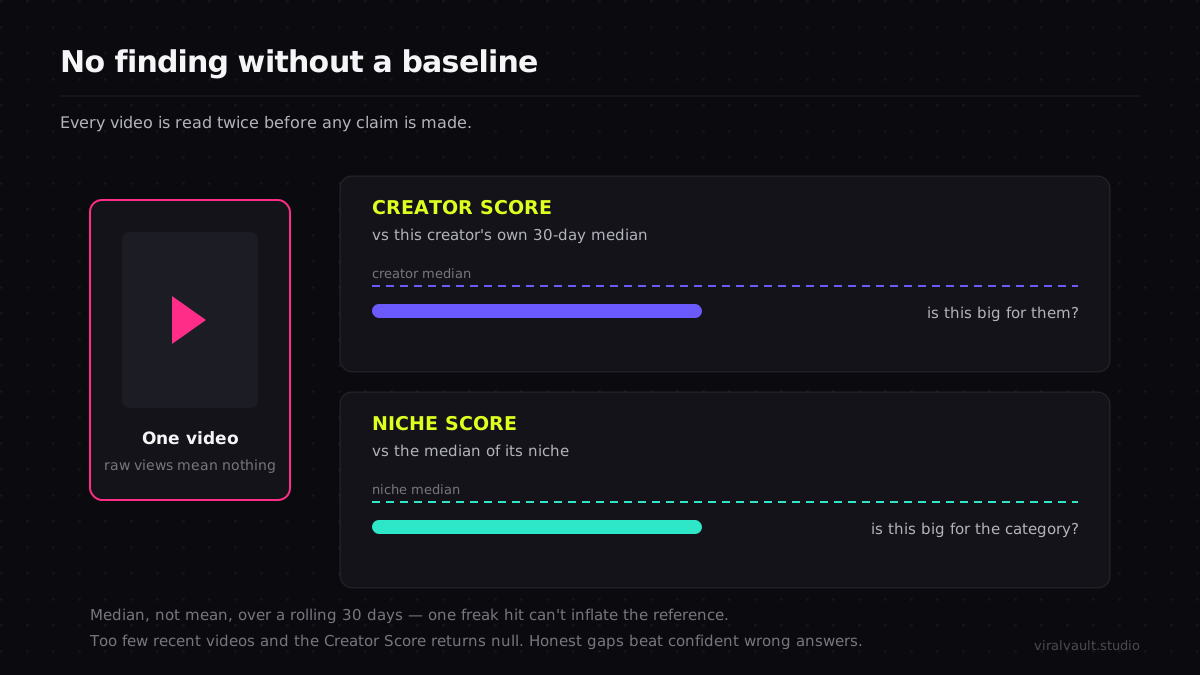
Before any finding, the method — because a number means nothing without the baseline it was measured against. The index does not rank a video by its raw view count. Raw views are the most misleading number in short-form, since two million views on a two-million-follower account is an ordinary day, while two million views on an eighty-thousand-follower account is a structural breakout. To keep those apart, every video is scored twice. The Creator Score compares a video to that creator's own 30-day median views. The Niche Score compares the same video to the median of its niche. Together they form the Outlier Score, and the two-number design is the entire reason the patterns below are readable at all.
Two deliberate choices keep the measurement honest. Both baselines use the median rather than the mean across a rolling 30-day window, so a single freak hit cannot inflate the reference and make every later video look weak. And the system refuses false precision: a creator with too few recent videos has no stable baseline, so the Creator Score returns null and the read leans on the Niche Score alone. Honest gaps beat confident wrong answers when you are deciding what to make.
What this report is not is a leak of TikTok's ranking weights. Most of the TikTok algorithm 2026 discourse claims a precise percentage breakdown — "watch time is 40% of the algorithm" — and any blog stating that with confidence is inventing it. Nobody outside TikTok has those weights. Our claims are narrower and, we think, more trustworthy: across 23,000+ videos, here is what the videos that over-perform their own baselines tend to share. That is a statement about correlation in our index, framed honestly as such, not a description of TikTok's internal machinery. When we say a signal "correlates with reach," read it literally — it travels with reach in the data, and that is a thing you can plan around even without knowing the mechanism. The platform itself is candid that search behavior and creator tooling shape distribution, as TikTok's own newsroom has documented; what the index adds is the per-format, per-niche specificity the platform's public framing leaves out.
Finding 1: format beats followers, by a lot
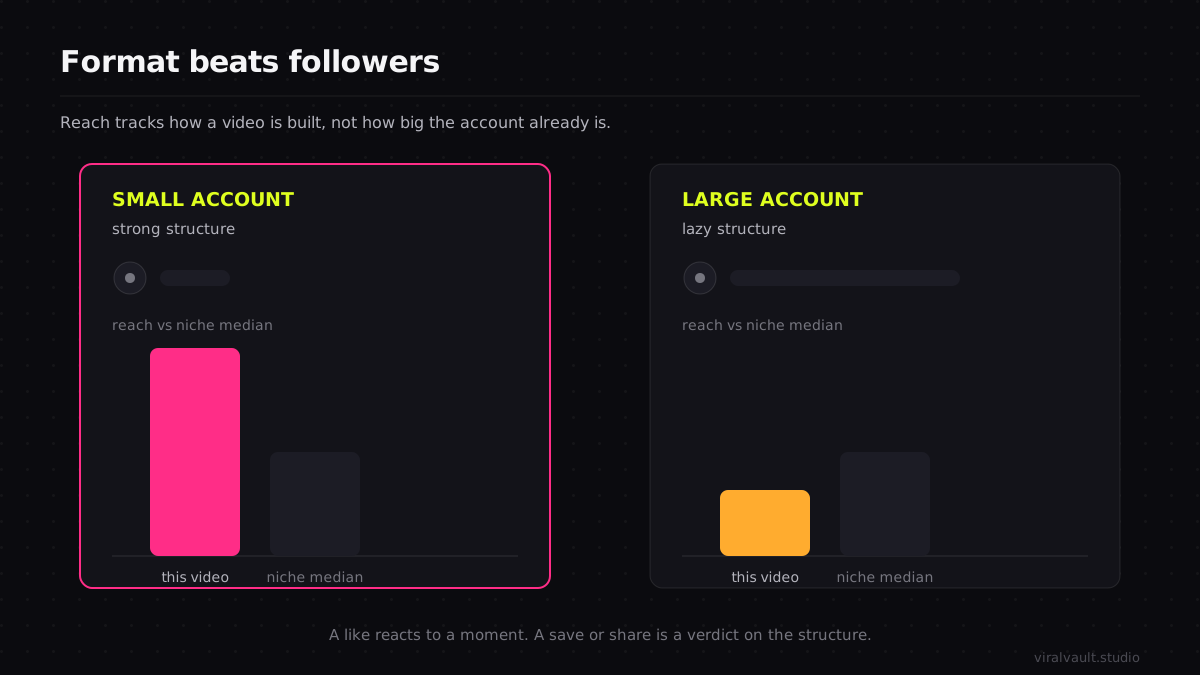
The first and most repeated pattern in the index is that structure travels independently of audience size. A video's reach correlates far more tightly with how it is built — the hook shape, the pacing, the reveal — than with how many followers the account already has. This is why the Niche Score exists as a separate number: it isolates the question "did this format outrun the niche?" from the question "is this a big account?" When the two diverge, the format story is almost always the more useful one.
Concretely, the index is full of small accounts posting videos that score five and ten times their niche median, and large accounts posting videos that barely clear it. Followers buy you a warmer cold-start audience and a slightly higher floor; they do not make a weak structure travel. A like is a reaction to a moment, but a save or a share is a verdict on a structure — viewers bookmark a format to copy it or send it to someone who needs it, and in the index those save-and-share-heavy videos are disproportionately the ones still climbing days later. That is the clearest read on what the algorithm rewards that survives across niches: not your follower count, but whether the build itself earns a second action.
The practical consequence is liberating for small creators and uncomfortable for large ones. If format is the variable that moves reach, then a 5,000-follower account that ships the right structure can out-travel a 500,000-follower account that ships a lazy one — and the index shows exactly that, constantly. The job is not to grow an audience first and earn reach later; it is to find the structures that travel and build them now. The deeper mechanics of why a structure outruns its own distribution are broken down in the viral content discovery guide, which walks the full dual-baseline method.
For a live read on which structures are clearing the niche bar this week, the Today tab curates what is hitting across 12 active niches and re-ranks daily.
Finding 2: the strongest signal is dual, not single
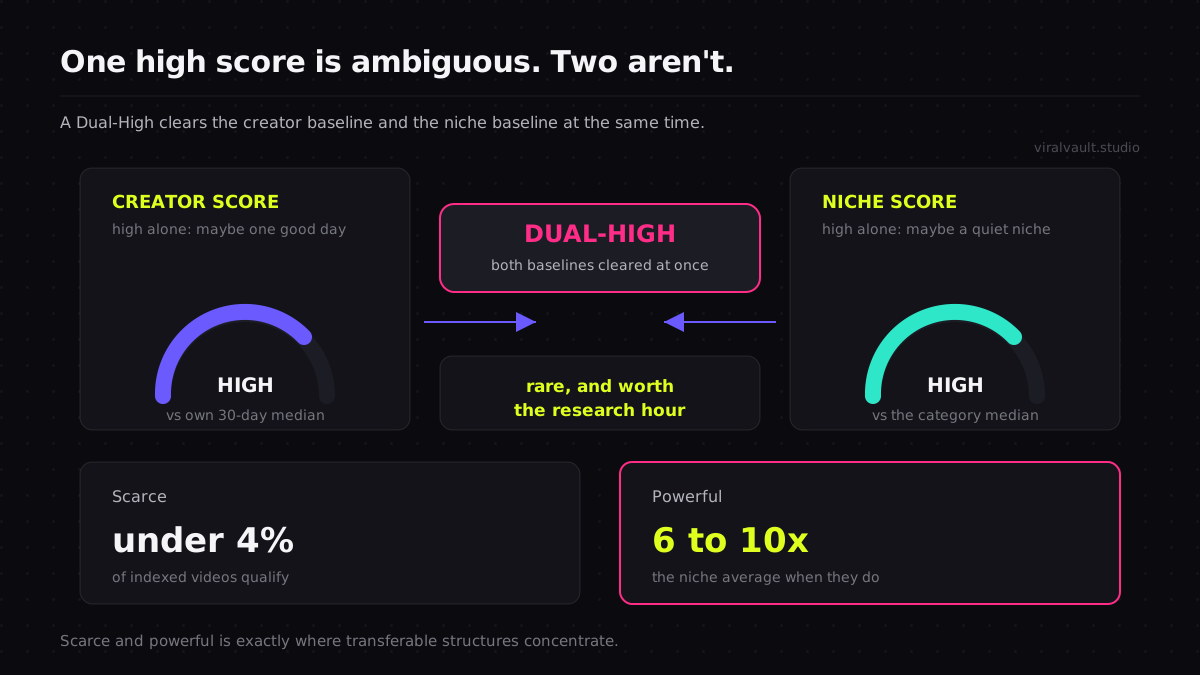
A single high score is ambiguous. A high Creator Score alone can mean a mid account had one good day relative to itself; a high Niche Score alone can mean a format is loud but the creator's audience is not engaging unusually hard. The signal that holds up — the one most worth building from — is when both light up at once. The index flags that as a Dual-High: a video where the Creator Score and the Niche Score are both high simultaneously. It is the strongest virality signal in short-form video, and the data is the reason we can say so rather than merely assert it.
Two thresholds make the case. Dual-Highs are rare on purpose: a video has to clear both baselines at once, at least 5x the creator's own median and 3x the niche median, and most videos never manage it. That combination — scarce and powerful — is what makes a shortlist of Dual-Highs a far better use of a research hour than scrolling the For You page hoping to recognize a pattern. A set filtered that hard is, definitionally, where the transferable structures concentrate. Everything below that threshold is noisier and, on average, less worth copying.
The reason a dual signal beats a single one comes back to Finding 1. A Dual-High has cleared both baselines, which means it is neither just a big-account artifact nor just a format that looks loud in an empty niche — it is a structure strong enough to outrun the creator and the category at the same time. Those are the formats that port. When you study what a Dual-High has in common across a niche, you are looking at the build that the data says travels, stripped of the confounders that mislead single-metric readers. That is the difference between learning from the index and getting fooled by it.
ViralVault tip: Do not eyeball "high" — let the dual threshold do the filtering for you. Set a Watchlist on the niches you actually post in, and when a niche's average Outlier Score jumps 50% or more in 24 hours, you get a pop alert the morning the surge starts instead of the week it trends. That head start is usually the entire gap between early and ninth. See how alerts work.
Finding 3: how to grow on TikTok with trending topics that last
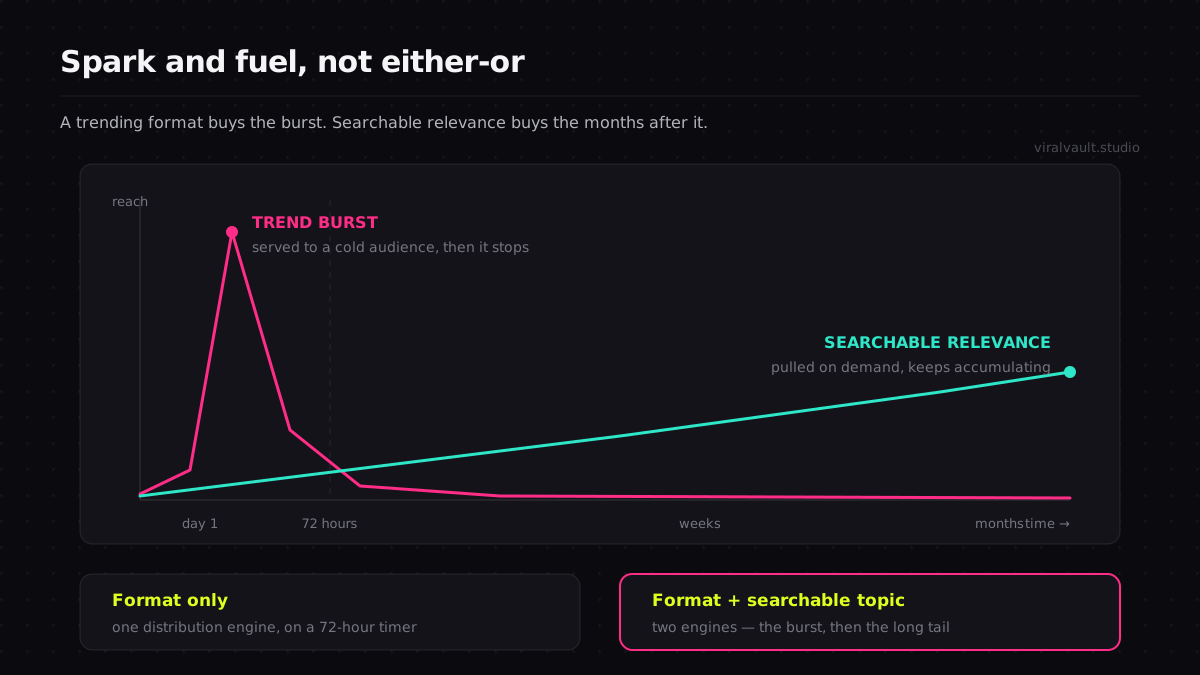
Trending distribution is real but short. A format that the feed is amplifying gets a burst of cold-audience reach, and when the burst ends, the distribution ends with it — whether or not the video was good. The index pattern here is unsurprising on its own, but it has a sharp implication for how to grow on TikTok with trending topics: the videos that keep accumulating reach after the trend window closes are the ones that also answer something people search for. A video built only to be served decays on the trend's clock. A video built to be served and found gets a second distribution engine that does not expire on a 72-hour timer.
This is where trending topics and searchable relevance stop being a tradeoff and start being a stack. The play is not to choose between riding a trend and answering a query — it is to ride a trending format while pointing it at a topic people are actively typing into the search bar. The trend gets you the initial burst; the searchable relevance gets you the long tail. TikTok surfaces what people search through Creator Search Insights, and pairing that demand signal with a proven format is the highest-return move the combined data supports. The full method for reading search demand and content gaps lives in the Creator Search Insights guide for small creators — that pillar owns the how-to of turning search demand into topics; this report's job is to show why the pairing matters in the numbers.
The honest framing again: the index cannot prove TikTok's ranking weights searchable relevance more in 2026 than 2024. What it shows is that videos with durable, search-aligned topics tend to keep pulling reach long after format-only videos flatten — a correlation that is consistent enough across niches to plan around. Treat trending topics as the spark and searchable relevance as the fuel. The creators who compound are the ones who stop building for the first 72 hours only.
Finding 4: momentum and saturation decide timing
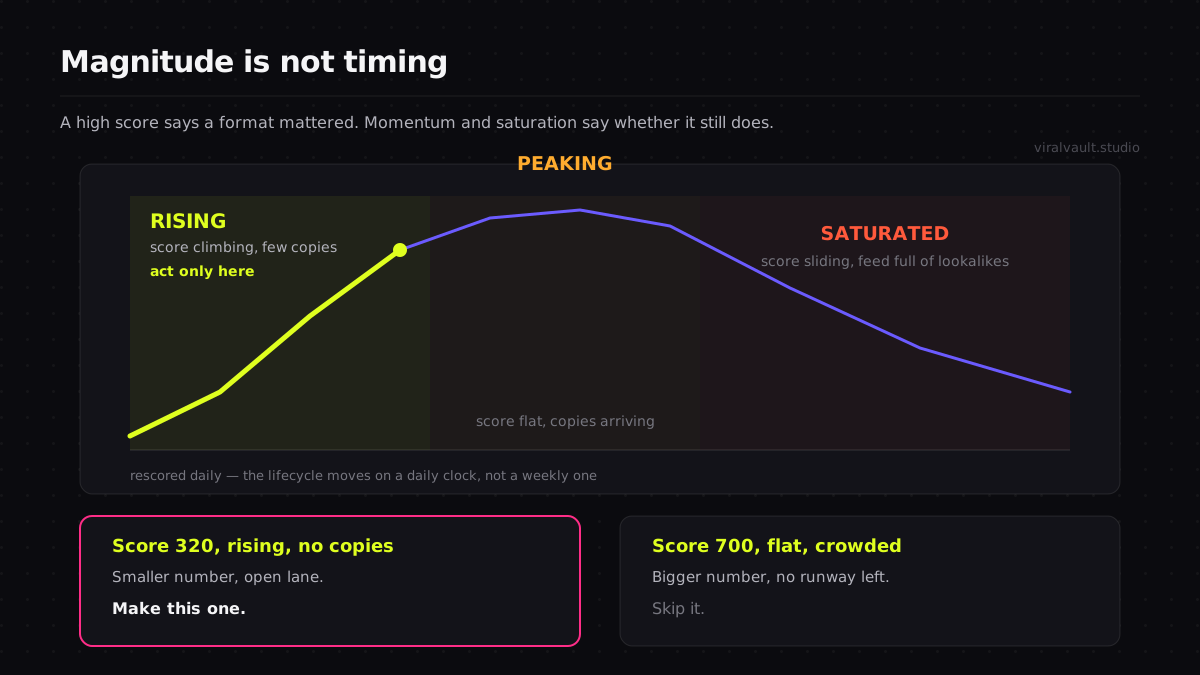
A high score tells you a format mattered. It does not tell you whether it still does — and in a daily medium, that timing question is where most reach is won or lost. The index resolves it with two signals layered on top of the Outlier Score. Momentum is the direction of the score over the last few days: a format whose score is climbing is in its rising phase, while a format whose score is flat or sliding has peaked or saturated. Saturation is how many near-identical videos already exist in the niche: a rising score with almost no copies is a wide-open lane, while a rising score sitting next to a dozen clones is a format you are already late to.
These two are the short-form ranking signals that creators most often ignore, and ignoring them is the most common way good research turns into wasted production. A creator bookmarks a format on Monday when it is rising, sits down to make it on Saturday, and ships into a feed where the structure has already saturated — the score has slid, the copies have arrived, and the window closed three days earlier. The index rescores them daily precisely because the lifecycle moves on a daily clock; reading it on a weekly cadence guarantees you arrive at the peak, never before it.
When the signals disagree, the data says weight momentum and saturation over raw magnitude. A merely good score that is climbing fast in an empty niche out-travels a spectacular score that has gone flat in a crowded one, because the runway is what you are actually buying. Picture two formats: one at a Niche Score of 320 and rising with no copies in sight, the other at 700 and flat with the feed already full of lookalikes. The 320 is the better make every time. Magnitude tells you a format mattered; momentum and saturation tell you whether it still does — and only the second question controls your reach. Why so many videos miss this window entirely is unpacked in why TikTok content is not going viral.
The playbook: turning the findings into posts
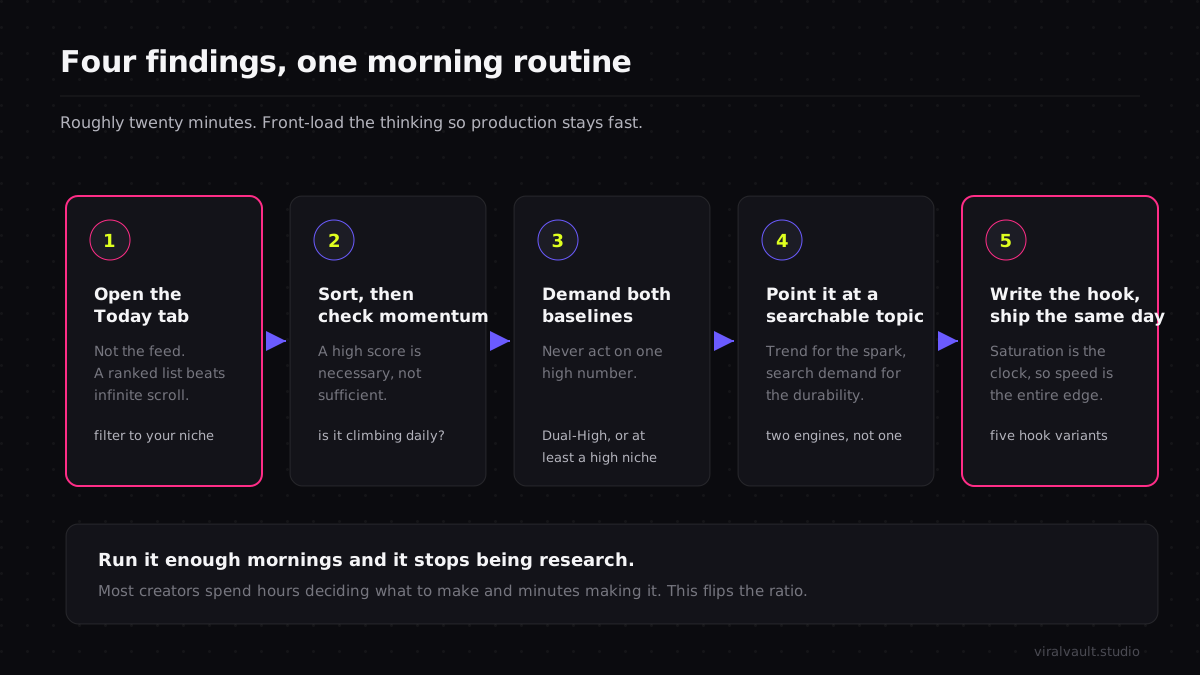
Findings only matter if they change what you make tomorrow. Here is the routine the four patterns add up to — a roughly twenty-minute scan that front-loads the hard thinking so production stays fast. It is built to read the same signals the index reads, in the same order, so you act on structure and timing instead of guesses.
- Open the Today tab, not the feed. Start from the curated list of what is hitting across 12 niches, rescored daily, and filter to your niche first. A ranked list beats an infinite scroll for finding the rising formats before they are obvious.
- Sort by Outlier Score, then check momentum. A high score is necessary but not sufficient. Open the format and confirm the score has been climbing day over day — that is the line between a rising format and one that already peaked.
- Demand both baselines. Apply Finding 2: do not act on a single high number. Confirm it is a Dual-High, or at minimum that the Niche Score is high, so you are copying a structure that cleared the category, not a big-account artifact.
- Point it at a searchable topic. Apply Finding 3: pair the proven format with a topic people actually search, using Creator Search Insights, so the video gets the trend burst and the long tail. Trending topic for the spark, search demand for the durability.
- Generate the hook and ship the same day. Use the AI Hook Writer, which runs on GPT-4o mini, to spin five hook variants — contrarian, listicle, POV, curiosity, and meme — matched to the format, then make your version immediately. Speed is the entire edge, because saturation is the clock.
Run this enough mornings and it stops being research and becomes a posting system. The board fills with proven structures faster than you can use them, which is the point: a backlog to draw from on the days you have no idea what to make. If you run TikTok in the browser, the Chrome extension overlays Outlier Scores on the videos you are already watching so the whole loop happens without a context switch. Most creators run the reverse — hours agonizing over what to make, minutes actually making it. This flips the ratio.
Frequently Asked Questions
Q: How do you grow on TikTok with trending topics in 2026? A: Use trending topics as the spark, not the whole plan. Ride a format the feed is amplifying, but point it at a topic people actually search so it keeps pulling reach after the trend fades. In the index, videos that stack a proven structure with searchable relevance compound long after format-only videos flatten — that pairing is the durable way to grow.
Q: What does the TikTok algorithm reward most in 2026? A: We cannot read TikTok's internal weights, but across 23,000+ videos the clearest correlation with reach is structure, not follower count. Videos that earn a second action — a save or a share — and clear both the creator and niche baselines tend to travel furthest. Format beats followers in the data, consistently, across niches.
Q: Are short-form ranking signals different for small creators? A: The signals are the same; the advantage shifts. Because reach tracks format more than audience size, a small account that ships the right structure routinely out-travels a large account that ships a weak one. The index is full of 5,000-follower videos scoring 5 to 10 times their niche median. Small creators win on structure and timing, not reach bought with followers.
Q: Can you actually know TikTok's algorithm from outside data? A: Not the internal ranking weights — anyone claiming an exact percentage breakdown is guessing. What an index of 23,000+ dated videos can show is what over-performing videos have in common, framed honestly as correlation. That is enough to plan around: read the dual baseline, check momentum and saturation, and copy the structures the data says travel.
What the data says to do next
The shortest honest summary of how to grow on TikTok with trending topics in 2026 is this: structure travels, the dual signal is the one to trust, searchable relevance buys you a second distribution engine, and momentum plus saturation decide your timing. None of that is a leak of TikTok's ranking system — it is correlation read across 23,000+ videos and 7,800+ creators, which is a far better foundation than the single-video theories that fill most feeds. The creators who compound are not more creative than the ones who do not; they read the signals earlier and build to them, turning a guess into a twenty-minute morning routine. Spin up a free account, set a Watchlist on your niche, and let the index flag the next rising format before the feed catches up — start at viralvault.studio.