How to Analyze Why a Video Went Viral: A Repeatable Framework

A view count tells you a video popped. It never tells you why. Here's a repeatable teardown that separates the hook, the structure, and the distribution — then reads the score to tell format from luck.
A view count tells you a video popped. It never tells you the one thing you actually need: why. Most creators stop at "that one blew up," screenshot it, and try to copy the vibe — which is exactly why the copy flops. Knowing how to analyze why a video went viral is a different skill from spotting that it did, and it is the skill that turns one lucky hit into a format you can run on purpose. The method is a teardown. You pull the video apart into three independent layers — the hook, the structure, and the distribution — diagnose each one separately, then read its dual-baseline Outlier Score to settle the only question that matters: did this win on a repeatable format, or on luck and audience size you cannot borrow? This playbook gives you that framework as a fixed routine, then shows you how to rebuild the win as your own video.
Table of contents
- Why a viral video breakdown starts with three layers
- How to analyze why a video went viral in four steps
- Reading the score to separate format from luck
- Turn the teardown into your own version
- Frequently Asked Questions
- A repeatable way to analyze why a video went viral
Why a viral video breakdown starts with three layers
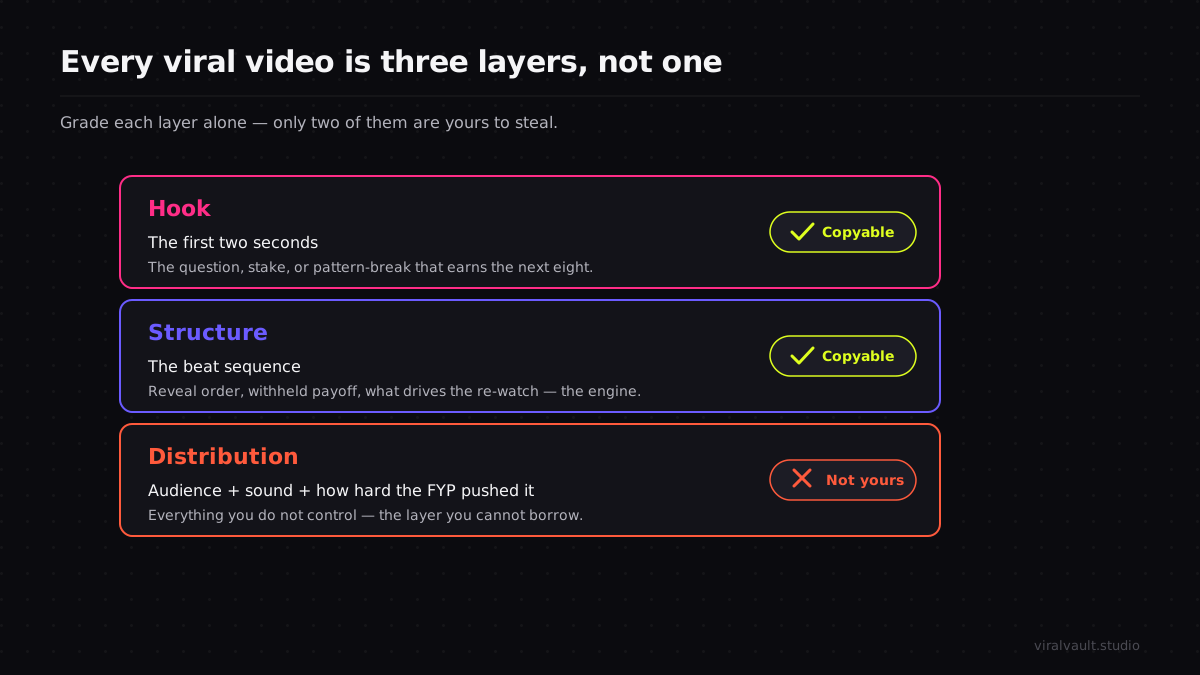
A viral video is not one thing that worked. It is three things that worked together, and a useful viral video breakdown framework keeps them apart so you can tell which one actually carried the post. The three layers are the hook, the structure, and the distribution. The hook is the first two seconds — the question, stake, or pattern-break that earns the next eight. The structure is the skeleton — the order information is revealed, where the payoff is withheld, what drives the re-watch. The distribution is everything you do not control — the creator's existing audience, the sound's momentum, and how hard the For You page pushed it cold.
Most teardowns fail because they collapse all three into a single vague feeling: "it was relatable," "the editing was clean," "the sound was trending." Those are surface descriptions, and surface descriptions do not port to your next video. When you separate the layers, you can grade each one independently and find the real engine. A video can have a mediocre hook and a brilliant structure, or a perfect hook strapped to a format that only worked because a two-million-follower account posted it. You cannot see any of that until you stop treating the video as a blob and start treating it as a stack.
The reason the three-layer split matters so much is that only two of the layers are yours to steal. You can rebuild a hook. You can rebuild a structure. You cannot rebuild someone else's audience or the algorithmic luck of a sound catching fire on the right afternoon. So the entire point of the teardown is to figure out how much of the win lived in the layers you can copy versus the layer you cannot. That is the difference between a format worth reshooting and a one-off you should admire and move past.
This is measurable rather than vibes-based, which is what makes it a framework instead of an opinion. The ViralVault index tracks 23,000+ videos across 7,800+ creators and rescores them daily, scoring each video against two baselines at once — how that creator normally performs and how the niche normally performs. That dual baseline is the instrument that tells you, after you have torn the layers apart by eye, whether the numbers agree with your read. Your eyes find the beats; the score tells you whether those beats actually drove the breakout or just rode along with it.
How to analyze why a video went viral in four steps
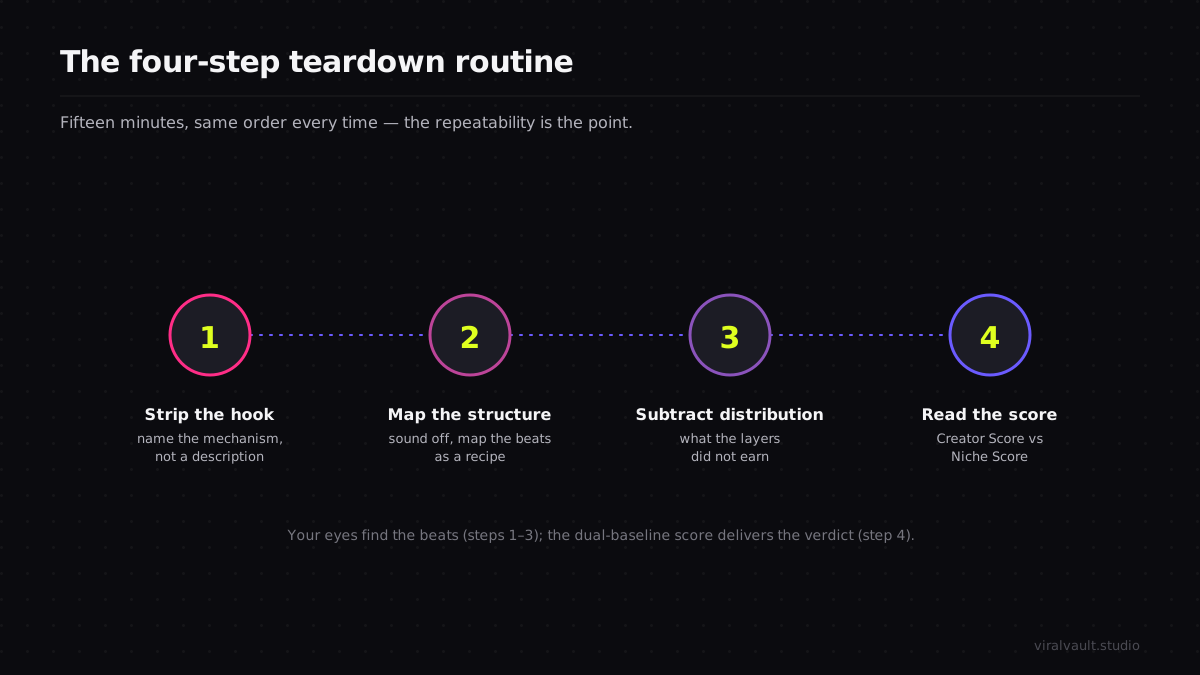
This is the routine. It takes about fifteen minutes per video and runs the same way every time, which is the whole value — a repeatable teardown beats a clever one-off read because you can run it on ten videos in an afternoon and start seeing patterns across them.
Run the video through a free ViralVault search before you start the teardown so you have its dual-baseline score open while you grade the layers — pull the Creator Score and Niche Score first and the rest of the read gets sharper.
Step 1: Strip the hook and grade it alone
Watch only the first two seconds, then stop. Ask one question: what did this open promise or withhold that made stopping the scroll feel worth it? Write it down as a mechanism, not a description — "teases the result before showing the work," "opens mid-conflict so you need the resolution," "states a claim you immediately want to argue with." If you cannot name the mechanism in a sentence, the hook is weaker than you think and the win lived elsewhere. A strong hook is the gate every other layer sits behind, so grading it first tells you whether the video even earned its audition or coasted in on an existing audience.
Step 2: Map the structure with the sound off
Now watch the whole video twice with the audio muted, because the sound is the most seductive layer and the one least likely to be the real engine. Map the skeleton as a sequence of beats: where the hook lands, in what order information is revealed, where the payoff is held back, and what specifically drives a re-watch or a full completion. Write it as a recipe — "result first, then the three steps that produced it, payoff held to the final frame" — not as a topic summary. This is the layer most creators skip entirely, and skipping it is why their copies feel hollow. The structure is the engine; the topic and sound are the paint.
Step 3: Account for the distribution you cannot copy
Before you credit the hook and structure, subtract what they did not earn. Check the creator's follower count and typical view range, and note whether the sound was already surging when they posted. A video pulling two million views from an account that averages two million is not a format story — it is an audience story, and the format underneath might be ordinary. A video pulling two million from an account that averages forty thousand is the opposite: the distribution layer is small, so the hook and structure had to do the heavy lifting. TikTok's own newsroom has documented how the system surfaces videos to people who have never followed the creator, which is why cold reach to a small account is the strongest evidence the format itself did the work. This step is where most teardowns lie to themselves, and it is exactly what the dual baseline exists to settle in the next step.
Step 4: Read the dual-baseline score to confirm the engine
Open the Outlier Score and read it as two numbers, not one. The Creator Score compares the video to that creator's own 30-day median; the Niche Score compares it to the niche median. A high Niche Score means the format over-performed the entire category — that is a structure the algorithm rewarded on its merits, and it is the thing you can copy. A high Creator Score with a low Niche Score means the creator's community pulled it up but the format barely moved the niche — admire it, do not copy it. When both light up, you are looking at a Dual-High: 1,400+ videos in the index have cleared both baselines, and ViralVault calls a genuine Dual-High the strongest virality signal in short-form video. The score is the verdict your eyeball teardown has been building toward.
Reading the score to separate format from luck
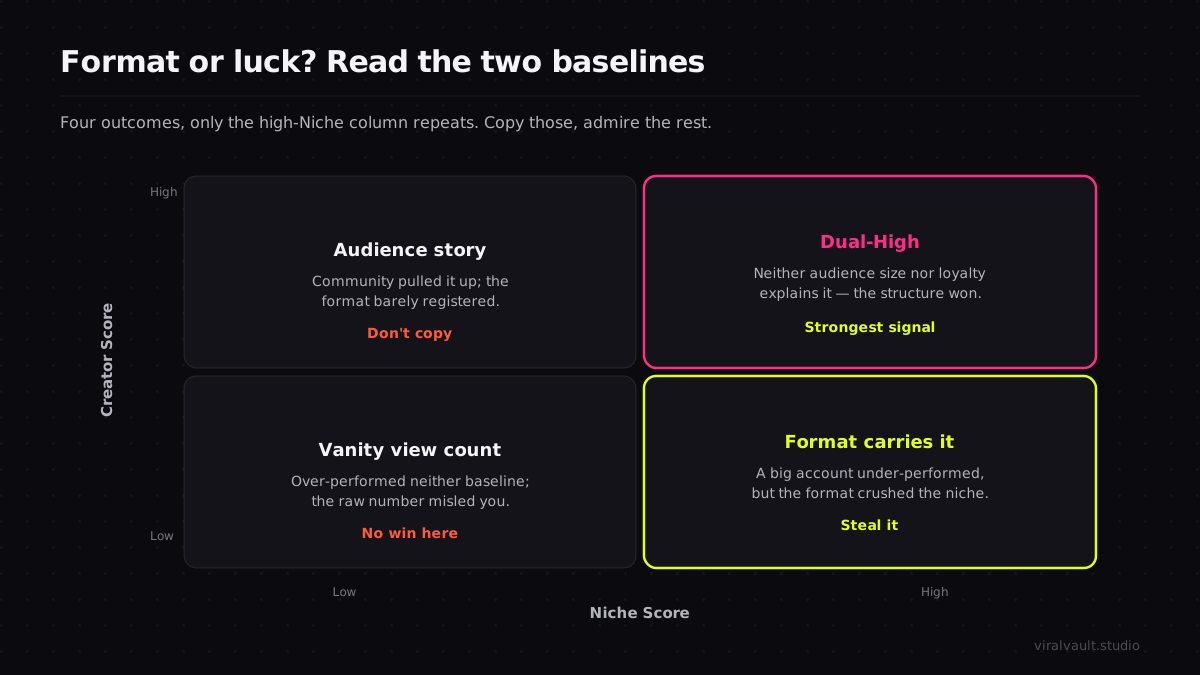
The score is where the teardown stops being subjective. Knowing why did my video go viral — or why someone else's did — comes down to which baseline lit up, because each baseline answers a different question. The Creator Score answers "did this beat the creator's own ceiling," and the Niche Score answers "did this beat everything else in the category." Those two questions have four possible answers, and only one of them is a format you should reshoot.
Here is how the four combinations read in practice.
| Creator Score | Niche Score | What actually happened | Steal it? |
|---|---|---|---|
| High | Low | Community pulled it up; the format barely registered against the niche | No — it is an audience story |
| Low | High | A big account under-performed its own ceiling, but the format crushed the niche | Yes — the format carries it |
| High | High | Dual-High: neither audience size nor loyalty explains it; the algorithm rewarded the structure | Yes — strongest signal |
| Low | Low | It did not actually over-perform either baseline; the raw view count was a vanity read | No — there is no win here |
The bottom row is the most important and the most overlooked. A video can show a giant raw view count and still over-perform nothing once you put it next to the right baselines — it just came from an account where giant numbers are normal. That is the exact trap that makes creators copy the wrong videos. Raw views with no reference point cannot tell format from luck, and luck does not reshoot. The dual baseline is the only thing that closes that gap honestly, including the cold-start handling for new creators and thin niches so the read stays fair. How the Outlier Score works walks through the underlying math if you want to see how each baseline is computed.
ViralVault tip: When you finish a teardown, write the verdict as one line — "won on format" or "won on audience" — next to the saved video. After ten teardowns you will see which structural beats keep showing up in the format wins, and that pattern is your next shoot list. Score any TikTok in your niche free, no card required, at viralvault.studio.
The discipline here is refusing to let a big number end the conversation. A high raw count is the question, not the answer. The two baselines turn it into a verdict you can act on, and acting on the format wins — while ignoring the audience flukes — is the entire difference between a swipe file that compounds and one that sends you chasing videos you could never have replicated. The full early-detection method for catching these formats while they are still rising lives in the viral content discovery guide.
Turn the teardown into your own version
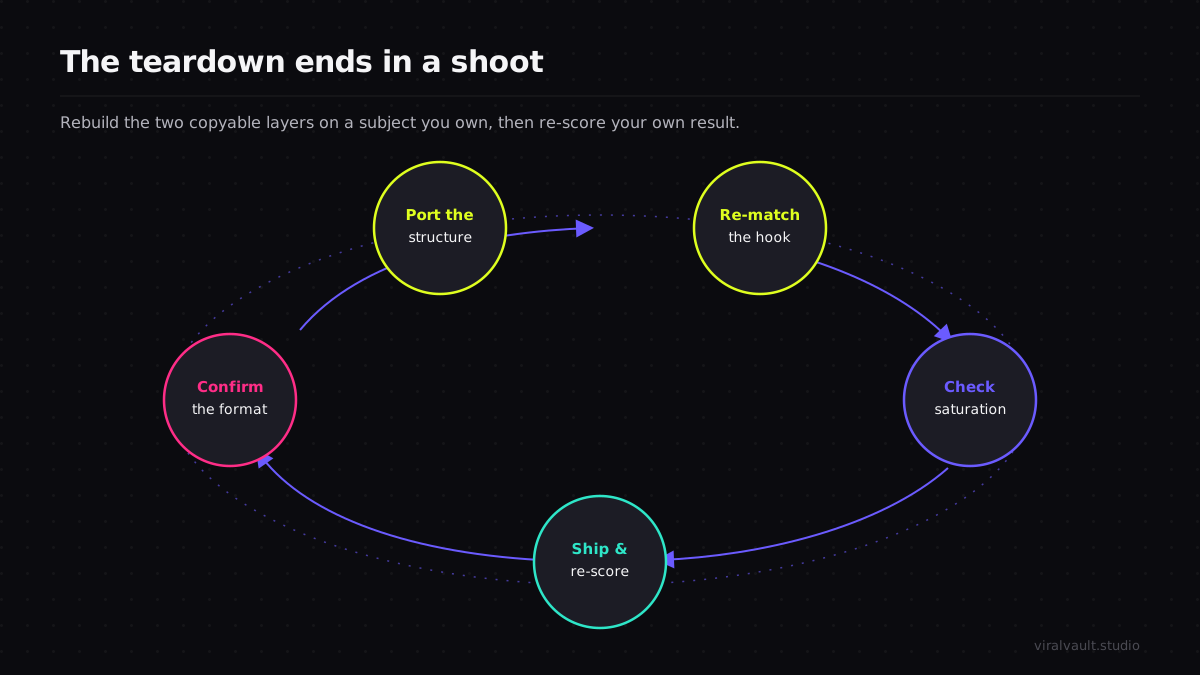
A teardown that ends in a verdict is only half the job. The point of learning to reverse engineer viral videos is to ship your own, so the last move is rebuilding the two layers you confirmed were copyable — the hook and the structure — onto a subject you own. Start from the structure, because it is the engine and it ports across niches cleanly. Take the beat sequence you mapped in Step 2 and rewrite it for your topic, keeping the order and the withheld payoff exactly, changing only the content that fills each beat. A "result first, then the steps, payoff at the end" skeleton works in finance, cooking, or fitness because the tension it builds has nothing to do with the subject.
Then rebuild the hook to match. The hook you graded in Step 1 had a specific mechanism; your version needs the same mechanism aimed at your audience, not a copy of the exact words. If the original teased a result, your hook teases your result. If it opened mid-conflict, yours opens mid-conflict. To generate options fast, run the mechanism through the AI Hook Writer, which spins five variants across contrarian, listicle, POV, curiosity, and meme angles on GPT-4o mini, then pick the one that fits the beat you are rebuilding. For sharper, higher-converting prompts, the hook writer prompt guide shows how to steer the output toward the mechanism instead of a generic opener.
The last check is timing, because a copyable format still flops if you are late to it. Before you shoot, count how many near-identical videos already exist around this structure. A confirmed format win with almost no clones is a same-day shoot; the same structure sitting next to a dozen lookalikes is one you are already late to, and your version lands as the latest copy the feed has seen this week. If the format is crowded, port the structural beat to a niche or angle where it has not been done — the structure travels, the saturation is local. Then ship, and run the same four-step teardown on your own result to confirm the rebuild carried the win the original did.
Frequently Asked Questions
Q: How do I analyze why a video went viral instead of just guessing? A: Tear the video into three independent layers — the hook, the structure, and the distribution — and grade each one alone. Strip the hook and name its mechanism, map the structure with the sound off, then subtract the distribution you cannot copy, like follower count and a surging sound. Finish by reading the dual-baseline Outlier Score, which confirms whether the format or the audience drove the breakout.
Q: Why did my video go viral when a similar one flopped? A: Almost always because of a layer you did not control or did not match. The distribution may have differed — a bigger audience or a hotter sound on the day. Or your version copied the surface and flattened a structural beat, so retention dropped. Tear both videos down layer by layer and compare their Niche Scores; the gap usually shows up in the structure or the distribution, rarely in the topic.
Q: What is the best viral video breakdown framework to use? A: A three-layer teardown plus a dual-baseline score. Separate the hook, the structure, and the distribution so you can grade each independently, then read the Creator Score and Niche Score to settle whether the win was a repeatable format or a one-off driven by audience size. The three-layer split keeps you from crediting the wrong thing, and the score keeps the verdict honest rather than based on a raw view count.
Q: How do I reverse engineer viral videos to make my own? A: Confirm which layers were copyable, then rebuild them on your subject. Take the structure you mapped — the beat order and withheld payoff — and rewrite it for your topic, keeping the skeleton intact. Re-match the hook's mechanism for your audience, check saturation before you shoot, and ship. Then run the same teardown on your own result to verify the rebuild carried the win.
Q: Can a high view count alone tell me a format is worth copying? A: No. A raw view count hides the context that decides whether a format repeats. A huge number from an account that always posts huge numbers is an audience story, not a format story. Put the video next to its creator's 30-day median and the niche median; if it only over-performs the creator and not the niche, the format barely moved and copying it will disappoint.
A repeatable way to analyze why a video went viral
The reason most creators cannot answer how to analyze why a video went viral is that they look at the whole video and a single big number, when the answer lives in the layers and the two baselines underneath it. Tear every breakout into the hook, the structure, and the distribution, and grade each one alone. Subtract the audience and the sound you cannot borrow. Then read the Creator Score against the Niche Score to settle, once and for all, whether the win was a format you can reshoot or luck you can only admire. Confirm the copyable layers, rebuild them on a subject you own, check the runway, and ship — then run the same teardown on your own result. That is a loop, not a guess, and it turns one viral video into a repeatable method. Spin up a free account, score your first teardown, and start reading exactly why videos win at viralvault.studio.