Why Copying Viral Videos Doesn't Work (And What to Do Instead)
You found a hit, remade it beat for beat, and it died anyway. Copying the clip is the trap. Here is why it fails for small creators — and the method that works instead.
You found a video doing millions of views, remade it shot for shot — same sound, same caption, same cut — and it died at four hundred views. The instinct that copying a proven hit is the safest source of viral content ideas for small creators is the single most expensive belief on the platform, because the thing you copied is almost never the thing that worked. A viral clip is the visible tip of an invisible machine: a structure, a timing window, and an account context that produced the result. Copy the clip and you inherit none of those. You arrive after the peak, you bolt a borrowed format onto a channel it does not fit, and you mistake one survivor for a repeatable pattern. This piece breaks down exactly why copying fails — four mechanisms, not vibes — and then hands you the extract-score-add method that turns the same hits into ideas that actually travel to your account.
Table of contents
- Why copying viral videos doesn't work
- What copying actually costs a small creator
- Extract the structure, not the clip
- What to do instead of copying, step by step
- Frequently Asked Questions
- Where good ideas actually come from
Why copying viral videos doesn't work
Copying a viral video feels like de-risking. You are picking something the algorithm already blessed, so the logic seems airtight. The logic fails because four separate things break the moment you press record, and most creators never see any of them.
The first is timing. By the time a video is viral enough that you found it, the format is usually past its peak. The For You page rewards fresh, original content and watch time over near-duplicates, a priority TikTok's newsroom has documented in how it frames recommendation. It surfaces a new structure, amplifies it, and a wave of creators rushes to copy — so the feed fills with near-identical clones within days. You did not discover the format early; you discovered it at the moment it became saturated. Your version lands as the four-hundredth copy the viewer has scrolled past this week, and the algorithm treats it accordingly.
The second is no native fit. A format that exploded on a finance account with a deadpan delivery and a specific audience does not automatically survive being transplanted onto a cooking channel with a warm host and a different crowd. The original worked partly because it fit the creator and the people already watching them. Strip that context, paste the format somewhere it does not belong, and the thing that made it land is gone.
The third is survivorship bias. You are looking at the one video that hit, not the nine hundred identical attempts that flopped and disappeared from your feed. The format you are about to copy may have a one-in-a-thousand strike rate, and you are seeing only the one. Copying the survivor is copying a lottery ticket that already won — the win does not transfer.
The fourth, and the one that quietly causes the most damage, is that you copied the clip, not the format. The sound, the caption, and the cover are the paint. The structure — the order information is revealed, the question planted in the first two seconds, the payoff withheld to the final frame — is the engine. The engine is invisible, so it gets skipped, and a video that looks identical to a hit pulls a fraction of the views because the part that actually drove retention was never replicated. That specific failure has its own deep breakdown in why your TikTok content isn't going viral; here the point is simpler — copying the surface guarantees you skip the engine.
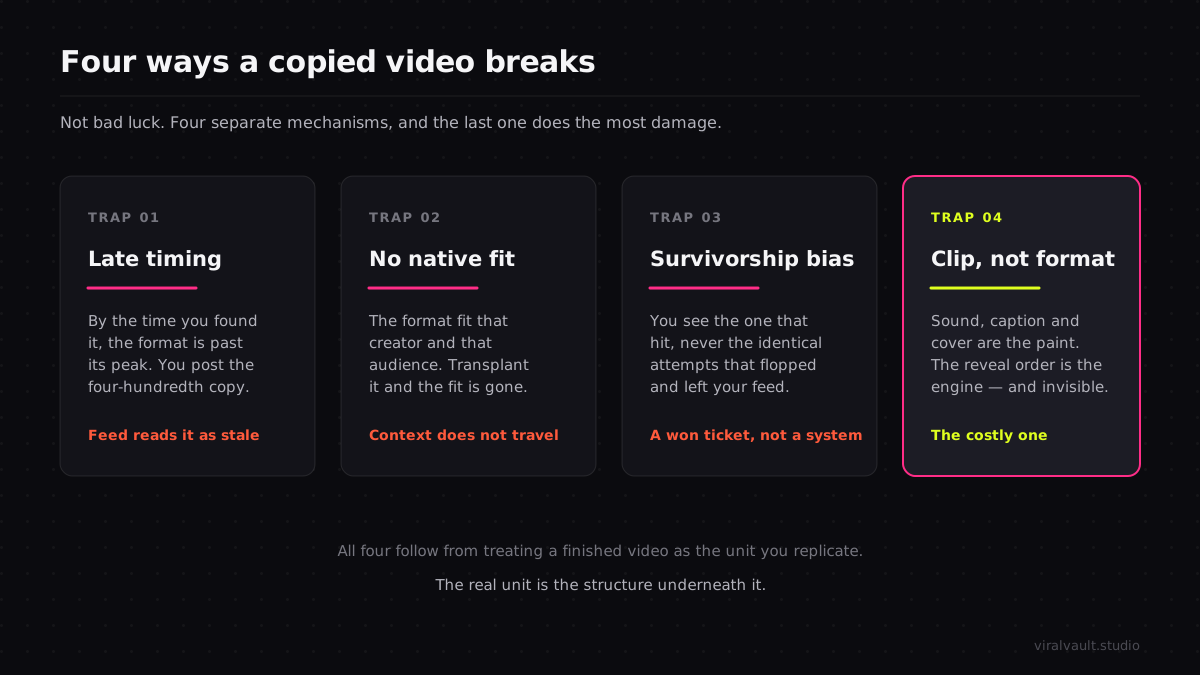
None of these four are bad luck. They are the predictable outcome of treating a finished video as the unit you replicate, when the real unit is the structure underneath it.
What copying actually costs a small creator
For a large account, a failed copy is a shrug — the audience is already there and the next post recovers. For a small creator, the cost compounds, and that is what makes copying a worse strategy the smaller you are.
Start with the saturation tax. A small creator has no follower base to force early distribution, so you live or die on the For You page reading your video as fresh and worth pushing. Posting the four-hundredth copy of a peaked format is the exact opposite of fresh. The algorithm has seen this structure all week; your version inherits the fatigue without the head start, and the post stalls before it reaches anyone who would have cared.
Then there is the survivorship trap, which is more corrosive than a single flop. When you copy the one surviving video and it fails, you do not just lose that post — you learn the wrong lesson. You conclude the format is dead, or that your niche is unworkable, or that you need a bigger account to make anything land. None of that is true. What actually happened is you copied a survivor with a hidden one-in-a-thousand strike rate and read its failure as a verdict on you. That misread is why so many small creators churn through copied formats and quit, convinced the platform is rigged, when the real problem is the unit they were copying.
The deepest cost is the one nobody notices: copying builds nothing that compounds. Every copied clip is a one-off. When it works, you cannot say why, so you cannot repeat it. When it fails, you cannot say why, so you cannot fix it. You are running a slot machine, not a system, and a small creator's entire path to growth is building a system before the audience exists to carry you. The creators who break out are rarely more creative than the ones who stall — they stopped copying clips and started extracting structures they could reuse on purpose.
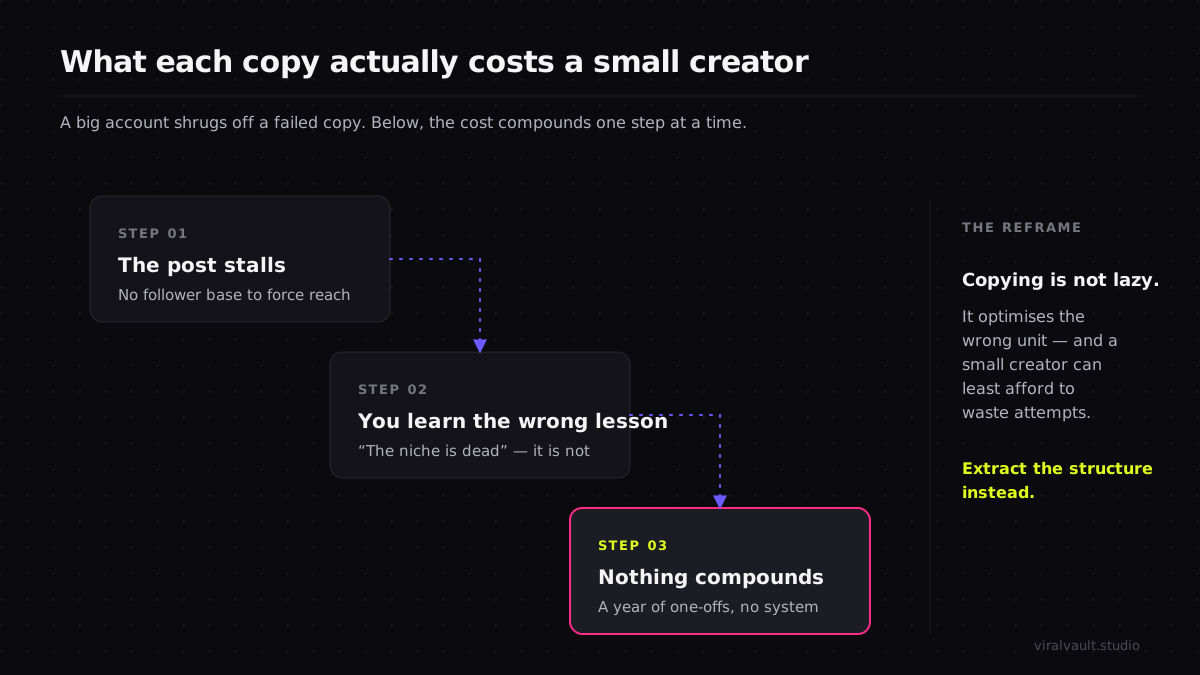
This is the reframe that changes everything downstream. The problem with copying is not that it is lazy. It is that it optimizes the wrong unit — and a small creator can least afford to waste the attempts.
Extract the structure, not the clip
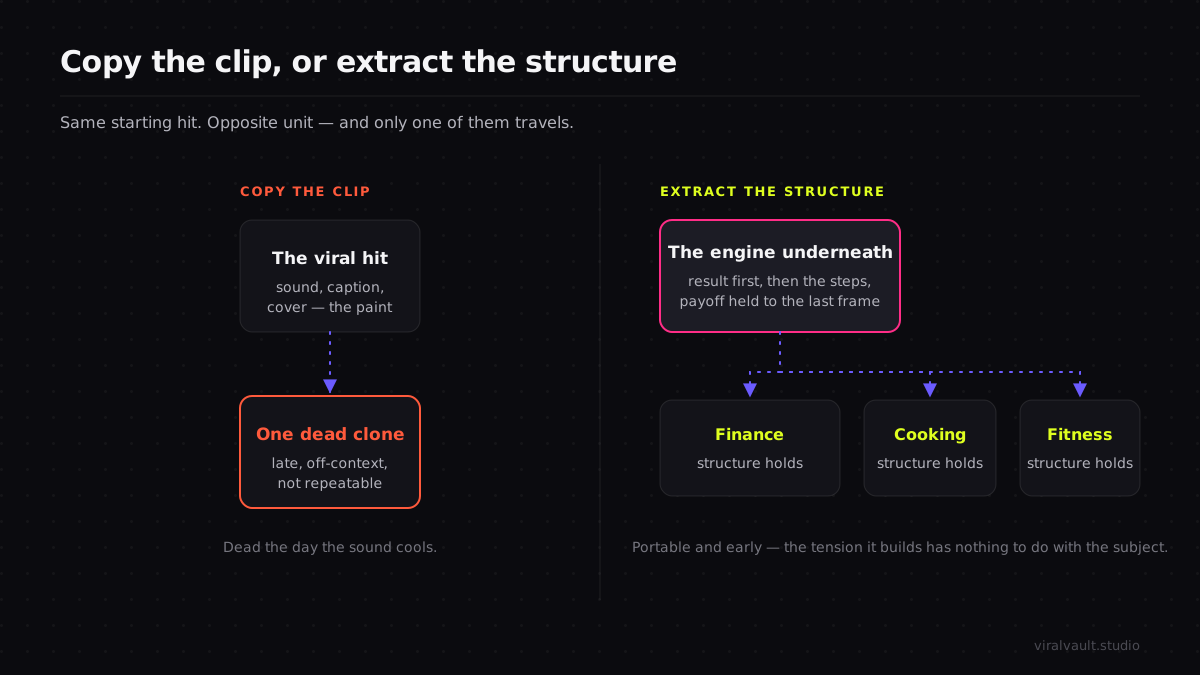
Here is the shift. The best viral content ideas for small creators do not come from finding a hit and remaking it. They come from finding a hit, throwing away the clip, and keeping only the structure — then proving that structure is rising rather than peaked before you spend a single shoot on it. Same starting point, opposite unit. You still study viral videos obsessively; you just extract the engine instead of repainting the body.
Two things have to be true for a borrowed structure to actually work, and copying a clip ignores both. It has to be portable — a beat that holds attention regardless of subject, like a result-first reveal or a withheld payoff, not a topic-specific gag that only lands once. And it has to be early — rising in your niche with few clones, not the format everyone already noticed. Portability is what lets the idea survive the jump to your channel; earliness is what keeps you out of the saturation tax. Hit both and a structure pulled from a finance hit can carry a cooking video, because the tension it builds has nothing to do with the subject.
Getting both right takes a baseline, and a baseline is exactly what raw scrolling cannot give you. The ViralVault index tracks 23,000+ videos across 7,800+ creators and rescores them daily, scoring each video against two reference points at once: how that creator normally performs, and how the niche normally performs. That dual baseline is what separates a real structural breakout — worth extracting — from a video that merely rode a big account or a peaked sound. It is the difference between copying a survivor and copying a pattern.
Before you commit a shoot to any borrowed structure, run the format through a free ViralVault search to confirm it is over-performing on its own merits and still rising in your niche — not a clip that already peaked.
ViralVault tip: Stop saving viral videos to a "remake later" folder. Save the structure instead — write down the beats ("result first, then three steps, payoff to the final frame") and tag it to the niche. That swipe file of engines is reusable across topics for months; a folder of clips to copy is dead the day the sound cools. See how the dual-baseline number separates a real breakout from a lucky clip in how the Outlier Score works.
What to do instead of copying, step by step
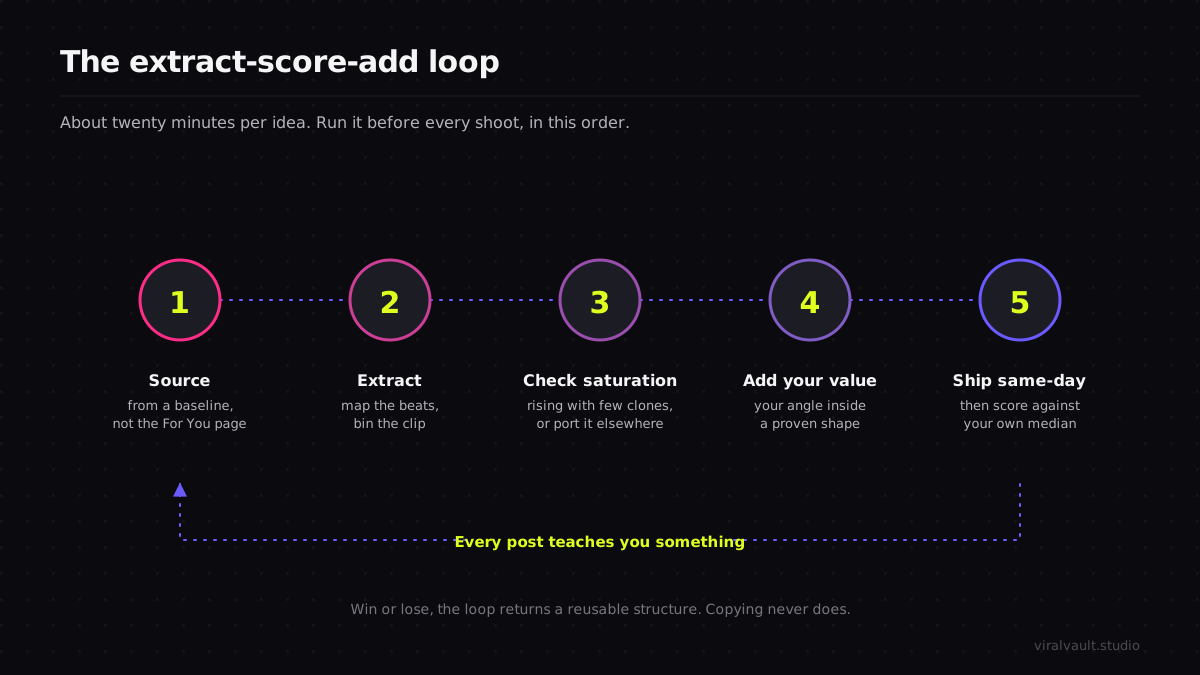
This is the corrective method — what to do instead of copying, as a repeatable loop you run before every shoot. It takes about twenty minutes per idea and is built to give you portable, early, niche-fit structures instead of dead clones.
Step 1: Source from a baseline, not the For You page
Stop hunting on your personal feed, which is tuned to keep you watching and skewed toward whatever already went huge. Open the Today tab, which surfaces what is over-performing across 12 active niches and rescores them daily, and filter to yours. Sort by Outlier Score and look specifically for a Dual-High — a video that beats both its creator's 30-day median and the niche median at once. Clearing both takes at least 5× that creator's own median and 3× the niche median, and most videos never manage it, so a shortlist of Dual-Highs is a far better starting point than anything your scroll surfaces. A high creator score alone is a fan-loyalty story you cannot copy; a high niche score is a format story you can.
Step 2: Extract the structure and throw away the clip
Watch the outlier three times, the second and third pass with the sound off, and map the skeleton only. Where is the hook, what question does it plant in the first two seconds, in what order is information revealed, and where is the payoff withheld to drive completion or a re-watch. Write it as a sequence of beats — "result shown first, then the three steps that produced it, payoff held to the final frame" — never as a description of the topic. This is the step that separates extracting from copying, and it is the one almost everyone skips. The sound and caption are paint; this skeleton is the engine. Keep the engine, bin the paint.
Step 3: Check saturation before you commit a shoot
A perfect structure copied too late still flops, so measure the runway. Scan your niche for how many near-identical videos already exist around this format. A rising Outlier Score with almost no clones is wide open and worth a same-day shoot. A rising score sitting next to a dozen lookalikes means the format is peaking, and your version will land as one more copy in a saturated feed. If it is crowded, do not abandon the structural beat — port it to a niche or angle where nobody has done it yet. The structure travels; the saturation is local. A Watchlist on your niche fires a niche-pop alert the morning a rising format starts, so you reach it before the clones arrive and the window closes.
Step 4: Add your value so it is not a clone
A copied clip offers the viewer nothing they have not already seen. An extracted structure is a frame you fill with something only you have — your specific result, your niche expertise, your angle, your data, your contrarian take. Run the structure through the TikTok Creator Search Insights view of what your audience is actually searching, and pour a genuinely under-served answer into the proven shape. This is the whole difference between a clone and an original built on a borrowed engine: the clone re-says what was said, the original answers a real question inside a structure proven to hold attention. Use the AI Hook Writer to spin five hook variants — contrarian, listicle, POV, curiosity, and meme — and pick the one that fits your beat and your angle.
Step 5: Ship same-day and measure against your median
Speed is the edge a small creator actually has, so ship the day you find the structure, not the following week — a format rising on Monday can be saturated by Saturday. After you post, ignore the raw view count and judge the video against your own 30-day median and the niche median. Clear either by 2x or more and the structure worked; keep it, refine the hook, and reshoot it on a new subject. Miss both and the extraction broke somewhere — re-watch the original, find the beat you flattened, and patch that specific one. That loop is the thing copying can never give you: every post teaches you something reusable, win or lose.
Frequently Asked Questions
Q: Why doesn't copying viral videos work for small creators? A: Copying fails because you replicate the clip, not the structure that drove it, and you arrive after the format has already peaked and saturated the feed. A small creator has no follower base to force distribution, so the For You page reads your late copy as stale and stalls it. You are also copying one survivor out of hundreds of identical flops you never saw.
Q: What should a small creator do instead of copying viral videos? A: Extract the structure from a proven outlier and reuse it on your own subject, instead of remaking the clip. Source winners from a niche baseline rather than your feed, confirm the format is still rising with few clones, then fill the proven shape with a genuinely under-served answer only you can give. The structure travels across topics; the original clip does not.
Q: How do I copy a viral video without it failing? A: Do not copy the video — copy its skeleton. Watch the outlier with the sound off and map the hook, the reveal order, and the withheld payoff as a sequence of beats. Throw away the sound, caption, and cover. Rebuild those beats with your own topic and angle, confirm the format is not already saturated, and ship same-day while the structure is still rising.
Q: Why did my exact copy of a viral video flop? A: Almost always one of four reasons: you posted after the format peaked, the format did not fit your account or audience, you copied a one-in-a-thousand survivor, or you replicated the surface and skipped the structure that actually drove retention. Score the original against a creator-and-niche baseline to see whether it was a real format or a lucky clip before you remake anything.
Q: What should I do instead of copying viral videos? A: Run an extract-score-add loop. Source an outlier from a niche baseline, extract its structure as portable beats, check saturation so you are not late, add your own value inside the proven shape, then ship same-day and measure against your 30-day median. Each pass builds a reusable swipe file of structures, which a folder of copied clips never does.
Where good ideas actually come from
The best viral content ideas for small creators are not hiding inside a video you can remake — they are hiding inside its structure, which is the one part copying always misses. A viral clip is a survivor of a lottery you cannot see, transplanted past its peak onto an account it was never built for, with the engine left behind. Throw the clip away and keep the skeleton. Source from a baseline so you copy patterns instead of luck, confirm the format is still rising so you are early instead of late, and add a genuinely under-served answer only you can give so the result is an original, not a clone. None of this is talent — it is a twenty-minute loop that replaces guesswork with a system, which is exactly what a small account needs before the audience arrives. Spin up a free account, set a Watchlist on your niche, and start extracting structures instead of copying clips at viralvault.studio.