Cross-Platform Content Strategy: TikTok to Shorts to Reels
The same structure does not win on three feeds unchanged. Here are the platform-by-platform re-cutting rules — length, caption, pacing, discovery — for TikTok, Shorts, and Reels.
You exported the same vertical video to all three apps, changed nothing but the upload button, and the numbers came back wildly different — a hit on TikTok, dead on Shorts, mediocre on Reels. That gap is not luck. A content repurposing tool for TikTok reels and Shorts can copy a proven structure across feeds in seconds, but copying is the easy half; the structure still has to be re-cut for each surface, because TikTok, YouTube Shorts, and Instagram Reels reward different lengths, read captions differently, pace differently, and surface videos through different discovery systems. Most creators treat the three as one upload with three destinations. The ones who win treat them as one skeleton with three native edits. This is the adaptation rulebook: the specific things you change — and the one thing you never touch — when you move a validated format from TikTok to Shorts to Reels. By the end you will have a per-platform checklist you can run on every repurpose, plus the step that comes before all of it: confirming the format is worth porting at all.
Table of contents
- Validate the structure before you adapt anything
- What changes per platform and what never does
- Using a content repurposing tool for TikTok reels and Shorts
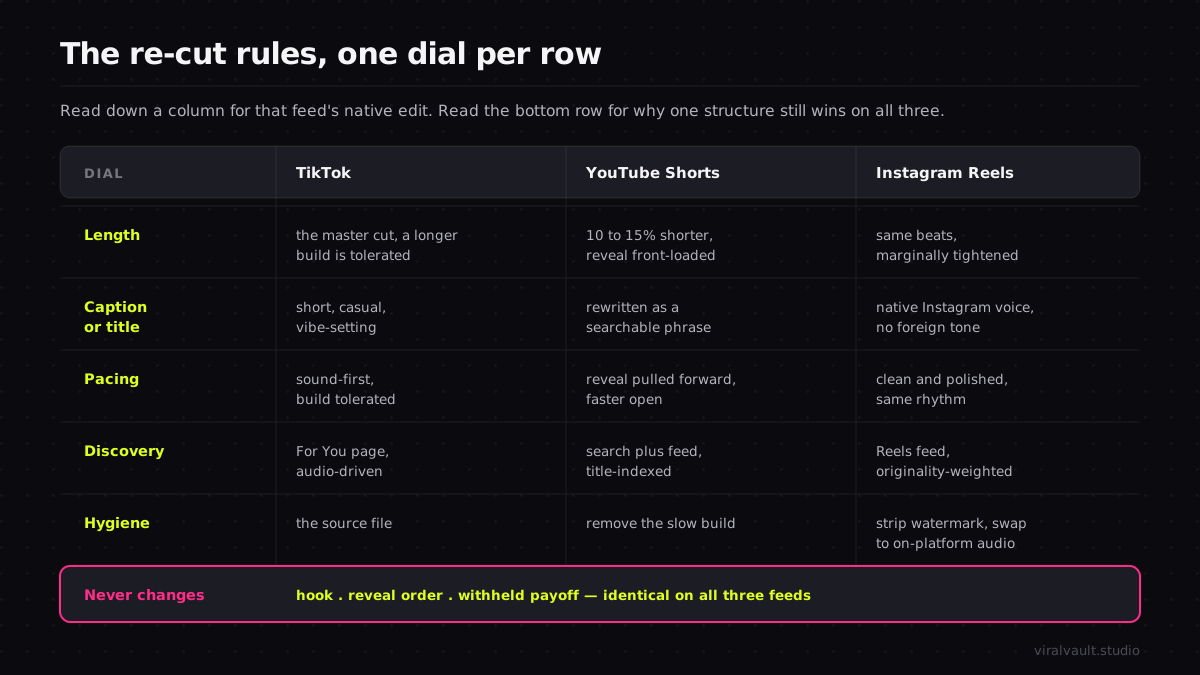
- The re-cut rules in one table
- Frequently Asked Questions
- Adapting one format to win on every feed
Validate the structure before you adapt anything
Adaptation is wasted effort if the underlying format was never proven. Re-cutting a mediocre video three ways just multiplies a mediocre result across three feeds — now you have three flops instead of one. So the rulebook starts before any editing: confirm the structure earned its place, then port it.
Raw view count cannot tell you that. Two million views on a creator with two million followers is an ordinary Tuesday; two million on a creator with eighty thousand followers is a structure strong enough to outrun its own reach. The second is the format worth adapting across platforms. Telling them apart is exactly what a viral content discovery tool does, and the full discovery method is broken down in this guide if format-finding is new to you.
ViralVault scores this against two baselines at once. The Creator Score measures a video against that creator's own 30-day median; the Niche Score measures it against the niche median. When both spike, the index flags a Dual-High — the strongest virality signal in short-form video, and rare on purpose: it takes at least 5× the creator's own median and 3× the niche median in one video, and few videos clear both. That is your adaptation shortlist. A high Creator Score alone is a loyal-audience story; a high Niche Score is a format story — and only format stories travel across surfaces, because the audience changes per platform but the structure does not.
The validation step also tells you which platform the format was born on, which matters for adaptation. A structure that broke out on TikTok is tuned to TikTok's fast, sound-first feed; porting it to YouTube Shorts means tightening it, and porting it to Reels means polishing it. Knowing the origin tells you which direction to re-cut. The creator search and insights workflow covers how to read a format's native context off the data before you touch an editor.
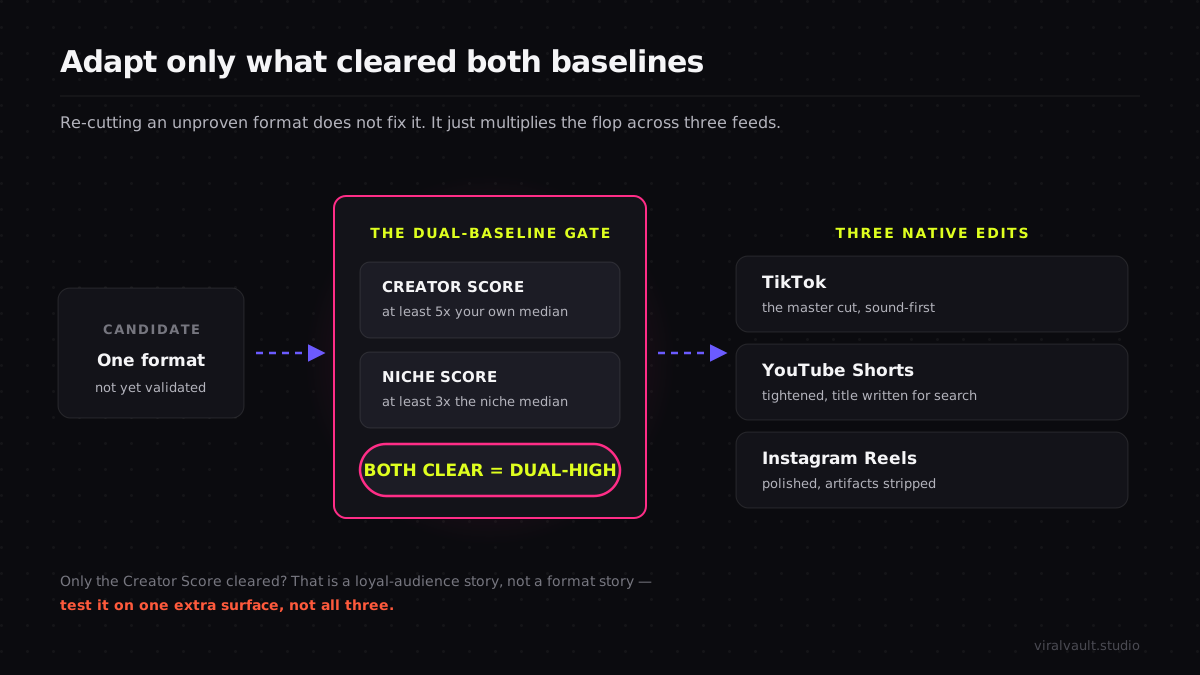
The reframe: never ask "where should I post this," ask "is this structure a proven outlier, and if so, which native edit does each feed need." The first question multiplies guesses. The second multiplies a winner.
What changes per platform and what never does
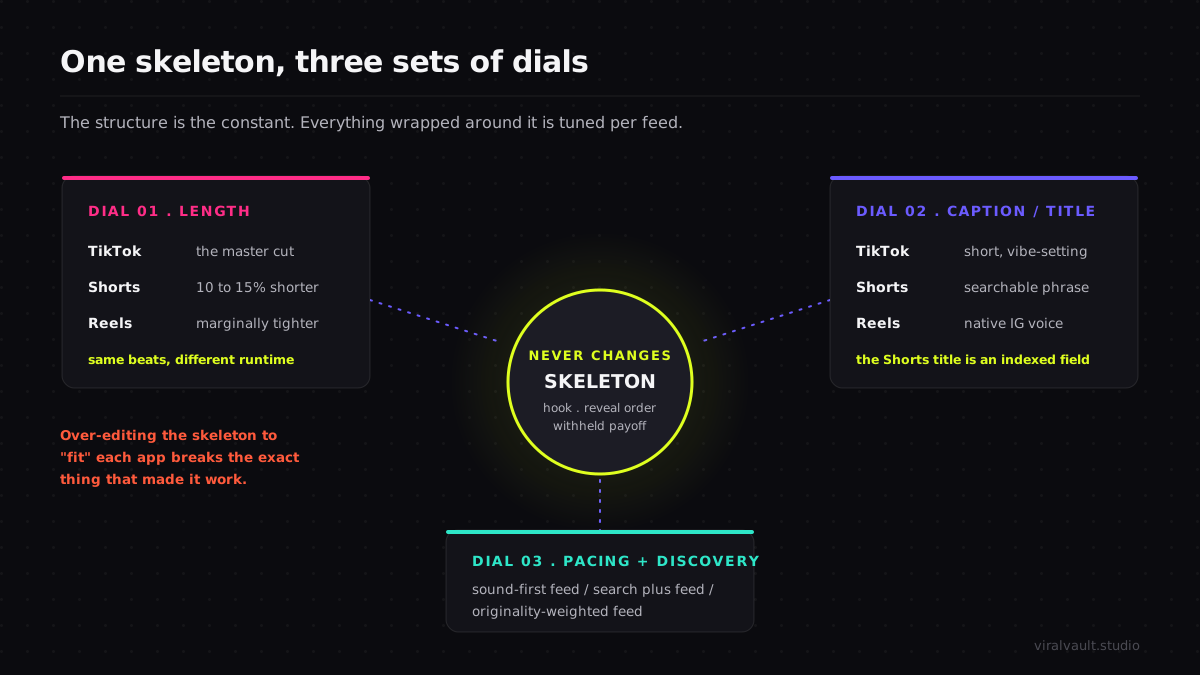
Here is the rule that holds every other rule together: the structural skeleton stays constant; the native execution changes. The hook shape, the reveal order, the withheld payoff — those are the engine that earned the outlier number, and they port unchanged. What changes is length, caption behavior, pacing, and how each platform's discovery system finds the video. Hold the engine fixed and re-skin everything around it.
TikTok is the densest expression and usually the master cut. The feed is sound-first and forgives a slightly longer build, because the audio and the For You page do heavy lifting on discovery. The caption is short, casual, and mostly a vibe-setter rather than a search field. This is the version your other two edits reduce from or polish up toward.
YouTube Shorts is where most creators lose the most, because they upload the TikTok cut verbatim. Shorts viewers bail faster, so the structure has to be tightened — front-load the reveal, cut roughly 10 to 15% of the runtime, and remove any slow build the TikTok version could afford. The bigger difference is discovery: Shorts behaves partly like search, and the title is an indexed field. A TikTok caption pasted into a Shorts title wastes the single most important ranking signal the platform gives you. The whole tiktok to youtube shorts move lives or dies on rewriting that title as a searchable phrase, not a caption. YouTube's recommendation and search systems treat the title as a query target — a vague one-liner that worked as TikTok flavor leaves the format invisible to the exact people searching for it.
Instagram Reels wants the same beats, cleaner. The penalty here is recycling artifacts: a baked-in TikTok watermark, an off-platform audio fingerprint, or a caption written in another app's voice all signal "recycled," and the reach gets throttled. Reels adaptation is mostly a hygiene and polish pass — strip the watermark, swap to on-platform audio, tighten the edit slightly, and write the caption native to Instagram. TikTok has been explicit that recommendation systems rank for relevance and originality over raw reposting, as its own newsroom documents, and Reels enforces the same principle from the other side. Clean reels repurposing is the difference between a structure that travels and a clip that gets buried as a duplicate.
ViralVault tip: Before you adapt a format, set a Watchlist on the niche it came from. When that niche's average Outlier Score jumps 50% or more in 24 hours, you get an alert the morning the surge starts — which tells you whether the structure you are about to cut three ways is still rising or already cooling. Score any TikTok in your niche free, no card required, at viralvault.studio.
The one constant worth repeating: do not touch the skeleton. Creators who underperform on cross-platform usually over-edit — they change the structure to "fit" each app and break the exact thing that made it work. The structure is platform-agnostic. The length, caption, pacing, and discovery wrapper are not.
Using a content repurposing tool for TikTok reels and Shorts
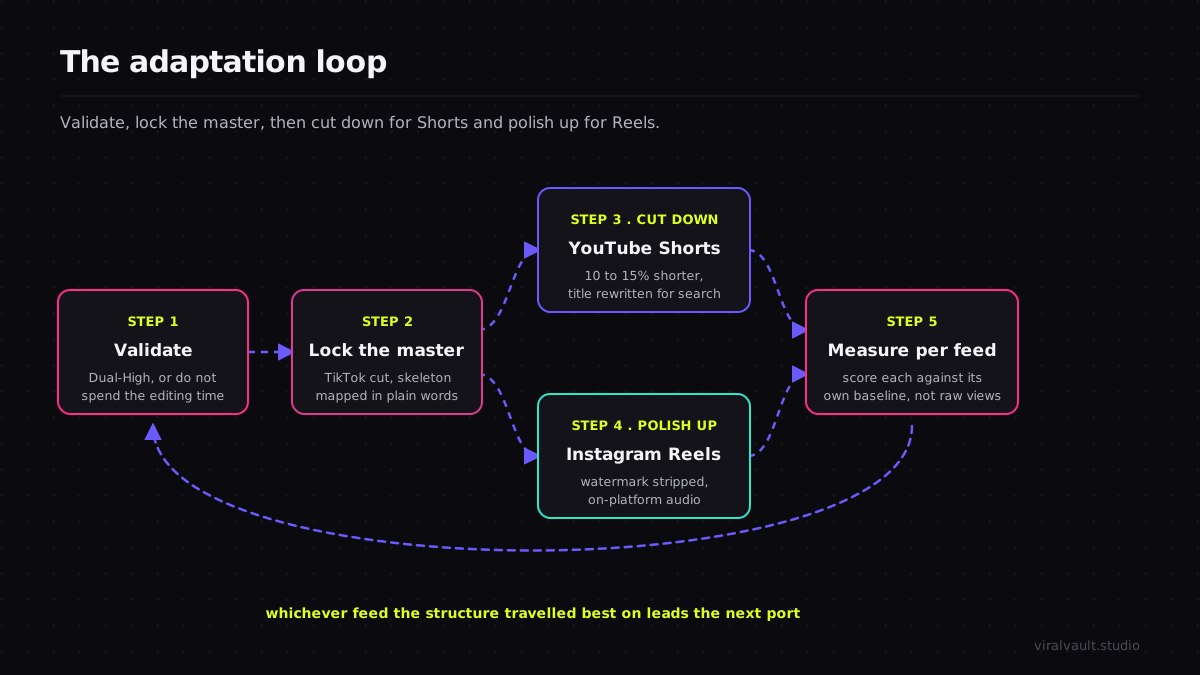
A content repurposing tool for TikTok reels and Shorts should not just copy a clip three times — that is reposting, and the feeds punish it. It should help you carry a validated structure across surfaces and re-cut it natively. Here is the adaptation procedure as numbered steps, the same loop you run on every format worth porting. It assumes you have already done the weekly atomization planning; this is the platform-craft layer that sits underneath the full-week repurposing system, focused only on how the cut itself differs per feed.
Before you re-cut a format three ways, check it against both baselines free so you are adapting a proven Dual-High, not multiplying a guess across feeds.
Step 1: Confirm the format is a Dual-High, not a vibe
Open the candidate in your niche and check both baselines before you commit any editing time. If it cleared the creator median and the niche median at once, it is a Dual-High and worth adapting across all three feeds. If only the Creator Score is high, the format is carried by that creator's existing audience and may not travel — re-cut it for one extra surface as a test, not all three. This single gate is what stops cross-platform work from multiplying a weak result.
Step 2: Lock the TikTok master cut
Treat the TikTok version as the canonical structure, because it is the densest and most forgiving surface. Map the skeleton in plain language — what the hook does in the first two seconds, where the payoff sits, how the pacing builds — and finalize this cut first. Everything downstream is a reduction toward Shorts or a polish toward Reels, so you want the master locked before you adapt. Capture the beats, not just the file; the file is disposable, the skeleton is what you are actually porting.
Step 3: Tighten and re-title for YouTube Shorts
Re-cut the master 10 to 15% shorter and front-load the reveal, because Shorts viewers abandon faster and the platform rewards getting to the payoff sooner. Then rewrite the title as a searchable phrase — Shorts indexes the title as a query target, so a vague caption-style line leaves the format undiscoverable. This is the single highest-impact edit in the whole cross-platform short-form workflow: same structure, tighter cut, a title written for search instead of flavor.
Step 4: Polish and de-artifact for Reels
Export the master again for Reels, then run the hygiene pass: strip any TikTok watermark, swap to on-platform audio, tighten the edit slightly, and write a caption in Instagram's native voice. Reels is unforgiving of recycled artifacts and rewards a clean, polished cut of the same beats. You are not re-structuring — you are removing every signal that says "this came from another app," so the recommendation system reads it as native rather than duplicate.
Step 5: Measure which feed the structure traveled best on
After all three are live, score them against each platform's own baseline rather than comparing raw counts across feeds — a number that is strong on TikTok can be ordinary on Shorts and vice versa. Note which surface the structure carried best and feed that into your next port: if your formats consistently travel to Shorts, lead with the searchable title earlier; if Reels keeps winning, the polish pass is your edge. The loop sharpens every time, because each round tells you where this kind of structure lands.
The re-cut rules in one table
The procedure above compresses into a reference you can keep beside your editor. Each row is a dial you turn per surface; the skeleton column never moves.
| Dial | TikTok | YouTube Shorts | Instagram Reels |
|---|---|---|---|
| Length | The master cut, slightly longer build OK | Cut 10 to 15% shorter, front-load reveal | Same beats, marginally tightened |
| Caption or title | Short, casual, vibe-setting | Title rewritten as a searchable phrase | Native Instagram caption, no foreign voice |
| Pacing | Sound-first, build tolerated | Reveal pulled forward, faster open | Clean and polished, same rhythm |
| Discovery surface | For You page, audio-driven | Search plus feed, title-indexed | Reels feed, originality-weighted |
| Hygiene | The source file | Remove slow build | Strip watermark, swap to on-platform audio |
| What stays fixed | Hook, reveal order, withheld payoff | Hook, reveal order, withheld payoff | Hook, reveal order, withheld payoff |
Read down any column and you have that platform's native edit; read across the bottom row and you have the rule that makes the whole thing work — the structure is identical everywhere. The mistake is reading the table as "three different videos." It is one structure, expressed in three native grammars. Get the dials right and a single proven format earns on all three feeds; get them wrong and you have one hit and two duplicates the algorithms quietly bury.
Frequently Asked Questions
Q: How do I repurpose a TikTok to YouTube Shorts without it flopping? A: Do not upload the TikTok cut verbatim. Tighten it 10 to 15% and front-load the reveal, because Shorts viewers bail faster, then rewrite the title as a searchable phrase since Shorts indexes the title as a query target. Keep the hook, reveal order, and payoff identical — only the length, pacing, and title change. The structure travels; the wrapper is rebuilt for search.
Q: What is the difference between reposting and cross-platform repurposing? A: Reposting uploads the identical file to several apps, where recommendation systems detect the watermark and audio fingerprint and throttle the reach. Cross-platform repurposing keeps the proven structure but re-cuts it natively for each feed — tighter for Shorts, polished and de-artifacted for Reels. Reposting copies the clip and gets buried; repurposing copies the format and travels clean, because the algorithms reward originality over recycled files.
Q: Does the same video length work on TikTok, Shorts, and Reels? A: No. TikTok forgives a slightly longer build because the feed is sound-first and audio carries discovery. YouTube Shorts rewards a tighter cut with the reveal pulled forward, so trim 10 to 15%. Reels sits between the two — the same beats, marginally tightened and polished. The structural skeleton stays constant; only the runtime and pacing flex per surface.
Q: Which platform should I make the master cut on? A: TikTok, in most cases. It is the densest, most forgiving expression of a structure, so it works as the canonical version that you reduce toward Shorts and polish up toward Reels. Lock the TikTok cut first, map its skeleton in plain language, then adapt outward. If a format was born on another platform, validate where it broke out and treat that surface as the master instead.
Q: How do I know a format is worth adapting across platforms at all? A: Score it against two baselines before you edit. ViralVault flags a Dual-High when a video beats both the creator's 30-day median and the niche median at once — at least 5× its own median and 3× the niche median, a bar few videos clear. Adapt a Dual-High across all three feeds; a format carried only by a high Creator Score may not travel, so test it on one extra surface first.
Adapting one format to win on every feed
The shift is small and it changes everything: stop treating TikTok, Shorts, and Reels as three destinations for one upload and start treating them as three native edits of one proven structure. A content repurposing tool for TikTok reels and Shorts gets you the copy in seconds, but the win comes from the re-cut — a slightly longer master on TikTok, a tighter and search-titled version on Shorts, a polished and de-artifacted cut on Reels — all riding a skeleton you never touch because that skeleton is what earned the outlier number. Validate the format against both baselines first so you are multiplying a winner, not a guess. Hold the hook, reveal, and payoff constant; turn the length, caption, pacing, and discovery dials per feed; then measure each on its own baseline so the next port is sharper. Spin up a free account, find your first Dual-High format, and adapt one structure to win on every feed at viralvault.studio.