The Creator Economy in 2026: Trends, Tools, and What Works

Most creator-economy takes are vibes. This one is grounded in 23,000+ videos: what short-form actually rewards in 2026, which tools earn their keep, and the playbook that follows from the data.
Most state-of-the-creator-economy reports are written from the outside looking in: a deck of market-size estimates, a few brand-deal anecdotes, a confident arrow pointing up and to the right. This one is written from inside the feed. The creator economy 2026 looks very different depending on whether you measure dollars raised or videos that actually traveled — and for anyone who posts for a living, the second number is the one that pays rent. So instead of guessing at the size of the pie, this report reads the thing creators actually compete inside: short-form video, scored against a baseline, at scale. The ViralVault index tracks 23,000+ videos across 7,800+ creators and rescores them daily, which makes it a usable instrument for one specific question — not "how big is the market," but "what is short-form rewarding right now, and what does that mean for how you work." By the end you will have a grounded read on the trends that matter, the tools worth paying for, and the playbook the data points to.
Table of contents
- How we read the creator economy
- What the index can and cannot tell you
- Finding one: format beats follower count
- Finding two: the early window keeps shrinking
- Finding three: niches are not one market
- What this means for creator tools in 2026
- The playbook the data points to
- Frequently Asked Questions
How we read the creator economy
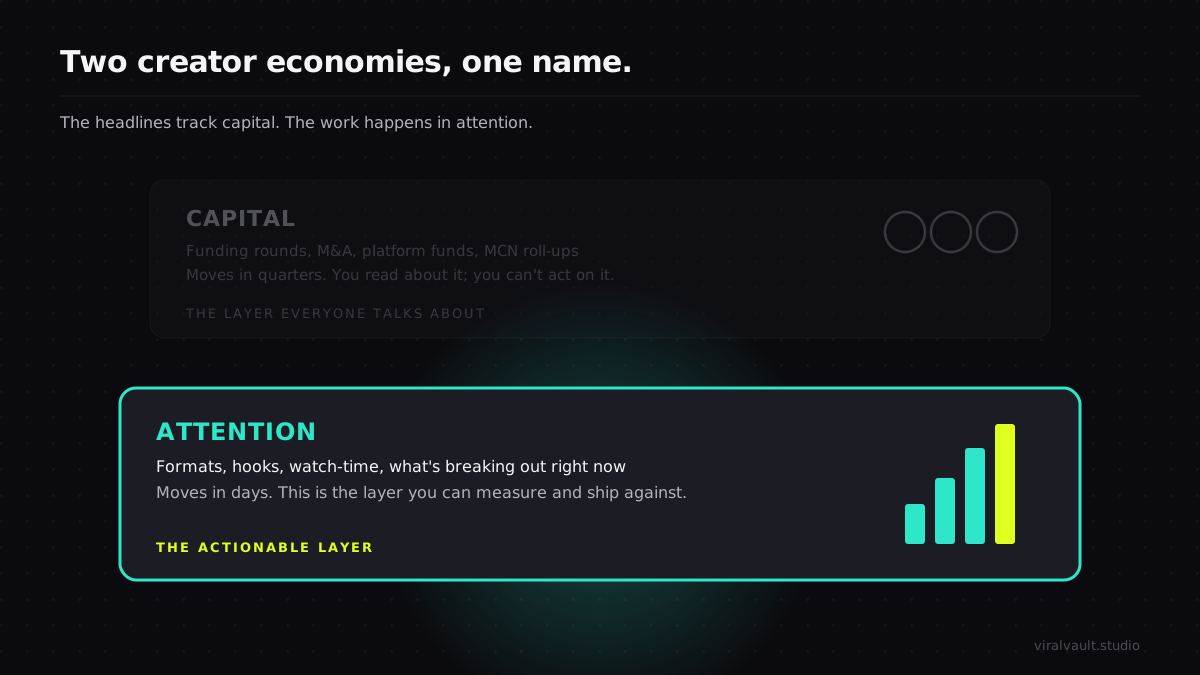
The honest place to start is with what "the creator economy" even refers to, because the phrase smuggles two very different things into one word. There is the capital layer — funding rounds, platform payouts, the headline figure analysts argue about. And there is the attention layer — the actual contest for views, saves, and shares that every creator wakes up to. The first is interesting. The second is the one you can act on tomorrow morning.
This report reads the attention layer, because that is what the index measures directly. Rather than estimate the size of the UGC market 2026 from survey data — a number we cannot verify and will not invent — the approach here is to treat short-form video as a population and ask what that population is doing. Every video is one data point. Each one carries its view count, its niche, its creator's recent history, and a timestamp. Aggregate 23,000+ of those and patterns emerge that no single feed could show you, because no human scrolls a representative sample.
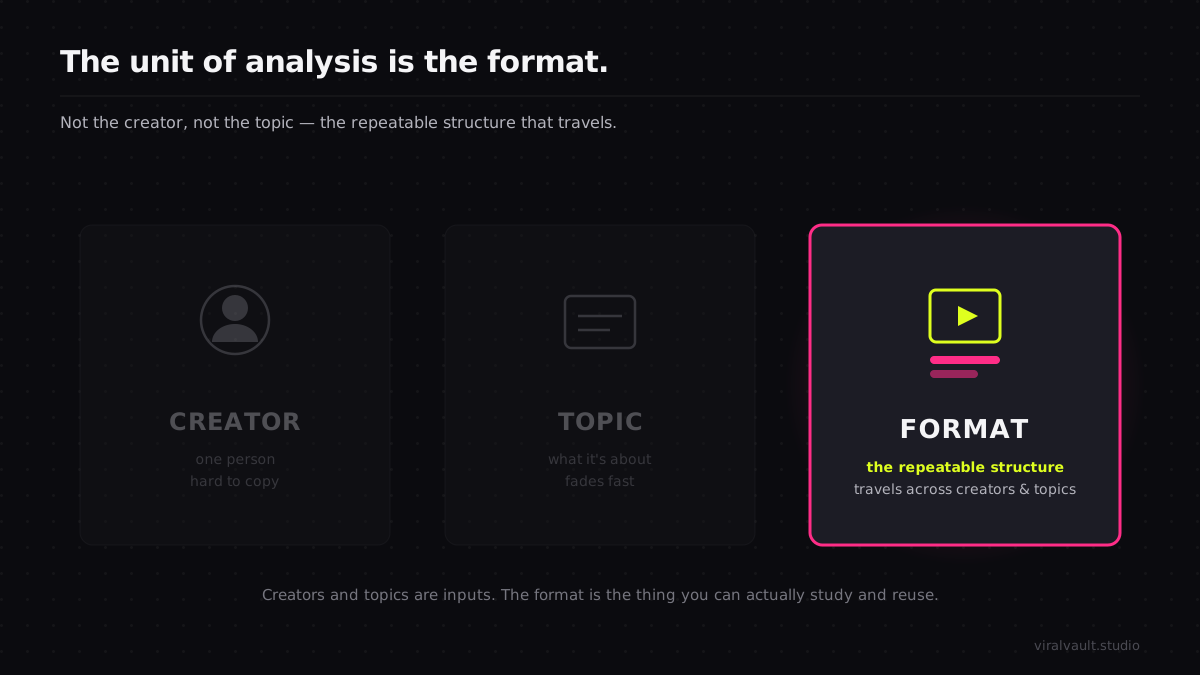
The unit of analysis is deliberately not the creator and not the topic — it is the format: the structural shape of a video, the hook and the reveal and the pacing, independent of who posted it or what it was about. That choice matters, and the rest of this report is downstream of it. Topics trend and die. Formats travel. If you want a read on the creator economy 2026 that is still useful in three months, you measure the things that port across niches, not the subject of the week.
What the index can and cannot tell you
A data report is only as trustworthy as its disclosed limits, so here they are up front. The index is a continuously refreshed sample of short-form video — 23,000+ videos, 7,800+ creators, re-scored daily across 12 niches. That is a sample, not a census: it is deep enough per niche to surface stable patterns and current enough to catch movement within a day, but it is not the whole platform and nothing here should be read as a population-level statistic about TikTok. What it can tell you is what the scored sample is rewarding right now, which is more than most "trend" content is working from.
It is also a sample, not a census. It does not see every video posted on every platform, and it skews toward the niches and creators it tracks most densely. So the right way to read what follows is directionally: these are patterns in the index, strong and repeatable, not universal laws of the entire internet. Where a claim depends on a number we cannot verify — total market revenue, platform-wide creator counts, the size of the UGC market 2026 — the report says so plainly rather than dressing a guess as a finding.
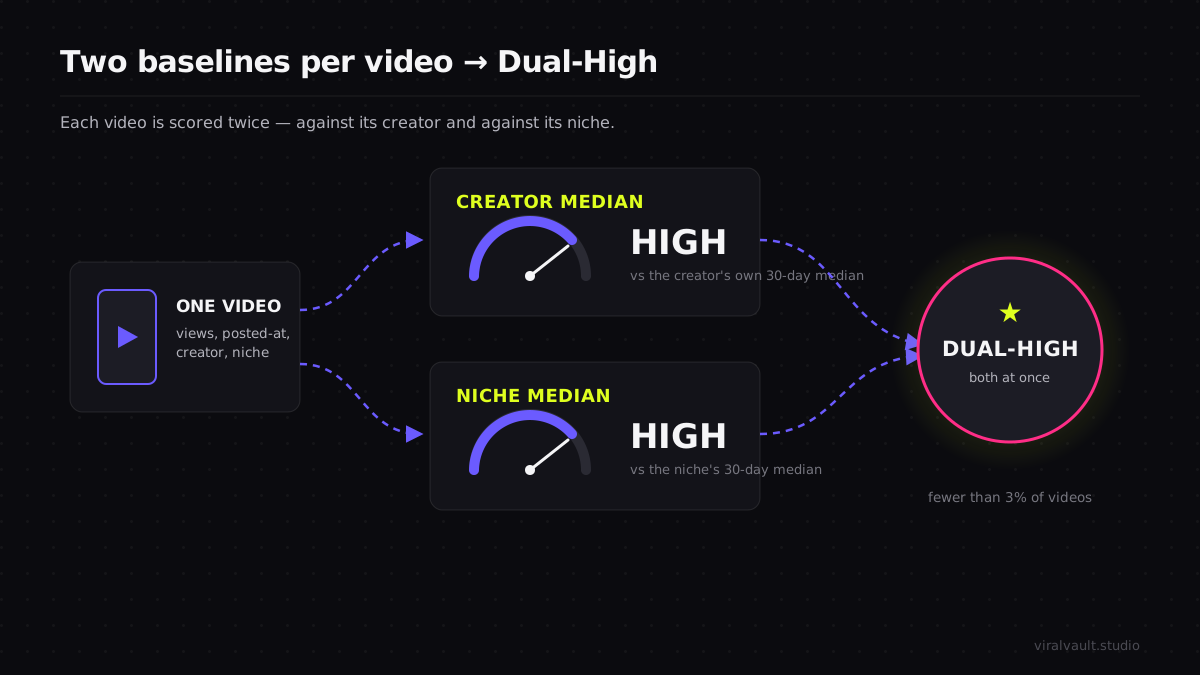
The core instrument is the Outlier Score, and understanding it is the prerequisite for everything below. Every video gets two numbers, not one. The Creator Score measures a video against that creator's own 30-day median views — a 500 means five times their normal numbers. The Niche Score measures the same video against the niche's 30-day median — a 500 means five times what an average video in that category gets. The reason for two baselines is the single most important methodological point in this report: a raw view count cannot separate a big account having an ordinary day from a small account breaking a ceiling, and only the second one teaches you anything about format.
When both baselines light up together, the index flags a Dual-High — the strongest virality signal in short-form video, and rare by design: 1,400+ videos in the index have cleared both. Clearing both means the same video did at least five times the creator's own median and three times the niche median. That scarcity is what makes the signal worth anything. If everything were a breakout, nothing would be. The full mechanics, including how cold-start creators and thin niches are handled, are broken down in how a dual-baseline discovery tool works.
Finding one: format beats follower count
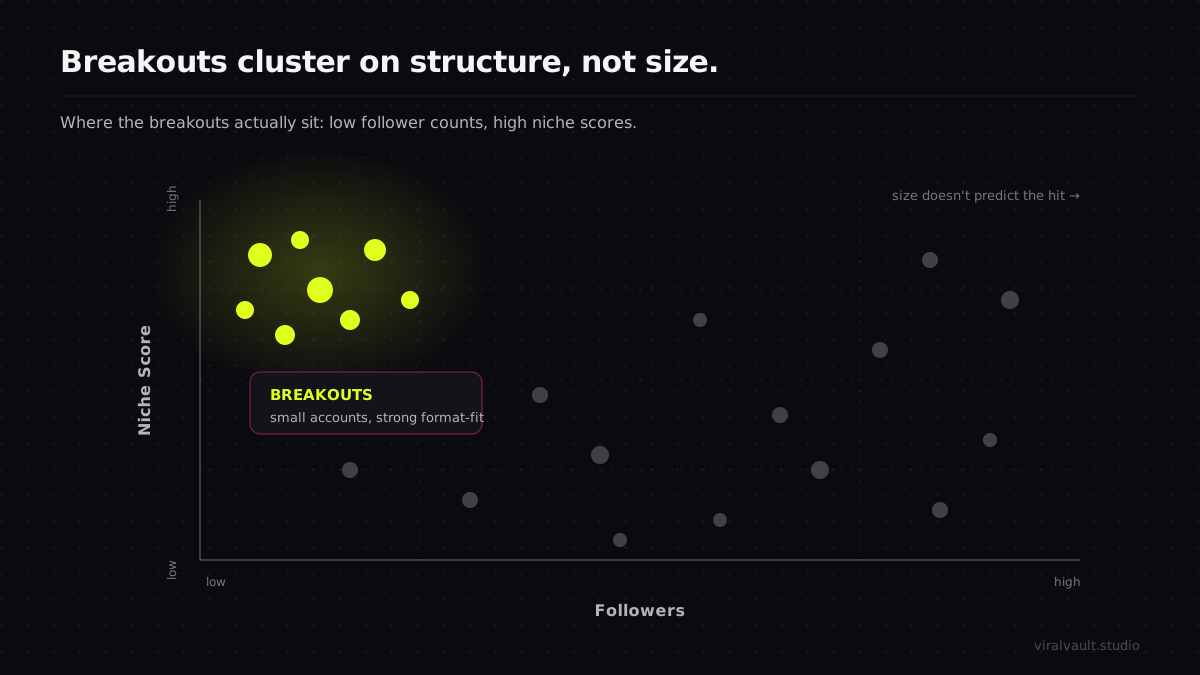
The most consistent pattern in the index — the one that holds across niches and across the whole window — is that structure outperforms size. Dual-High videos, the rare breakouts that beat both baselines at once, are not concentrated among mega-accounts. They show up disproportionately on creators whose follower counts had no business producing those numbers, because the thing that broke through was the format, not the distribution behind it.
This is the empirical core of the short-form video trends 2026 story, and it inverts the assumption most creators still operate under. The folk model says reach follows audience: get bigger, get seen more. The index says reach follows structure: a video built right outruns its own follower count, and a video built lazily underperforms it no matter how large the account. A Niche Score of 600 on a small creator is a louder signal than the same raw view count on someone ten times their size, because it means the structure cleared a bar the audience alone could not explain.
The practical consequence is liberating if you are small and uncomfortable if you are coasting on size. It means the lever you control — how you build the video — matters more than the lever you do not. It also means the right thing to study is other people's winning structures, not their follower graphs. A reverse-order reveal that pops in one niche tends to pop in the next, because the tension it creates is structural, not topical. The 11 formats currently overperforming across Gen Z and millennial niches are catalogued in the formats blowing up right now, refreshed weekly from this same index, and almost none of them are about who posted them.
The honest caveat: size still helps with the floor. A large account's median is higher, so its bad days are less bad. But the ceiling — the genuine breakout — is a format event, and formats are learnable, copyable, and cheap. That asymmetry is the best news in this report for a creator without a million followers.
Score any video in your niche free and see which structures are clearing the bar — no card required.
Finding two: the early window keeps shrinking
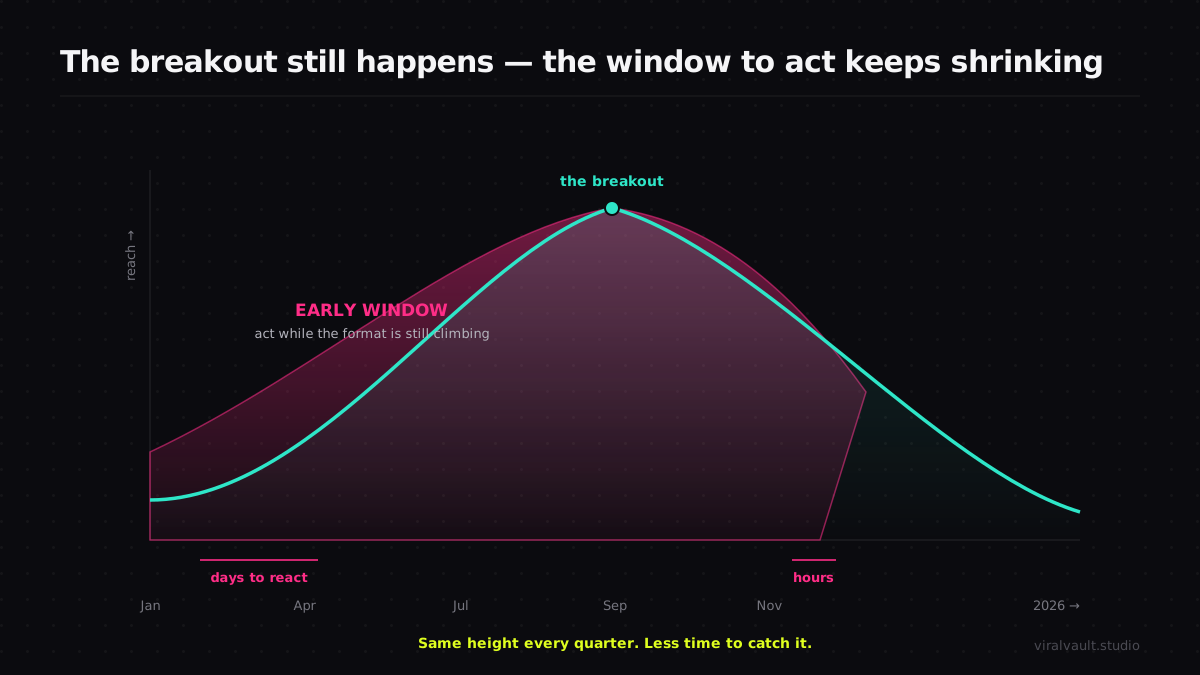
The second pattern is about timing, and it is the one most creators feel without being able to name. A format's useful life — the stretch between when it starts working and when the feed fills with copies — has been compressing. The index sees this as the speed at which a rising Niche Score is followed by a wave of near-identical videos, and that gap is tighter in fast niches than the folk wisdom assumes.
The mechanism is not mysterious. The algorithm amplifies a working format hard and fast, pulling its peak forward, and the moment it does, every creator watching the same feed starts shipping their version — which is exactly what tips a format from peaking into saturated. The runway you have is roughly the distance between the score starting to climb and the copies arriving, and in the fastest niches that can be a handful of days rather than a few weeks. This is the engine under the short-form video trends 2026 headline: not that things move fast, but that the window to act on them is moving earlier.
That changes what "trend-spotting" has to mean. Spotting a format after it has saturated is worthless — you would be the nine-hundredth version. The only useful detection is early detection, measured against a baseline, with the direction of the score telling you which phase the format is in. A high score that is climbing with few copies is wide open. A high score that has gone flat with the feed already crowded is a trap that looks like an opportunity, and it is the single most common thing creators act on too late.
| Format phase | What the score is doing | The honest move |
|---|---|---|
| Rising | Climbing day over day, saves and shares outpacing likes | Make your version now |
| Peaking | High but flat, first copies appearing | Ship today or skip it |
| Saturated | Sliding, the feed full of lookalikes | Move on, archive the structure |
Platforms hint at this acceleration in their own surfaces — TikTok has documented shifting search behavior through Creator Search Insights, as covered in TikTok's newsroom — but a platform shows you broad topics after they are already broad, not the structural lifecycle of a specific format while it is still early. That gap between "what's trending" and "what's rising in my niche right now" is precisely the gap a baseline closes.
Finding three: niches are not one market
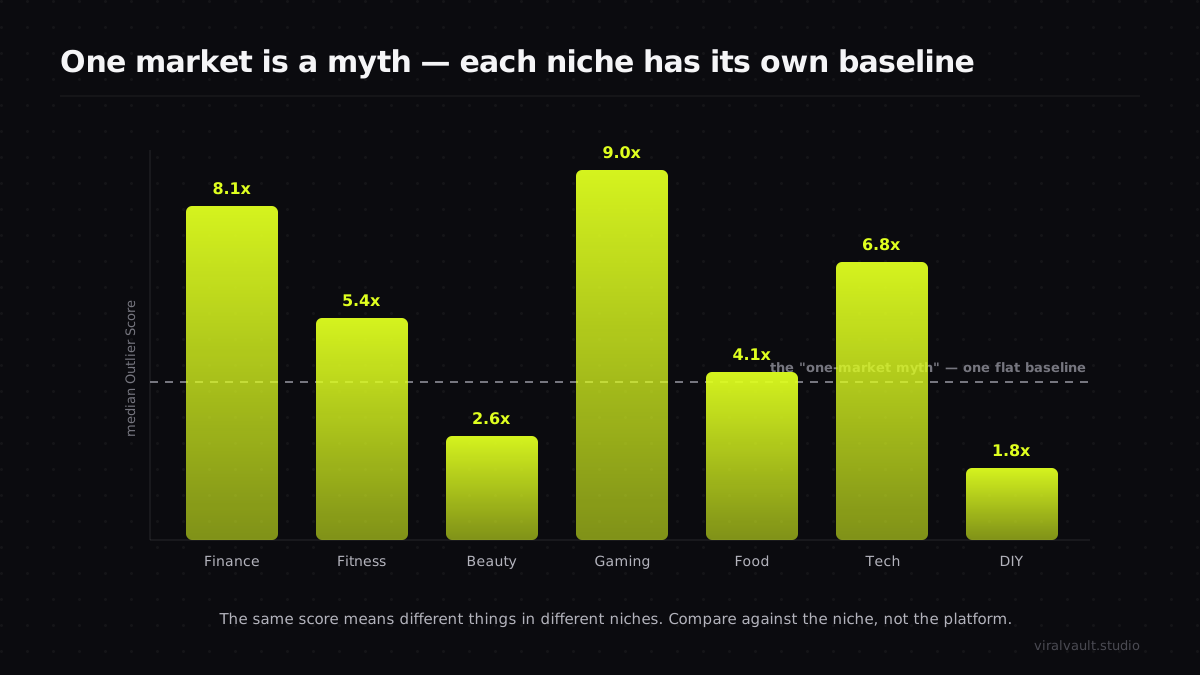
The third finding kills the most common analytical mistake in creator-economy writing: treating "short-form" as a single market with a single bar. It is not. Median Outlier behavior varies enormously across the 12 niches the index tracks, which means a number that signals a genuine breakout in one category is a slow Tuesday in another.
This is why follower-count benchmarks and platform-wide averages mislead. A video doing five times the median is exceptional regardless of the niche — but the raw views behind that multiple might be modest in a high-volume category and enormous in a niche one. Without the niche baseline, you cannot tell whether a video is genuinely special or merely posted in an easy lane. The niche-by-niche spread is concrete and large: the seven finance sub-niches still wide open in 2026, with their median scores mapped out, are detailed in the finance niche report, and the gaps between them are wider than most creators would guess.
The strategic reading of this is niche ownership over niche-hopping. Because the bar differs by category, the creators who compound are the ones who learn one niche's baseline cold — what normal looks like, what a real outlier looks like, which structures travel inside it — rather than chasing whichever category is loudest this week. Depth in one niche is a measurable edge: you recognize a rising format three days before someone parachuting in, because you know what the floor looks like.
It also reframes the UGC market 2026 from a single addressable number into a portfolio of micro-markets, each with its own supply, saturation, and reward curve. Some niches are crowded and punishing; others, like several of the finance sub-niches, still have unusual headroom. Picking the right pond beats swimming harder in the wrong one, and the only way to pick is against the data.
ViralVault tip: Pick the two niches you actually post in and set a Watchlist on each. When a niche's average Outlier Score jumps 50% or more in 24 hours, you get a niche-pop alert the morning the surge starts — not the week it trends. In a market where the early window keeps shrinking, that head start is usually the whole difference between early and ninth. See how Watchlist alerts work.
What this means for creator tools in 2026
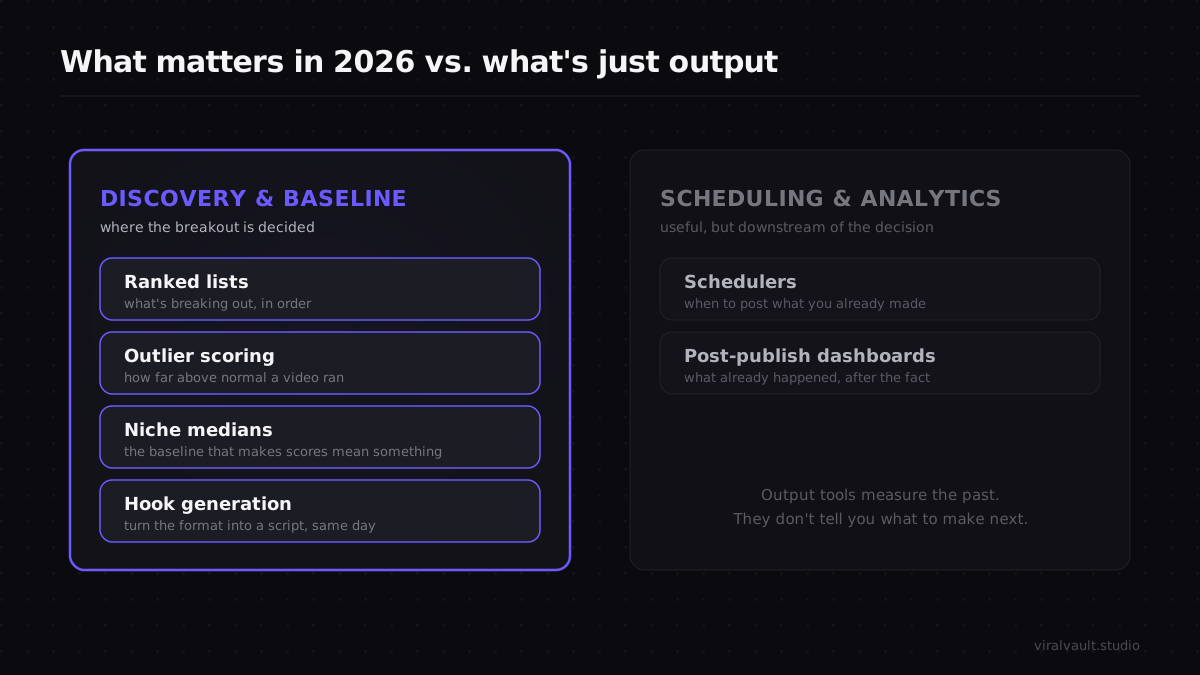
Read the three findings together and the requirements for creator tools 2026 fall out almost mechanically. If format beats follower count, the early window keeps shrinking, and niches are separate markets, then the tools worth paying for are the ones that help you find rising structures, early, against the right baseline. Everything else is a nice-to-have.
That sorts the category cleanly. Scheduling and publishing tools matter for output, but they tell you nothing about what to make. Broad analytics tools report what already happened, after the window closed. Generic "trend" feeds surface topics the whole platform already sees. None of those touch the actual bottleneck, which is not posting more or knowing the past — it is deciding what to build next while it is still early. The bar for a discovery tool in 2026 is whether it shortens the distance between a format starting to rise and you shipping your version of it.
Concretely, that means a few capabilities stop being optional. A dual-baseline score, so you can tell a format breakout from a big account's ordinary day. A per-niche baseline, so "good" is measured against the right market. A refresh cadence fast enough to matter — the index re-scores daily, because in a daily medium a weekly tool is a museum. In-context capture, like a Chrome extension that overlays scores on the videos you are already watching, so research does not require a context switch. And a way to bank structures, like boards that save the format and export a PNG score card, so a rising structure becomes a reusable asset instead of a screenshot you lose.
The pricing reality is friendlier than the hype suggests. A free tier with 3 searches a day is enough to test the scores against your own niche and read both baselines before you pay anything — the cheapest research hour you will spend this week. Paid tiers ($19/mo for Pro) add the Watchlist alerts, the AI Hook Writer that spins five hook variants from a winning video, and the extension. Compared with enterprise discovery suites that run an order of magnitude higher, the cost of staying early in 2026 is low; the cost of staying late is your whole content calendar.
The playbook the data points to
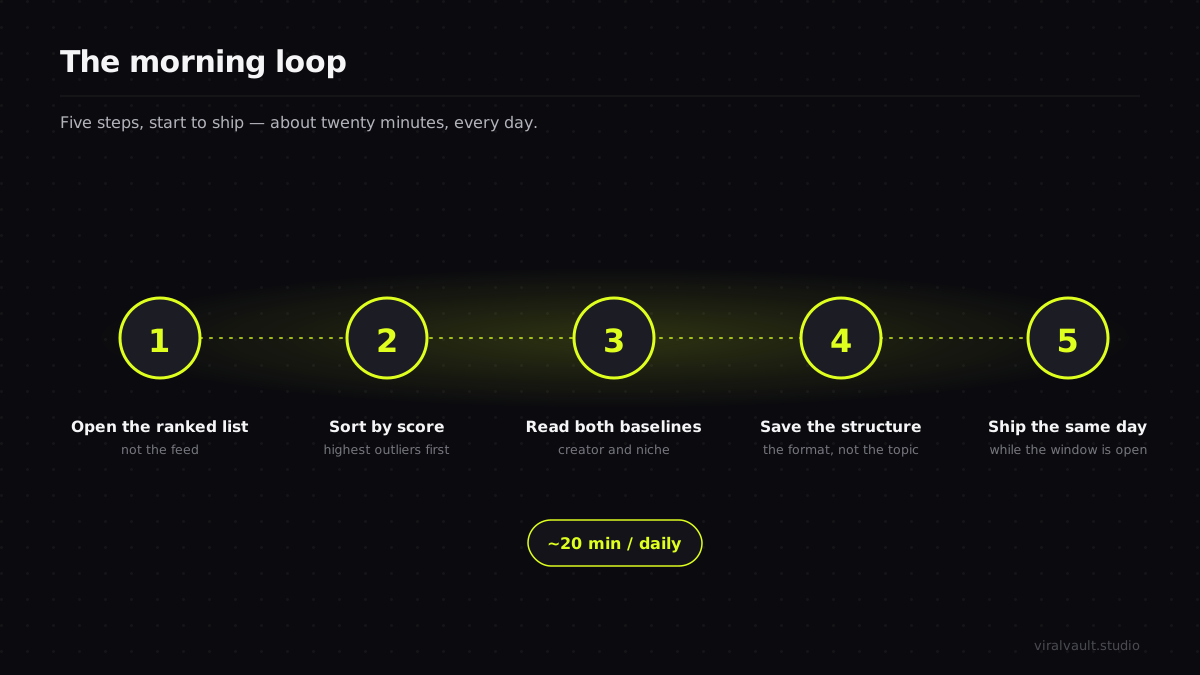
A report that ends at findings is half a report. Here is the playbook the data actually points to — a routine, not a theory, built to run in about twenty minutes a morning against everything above.
Start from a ranked list, not a feed. The Today tab curates what is hitting across all 12 niches and rescores them daily, so you open to a shortlist instead of an infinite scroll; filter to your niche first. Sort by Outlier Score, then check direction — a high score is necessary but not sufficient, and the climb over the last few days is what separates rising from already-peaked. Read both baselines before you trust anything: a high Creator Score alone is a community-pull story, while a high Niche Score is a format story, and formats are what you can copy. Save the structure, not the video — bank the hook shape and the reveal and the pacing to a board, note the structural beat rather than the topic, and let it become a backlog of proven formats for the days you have no idea what to make. Then generate the hook and ship the same day, because in a market where the early window keeps shrinking, speed is the entire edge.
Wrap that loop in two pieces of automation and it stops being research and becomes a system. A Watchlist on your two niches means a rising format arrives as a notification instead of a lucky scroll three days too late. And the discipline of niche ownership — going deep on one baseline rather than hopping — means you recognize the early signal faster than anyone parachuting in. That is the whole edge available to a creator in the creator economy 2026: not more talent and not a bigger following, but being earlier, against the right baseline, on purpose. The routine front-loads the hard thinking so production is fast, which is the exact inverse of how most creators spend their week — hours deciding what to make, minutes actually making it.
Frequently Asked Questions
Q: What is the creator economy in 2026 actually like for small creators? A: Better than the follower-count narrative suggests. In the index, breakout videos cluster on strong formats rather than large accounts, so a small creator who builds the right structure can outrun their own distribution. Size still raises your floor, but the ceiling — the genuine breakout — is a format event, and formats are learnable and copyable rather than something only big accounts can reach.
Q: What are the biggest short-form video trends 2026? A: Directionally, three patterns dominate the index: structure beats follower count, the early window between a format rising and saturating keeps shrinking, and niches behave as separate markets with their own baselines. The throughline is timing — the formats that pay are the ones you catch while they are still rising in your specific niche, measured against the niche median rather than raw views.
Q: Which creator tools 2026 are actually worth paying for? A: The ones that find rising structures early against the right baseline. That means a dual-baseline score, per-niche benchmarks, a fast refresh cadence, in-context capture, and a way to bank formats. Scheduling and after-the-fact analytics help with output and reporting but do not touch the real bottleneck, which is deciding what to build next while it is still early.
Q: How big is the UGC market 2026? A: There is no single trustworthy number, and this report will not invent one. More useful is the structural read: the UGC market 2026 behaves as a portfolio of micro-markets, one per niche, each with its own supply, saturation, and reward curve. Some niches are crowded and punishing; others still have real headroom. Pick the right pond against the data rather than chasing a market-size headline.
Where the creator economy 2026 actually rewards you
Strip the report to one sentence and it is this: in the creator economy 2026, being early against the right baseline beats being big. The capital layer will keep generating headlines, but the attention layer — the one you compete in every morning — rewards structure over size, speed over hesitation, and niche depth over niche-hopping, and all three of those are things you control. The tools that matter are the ones that turn those advantages into a twenty-minute habit instead of a guess. Spin up a free account, set a Watchlist on your niche, and let the index surface the next rising format before everyone else sees it — start at viralvault.studio.