Trending vs Outlier: Why Big View Counts Aren't a Signal

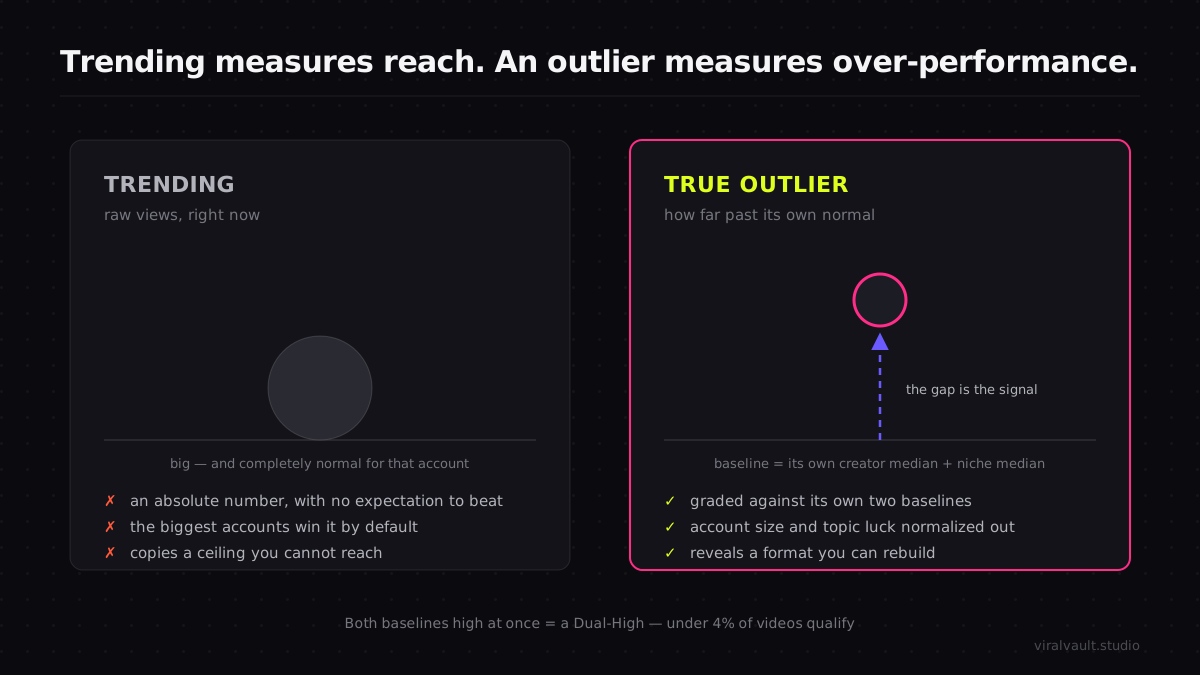
Trending is raw views, often just a big creator or a hot topic. A true outlier beats its own baselines, so it reveals a format you can actually repeat.
The trending tab is the most expensive distraction in short-form video, because it shows you results without ever showing you why. A video with four million views sits at the top of every trend feed, and nothing on that screen tells you whether it earned those views with a format you could rebuild or whether it simply belonged to someone with eight million followers. That blind spot is the whole reason a viral content discovery tool for creators exists: not to surface the biggest numbers, but to separate the videos that went big because of structure from the ones that went big because of who posted them. Trending and true outlier are two different things wearing the same view count, and confusing them is why small creators copy formats that were never going to work for them. This is the plain reference for what each term actually means, why chasing trending quietly misleads you, and how to read the difference before you decide what to make next.
Table of contents
- Trending video meaning vs what a true outlier is
- Why chasing trending misleads small creators
- How a viral content discovery tool for creators surfaces true outliers
- Frequently Asked Questions
Trending video meaning vs what a true outlier is
Start with the words, because the trending vs outlier distinction lives entirely in their definitions. The trending video meaning is the simple one: a video with high raw views right now, usually riding a hot topic, a sound, or a format the algorithm is pushing broadly. Trending describes reach. It is an absolute number, and absolute numbers have a quiet flaw — they say nothing about expectation. A million views is enormous for one account and a routine afternoon for another, yet the trend feed stacks them on the same shelf and lets the bigger number win.
A true outlier is defined the opposite way. The answer to what is a true outlier is not "a video that got a lot of views" but "a video that got far more views than it should have, given who made it and the lane it lives in." It is a relative measure. The question stops being how big and becomes how far past normal, and against whose normal. A true outlier on a small account can have a fraction of a trending video's raw views and still be the far stronger signal, because it broke a ceiling instead of inheriting one.
ViralVault draws that line with two baselines instead of a single view count. The Creator Score measures a video against that creator's own 30-day median — did it beat the person who posted it? The Niche Score measures the same video against the niche median — did it beat the category? A true outlier is a video that over-performs both, and when both light up at once the ViralVault index flags it as a Dual-High: the strongest virality signal in short-form video, and hard to clear on purpose, because qualifying takes at least five times the creator's own median and three times the niche median in the same video. Trending asks none of those questions. It just reports the number on the surface.
Why chasing trending misleads small creators
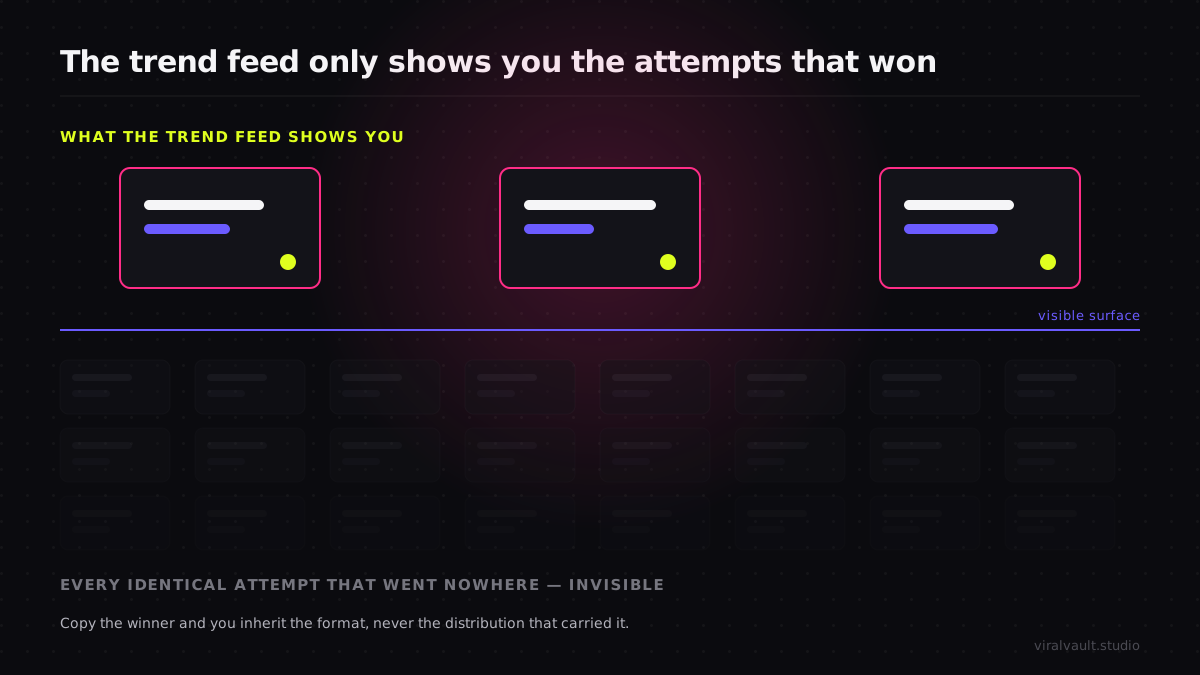
The trend feed is built on survivorship bias, and survivorship bias is what makes it dangerous for anyone without a large account. You only ever see the videos that already won. The thousands of attempts at the same sound, the same format, the same joke that went nowhere are invisible, so the feed quietly teaches you that the format works — when what actually "worked" was distribution you cannot see and may not be able to reproduce.
Two distortions do most of the damage. The first is the big-creator effect: a structurally forgettable video clears four million views because the account already had the audience, and a small creator copying that exact format inherits the structure without the distribution, then wonders why the same idea got two hundred views. The format was never the engine. The second is the hot-topic effect: a video trends because it caught a sound or a news moment at the right second, and by the time you have noticed it, filmed your version, and posted, the wave has broken. You copied a peak, not a pattern.
A true outlier sidesteps both because it is graded on a curve. When a video is measured against its own creator's median and its own niche median, account size and topic luck are normalized out of the result. A small creator's genuine breakout finally reads as the strong signal it is, and a mega-account's routine post reads as routine. That is the difference between a format that travels and a ceiling you can never reach — and it is the difference a raw trending number is structurally incapable of showing you. Run both scores free on any TikTok in your niche at viralvault.studio and the gap between a trend and a true outlier stops being a guess.
ViralVault tip: When a trending video catches your eye, do not ask how many views it got — ask whose views they are. A high Niche Score is the part you can actually steal; raw reach on a huge account is not. The full derivation of both baselines lives in how the Outlier Score works.
How a viral content discovery tool for creators surfaces true outliers
Knowing the definition only pays off if it changes how you research, and the change is mechanical. A viral content discovery tool for creators does not rank your niche by views — it ranks by outlier score, so the videos that beat expectation float to the top instead of arriving in a random scroll dominated by whoever is biggest. The sort itself is the upgrade: a trend feed orders by raw reach, which is exactly the metric you want to ignore, while an outlier-first view orders by over-performance, which is the metric you can act on.
From there the workflow is to read both baselines before you commit to anything. Prioritize a high Niche Score, because a video that beat its whole category is running a structure you can port to your own account regardless of follower count. Treat a high Creator Score on its own as a weaker buy — it usually means a loyal audience showed up, not that the format itself travels. The videos genuinely worth your time are the Dual-Highs, where neither account size nor community loyalty alone explains the result. Platforms do hint at the surrounding context — TikTok surfaces fragments of search and trend behavior, as TikTok's own newsroom has documented around Creator Search Insights — but a public trend surface shows you what is broadly popular, never whether a specific video beat both its creator and its niche.
Then save the structure, not the post. A score tells you a format mattered; your job is to bank why it mattered — the hook shape, the reveal, the pacing — as something you can rebuild. The end-to-end routine for catching these formats while they are still rising lives in the viral content discovery guide; the trending-vs-outlier distinction is the single judgment that routine depends on. Get it right and "what should I make?" turns from a scroll through other people's wins into a sorted shortlist of structures proven to beat normal.
Frequently Asked Questions
Q: What is the difference between a trending video and a true outlier? A: A trending video has high raw views right now, usually from a big creator or a hot topic, and reach alone tells you nothing about expectation. A true outlier is graded relatively — it beat its own creator's median and its niche median — so it reveals a repeatable format rather than borrowed distribution. Trending describes reach; a true outlier describes over-performance.
Q: What does trending video meaning actually refer to? A: The trending video meaning is a video pulling high absolute views in the moment, typically because it caught a popular sound, topic, or format the algorithm is pushing broadly. It is an absolute number with no baseline, so it cannot distinguish a small creator's breakout from a mega-account's routine post. That is why trending is a weak signal for deciding what to make.
Q: Why is a true outlier a better signal than a trending video for small creators? A: Because a true outlier is normalized for account size and topic luck. The trend feed only shows videos that already won, hiding every identical attempt that failed, which teaches survivorship bias. A true outlier measures a video against its own baselines instead, so a genuine format breakout on a small account reads as the strong, portable signal it is rather than getting buried under raw reach.
Make trending vs outlier a verdict you can act on
The trending tab will always show you the biggest numbers, and the biggest numbers will always be the least useful thing on the screen for deciding what to film next. Trending describes reach; a true outlier describes how far a video beat the only two baselines that predict whether a format will work for you — its creator and its niche. Hold that one distinction and most wasted research time disappears, because you stop copying ceilings you can never reach and start copying structures proven to beat normal. That is the entire job a viral content discovery tool for creators does: it replaces a vanity number with a verdict. Stop chasing trends and start reading outliers — spin up a free account and run the Creator and Niche scores on the next video that catches your eye at viralvault.studio.