What Makes a Video Dual-High? Short-Form's Strongest Signal

A Dual-High is one video clearing two baselines at once — its creator's median and the niche median. Only 1,400+ videos in the whole index have cleared both.
Most "viral" videos are easy to explain away. A huge account posted it, or a loyal audience showed up, or the topic was hot that week — none of which gives you a format you can actually steal. A Dual-High is the exception, and it is the one state worth building a research habit around. A viral score tool for social media posts flags a video as Dual-High when it clears two different baselines at the same time: the creator's own 30-day median and the niche median. Both have to be high at once, which is harder than it sounds — 1,400+ videos in the whole index have cleared both. The payoff for that scarcity is signal. When a video beats both the person who posted it and the entire category it sits in, neither audience size nor community loyalty explains the result, so the only thing left is the format itself. This is the crisp definition of what makes a video Dual-High, why it sits at the top of the signal stack, and how to find the handful that qualify before everyone else copies them.
Table of contents
- What is Dual-High
- Why a viral score tool for social media posts ranks it highest
- The math behind the flag
- How to find and act on Dual-High videos
- Frequently Asked Questions
What is Dual-High
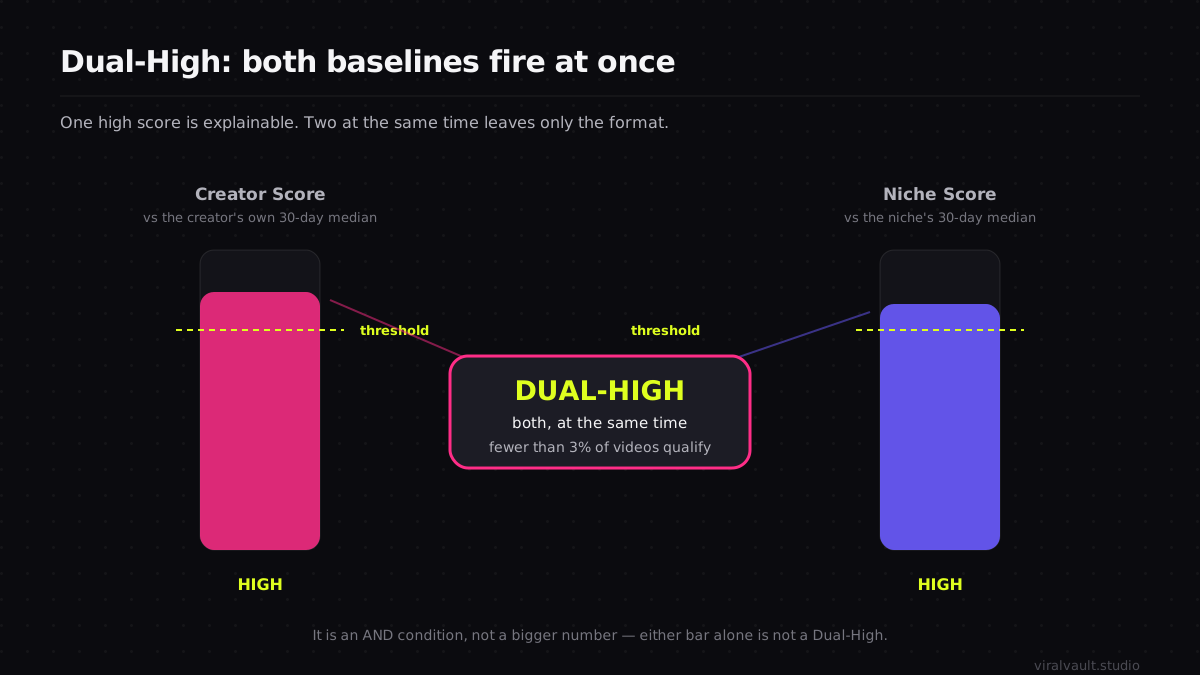
A Dual-High is a state a single video is in, not a score it earns. The question "what is Dual-High" has a one-line answer: a video is Dual-High when its Creator Score and its Niche Score are both high at the same time. The Creator Score measures the video against that creator's own 30-day median views — did it beat the account that posted it? The Niche Score measures the same video against the niche's 30-day median — did it beat the whole category? Either number can run high on its own for boring reasons. A Dual-High is the rarer case where both fire together.
That "both at once" is the entire definition, and it is what separates a Dual-High from an ordinary outlier. A video can post a massive Creator Score while its Niche Score stays flat, which usually means a loyal audience turned out for content that the wider niche shrugged at. A video can post a high Niche Score with a low Creator Score, which usually means a large account dropped a routine video that still towered over the category average. Neither of those is a Dual-High. The flag only lights up when the structure is strong enough to beat both reference points simultaneously — and that is a much taller order than beating one.
Why a viral score tool for social media posts ranks it highest
Once you understand the AND condition, the reason a Dual-High sits at the top of the signal stack becomes obvious: it has eliminated the two most common explanations for a big number. It cannot be written off as a community-pull story, because the niche baseline is high too — strangers outside the audience responded. It cannot be written off as a mega-account ceiling effect, because the creator baseline is high too — the video beat its own account's normal. Strip away both of those, and the only thing left holding the result up is the structure of the video itself.
That is exactly the thing a creator can copy. Audience size does not port to your account. Community loyalty does not port to your account. But a hook shape, a reveal, a pacing beat — the structural DNA of the video — ports to any niche that runs the same human attention. A Dual-High is the cleanest evidence a viral score tool for social media posts can give you that a format, not a fluke, is doing the work. That is why ViralVault treats it as the strongest signal short-form research can surface, flagging it distinctly rather than burying it inside a single blended number. Platforms hint at the surrounding context — TikTok publishes fragments of search and trend behavior, as TikTok's own newsroom has documented around Creator Search Insights — but a public feed shows you broad topics, not whether one specific video beat both its creator and its category at once.
The thresholds back up the framing. A Dual-High has to beat its creator's own median five times over and the niche median three times over — not a marginal edge but a different tier of result. A shortlist of Dual-Highs in your lane is therefore a categorically better use of a research hour than scrolling a feed hoping a pattern jumps out, because every item on it has already passed a test that the overwhelming majority of videos fail.
ViralVault tip: Treat a Dual-High as a "stop scrolling" alarm, not a nice-to-have. When the flag appears, open the format and capture the structural beat — the hook, the reveal, the pacing — before the copies arrive, because the runway on a fresh Dual-High is usually days, not weeks. The full lifecycle method for acting in that window is in the viral content discovery guide.
The math behind the flag
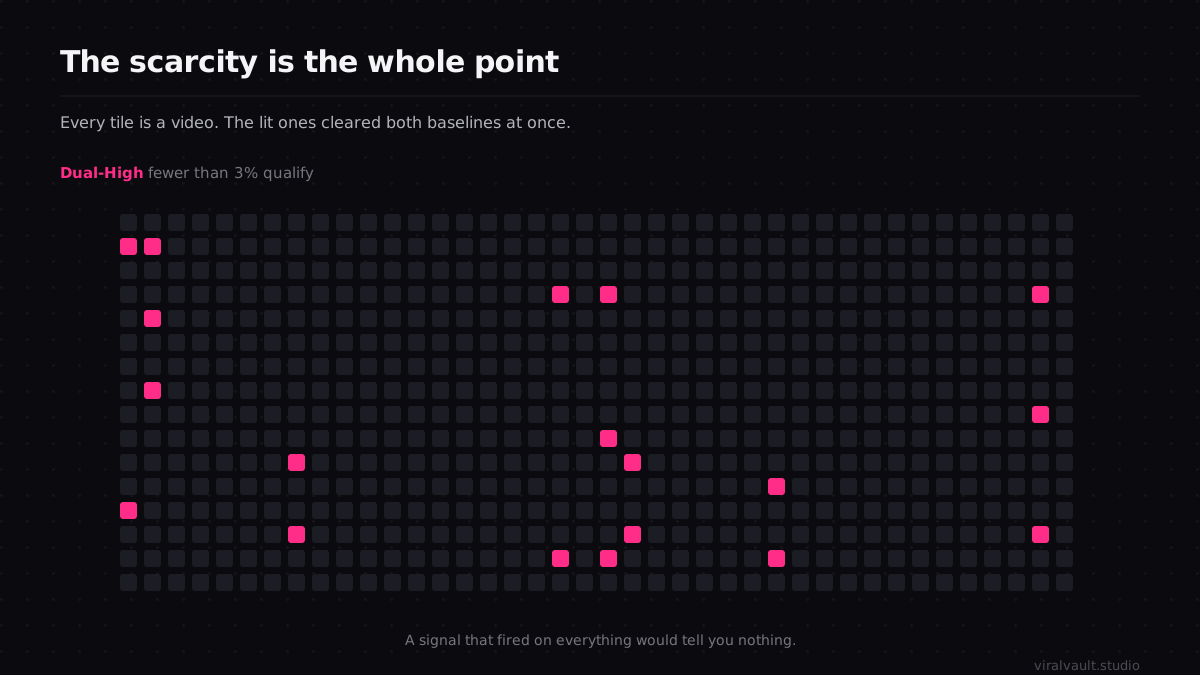
The flag sits on top of the two scores rather than replacing them, so the math is deliberately simple to read. Each baseline uses the median rather than the mean, computed across a rolling 30-day window, which means one freak hit cannot poison the reference and make everything after it look weak by comparison. A video becomes a Dual-High when both scores clear their thresholds together — Creator Score and Niche Score high at the same time — and the thresholds are set high enough that the flag stays rare on purpose. 1,400+ videos in the ViralVault index have cleared both, and that scarcity is the feature, not a limitation: a signal that fired on everything would tell you nothing.
The same honesty rules that govern the two scores govern the flag. A creator with too few recent videos has no stable baseline, so the Creator Score returns null and a Dual-High cannot be declared from a guess — the system would rather show you an honest gap than a confident wrong answer. A niche too thin to trust gets an approximate Niche Score, marked so you know to weight it carefully. The line-by-line derivation of how the medians are computed and where the thresholds sit lives in the companion breakdown on how the Outlier Score works; this article defines the flag those numbers produce, not the arithmetic underneath it.
How to find and act on Dual-High videos
Knowing the definition only pays off if it changes what you do on a Monday morning. Start by ranking your niche instead of scrolling your feed, then look specifically for the videos carrying the Dual-High flag rather than the single biggest view counts. A raw view count cannot tell you whether both baselines fired; the flag already did that work, so it is the fastest filter you have for separating a real format breakout from a distribution fluke.
When you find one, save the structure, not the post. The flag confirms a format mattered; your job is to capture why — the exact hook, the reveal, the pacing — and bank it as something you can rebuild in your own niche. Direction matters too: a fresh Dual-High that is still climbing has runway, while one that has gone flat with a dozen copies already in the feed is a peak you are late to. Read the flag together with momentum and saturation and you will know not just that a format won, but whether it is still worth making. You can run both scores and see Dual-Highs on any TikTok in your niche free at viralvault.studio.
Frequently Asked Questions
Q: What is a Dual-High video? A: A Dual-High is a video whose Creator Score and Niche Score are both high at the same time — it beat both the account that posted it and the niche it sits in. Because neither audience size nor community loyalty alone explains the result, the only thing left to credit is the format itself, which is why it is treated as the strongest virality signal in short-form video.
Q: How rare is a Dual-High? A: Rare on purpose. 1,400+ videos in the ViralVault index have qualified as Dual-High, because both baselines have to clear high thresholds at the same time — a Creator Score of 500 and a Niche Score of 300. That scarcity is the point: a signal that fired on everything would be useless.
Q: Why is a Dual-High the strongest virality signal? A: The Dual-High virality signal earns the title because it has eliminated the two most common false explanations for a big number. A high creator baseline rules out a mega-account ceiling effect; a high niche baseline rules out a community-pull fluke. With both removed, the structure of the video is the only thing left holding the result up — and structure is the one part of a viral video you can actually copy to your own account.
Make the Dual-High flag your research filter
What makes a video Dual-High is simple to state and hard to fake: it cleared two baselines at once, beating both its own creator and its entire niche, which is why only 1,400+ videos in the whole index have qualified. That AND condition is what makes the Dual-High a genuine format signal rather than a vanity number — it strips out audience size and community loyalty and leaves only the structure you can steal. Stop trying to reverse-engineer which big numbers are real; let a viral score tool for social media posts flag the Dual-Highs for you and start from a shortlist that has already passed the test. Spin up a free account and find the next Dual-High in your niche at viralvault.studio.