TikTok Creator Search Insights Guide for Small Creators
TikTok now tells you exactly what people search and which topics have almost no videos answering them. Here's how small creators read that demand — and pair it with format discovery.
Picking a video topic from a hunch is the most expensive guess a small creator makes, because a topic nobody searches for caps your ceiling before you ever press record. The TikTok Creator Search Insights guide for small creators starts from the opposite premise: instead of guessing what an audience wants, you read what they are already typing into the search bar — and, just as usefully, which of those searches almost nobody has answered yet. That second part is the prize. A topic with heavy demand and thin supply is an open lane, and TikTok now hands creators a tool that points at those lanes directly inside the app. The catch is that knowing the topic is only half a winning video. By the end of this guide you will know exactly where Creator Search Insights lives, how to read demand and content gaps without inventing numbers, and how to pair a wanted topic with a proven format so the video does not just get found — it over-performs.
Table of contents
- What TikTok Creator Search Insights actually is
- Where to find Creator Search Insights and how to read it
- The Creator Search Insights guide: demand into topics
- Why TikTok search is becoming a real discovery surface
- The gap Creator Search Insights leaves: topic vs format
- Pairing search demand with format discovery
- Frequently Asked Questions
What TikTok Creator Search Insights actually is
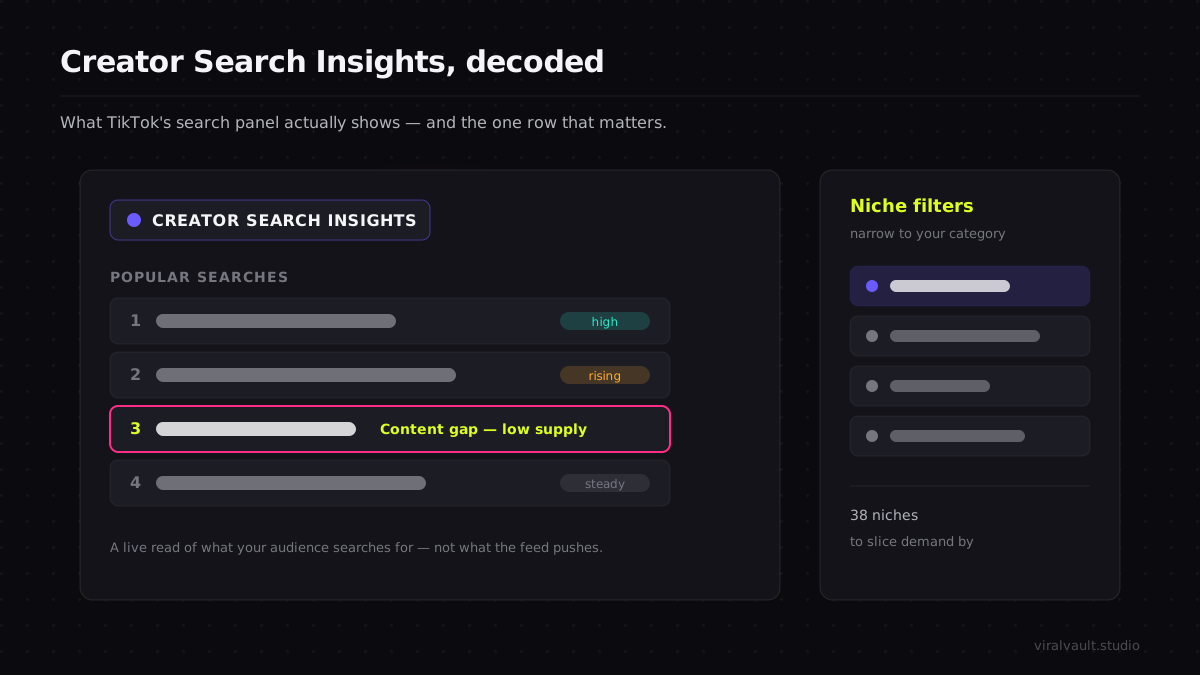
Creator Search Insights is TikTok's in-app tool for seeing what people search on the platform. Rather than guessing which questions your niche is asking, you get a view into the actual terms being typed into the search bar — organized by topic, sortable by category, and filterable down to subjects relevant to the content you already make. TikTok built it for one reason: creators kept making videos nobody was looking for, and the platform had the search data to fix that.
The single most valuable thing it surfaces is the content gap. Alongside popular searches, the tool flags topics where demand is high but the supply of videos answering that demand is low — TikTok labels these as searches with comparatively little content. A content gap is the clearest signal a small creator can get, because it points at an audience that is actively looking and not being served. You are not fighting a thousand other videos for the same query; you are often one of the few answering it at all.
There is a second layer worth understanding. The tool can be filtered to show topics that fit your niche, and it surfaces what TikTok describes as recommended or relevant searches for creators in a given space — so a cooking creator and a finance creator do not see the same generic list. This makes the demand readable in context. A search term that looks small in absolute terms might be enormous inside a narrow niche, and the in-niche framing is what lets you tell the difference.
What it is not is a magic ranking machine. Creator Search Insights tells you that a topic is wanted. It does not tell you how to structure the video, which hook will stop the scroll, or whether any particular video already made on that topic genuinely over-performed or just got lucky. That distinction matters more than it sounds, and the back half of this guide is built around it.
Where to find Creator Search Insights and how to read it
Access lives inside TikTok itself. Most creators reach the tool by searching for the term "Creator Search Insights" directly in the TikTok search bar, which opens the dedicated interface, or by navigating through the creator-focused tools in the app. Because TikTok periodically moves features around and rolls them out in stages, the exact tap path can shift — but searching the feature name by hand reliably surfaces it for accounts that have it. Always confirm the current location against TikTok's own help resources rather than assuming a fixed menu position.
Once inside, you are looking at three things, and reading them in order keeps you honest. First, the popular searches: the terms people in a category are actively typing. Second, the category and niche filters, which narrow that list to your lane so you stop comparing your cooking niche against the entire platform. Third, and most important, the content-gap signal — the topics flagged as having high interest and comparatively few videos answering them.
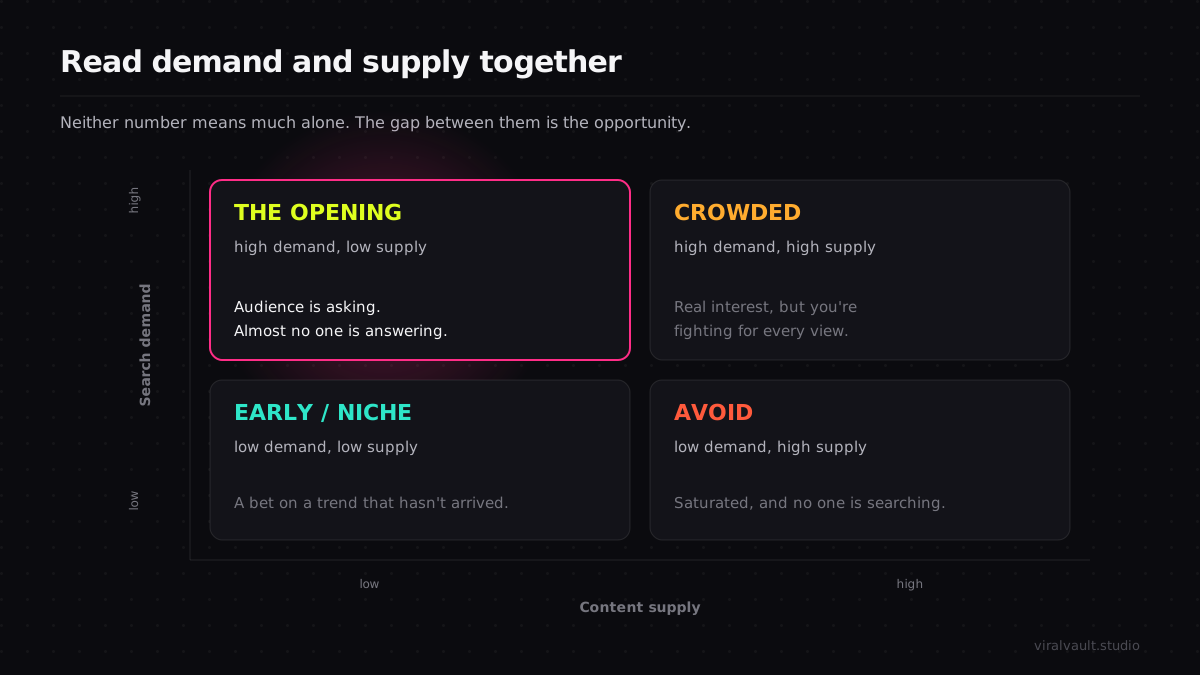
The discipline is to read demand and supply together, never apart. A high-demand topic with heavy supply is a popularity contest you may lose as a small account. A high-demand topic with thin supply is the opening. Mentally, every term you scan sorts into one of four boxes.
| Demand | Supply | What it means for a small creator |
|---|---|---|
| High | Low | The opening — make this first, you may be one of few answers |
| High | High | Real audience, crowded field — needs a sharper angle to break through |
| Low | Low | Niche or early — worth a test, not a tentpole |
| Low | High | Avoid — you are competing hard for an audience that is small |
Notice what the tool does not give you: it shows relative interest and relative content levels, not a precise monthly search volume you can paste into a spreadsheet. Treat the readings as directional. The right mental model is "this topic is clearly wanted and clearly under-served," not "this topic gets exactly N searches." Inventing a hard number where TikTok only gives you a relative signal is the fastest way to make a confident wrong decision.
The TikTok Creator Search Insights guide for small creators: demand into topics
A list of wanted topics is not a content plan until you turn it into one. The workflow that turns Creator Search Insights from a curiosity into a posting engine has a few repeatable moves, and none of them require a big following to work.
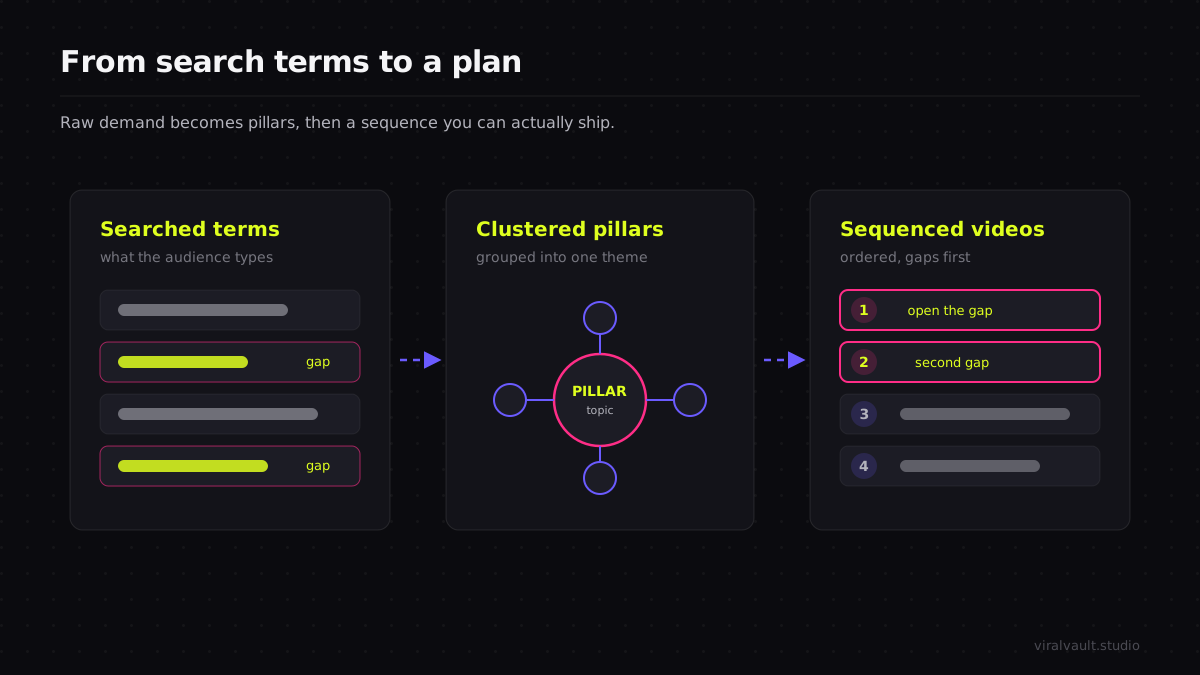
Start by filtering to your niche and pulling every content gap you can find — the high-demand, low-supply terms. These go at the top of a running list. A content gap is the highest-upside thing a small account can act on, because TikTok's search and For You surfaces both reward content that satisfies a query nobody else is satisfying. You are not asking the algorithm to choose you over a thousand competitors; you are filling a hole it already knows exists.
Next, cluster the terms. Ten related searches around the same theme are not ten videos — they are one strong pillar topic with nine supporting angles. A creator in personal finance might see separate searches for a budgeting method, a specific app, and a beginner mistake, and recognize them as one cluster about getting started with money. Making the pillar plus the satellites compounds: each video reinforces the others in search, and the account starts to read as the authority on that cluster.
If you want this in CTA form: open Creator Search Insights, pull your three clearest content gaps, then run each one through a format check before you script — a free ViralVault search shows you which structures are over-performing on that exact topic right now, so you build on a proven shape instead of a blank page.
Then comes the move most creators skip: match the search term to your actual title, on-screen text, and spoken hook. TikTok's search reads the words you say and show, not just your caption. If the gap is a specific phrase, that phrase belongs in your first line of on-screen text and out of your mouth in the first few seconds. This is the heart of TikTok SEO for creators — not keyword stuffing, but making sure the video clearly answers the exact question being asked, in the words it is being asked in.
Finally, sequence by upside, not by mood. Make the high-demand, low-supply topics first, because that is where a small account converts effort into reach most efficiently. The high-demand, high-supply topics can wait until you have a sharper angle or more credibility in the niche. Treating the search data as a priority queue — rather than a brainstorm you cherry-pick from — is what separates creators who grow from search and creators who just browse the tool.
Why TikTok search is becoming a real discovery surface
The reason any of this matters is that search on TikTok is no longer an afterthought. A growing share of users — younger users especially — open TikTok to look something up the way an earlier generation opened a search engine, typing questions about products, places, recipes, and how-tos directly into the app. TikTok has leaned into that behavior, and Creator Search Insights is one of the clearest signals of the bet: the company is actively helping creators make content that matches what people search, which it would not do if search were a sideshow.
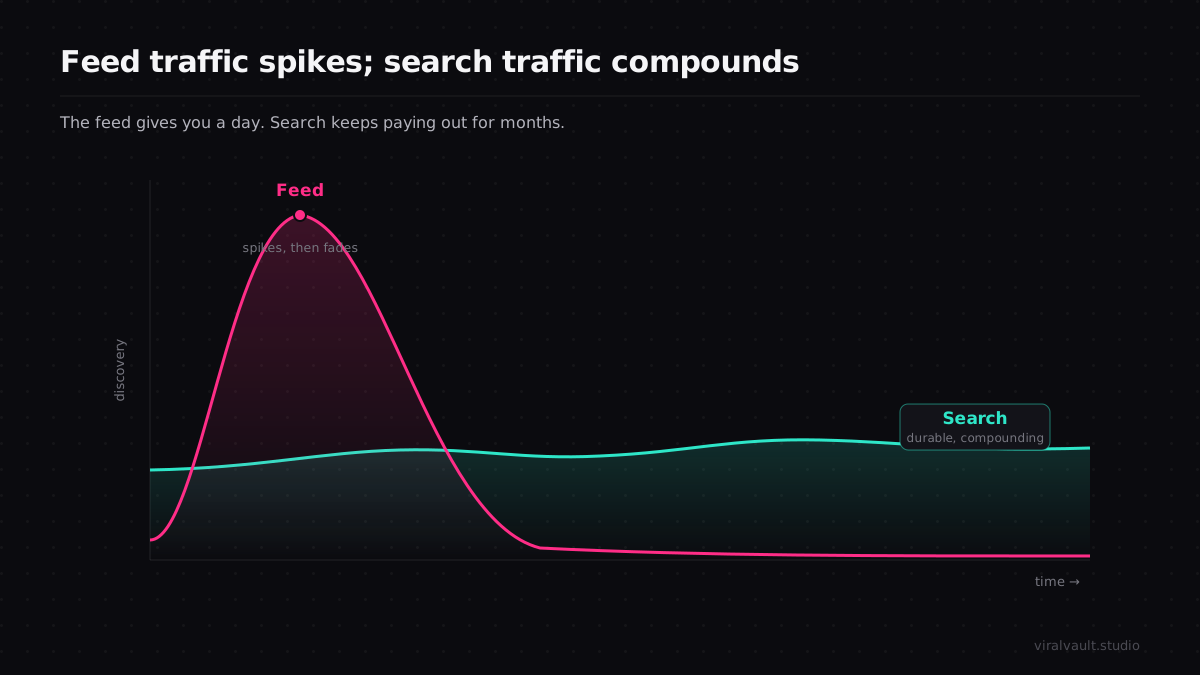
That shift changes the math of TikTok search demand for a small creator. A video on the For You page lives a fast, front-loaded life and then fades. A video that ranks for a search term keeps getting found long after the initial push, every time someone types that query. Search traffic is durable in a way feed traffic is not. For an account without a large following, that durability is the difference between starting from zero on every upload and building a back catalog that quietly keeps working.
It also rewards specificity, which favors small accounts. The For You page often rewards broad, mass-appeal content where big accounts have a structural edge. Search rewards the video that most precisely answers a narrow question, and a focused small creator can win that on relevance alone. The platform's own framing of this direction is documented through TikTok's newsroom, which has covered how search and discovery are evolving on the app. The practical takeaway: a niche account that consistently answers under-served searches can build real, compounding reach without ever landing a single mega-viral hit.
There is a catch that keeps creators from over-rotating, though. Search demand tells you a topic has an audience. It says nothing about whether your video will be the one that satisfies that audience or the one that gets ignored, because satisfaction on TikTok is decided in the first few seconds by the hook and the structure — not by the topic alone. A wanted topic with a weak hook still dies. Which is exactly the gap the next section is about.
The gap Creator Search Insights leaves: topic vs format
Here is the limitation stated plainly: Creator Search Insights answers what topic, never what format. It is a demand map. It tells you a subject is wanted and under-served, and there its job ends. It does not tell you the shape of the video that will win the topic, and on TikTok the shape is usually what decides the outcome.
Two creators can make a video on the identical searched topic, with the identical keywords in the title, and get wildly different results. One opens with a flat "today I'm going to talk about budgeting" and loses the viewer in two seconds. The other opens with a reverse-order reveal — the result first, then the steps — and holds them to the end. Same topic, same search term, opposite performance. The difference was entirely structural: the hook, the pacing, the way the payoff was withheld. None of that is visible in a demand tool.
There is a second blind spot. Even when you study videos already made on a wanted topic, raw view counts will mislead you about which structures actually work. A video on your topic with two million views might have done that because the creator already had two million followers — the format may be forgettable. A video on the same topic with eighty thousand views on a small account could be the real lesson, because something about its structure broke through a ceiling it had no business breaking. Creator Search Insights does not separate those two stories, and neither does a plain view count. You need a baseline to tell a genuine format breakout from a big account's ordinary day.
This is precisely the problem ViralVault was built to solve. The ViralVault index tracks 23,000+ videos across 7,800+ creators and rescores them daily, scoring each video against two reference points at once: how that creator normally performs, and how the niche normally performs. That dual-baseline read is what turns "this topic gets views" into "this specific structure over-performs on this topic." Search demand gives you the where; the score gives you the how. If your videos already pick good topics but still stall, the reasons are usually structural — the breakdown in why your TikTok content is not going viral maps the most common ones.
Pairing search demand with format discovery
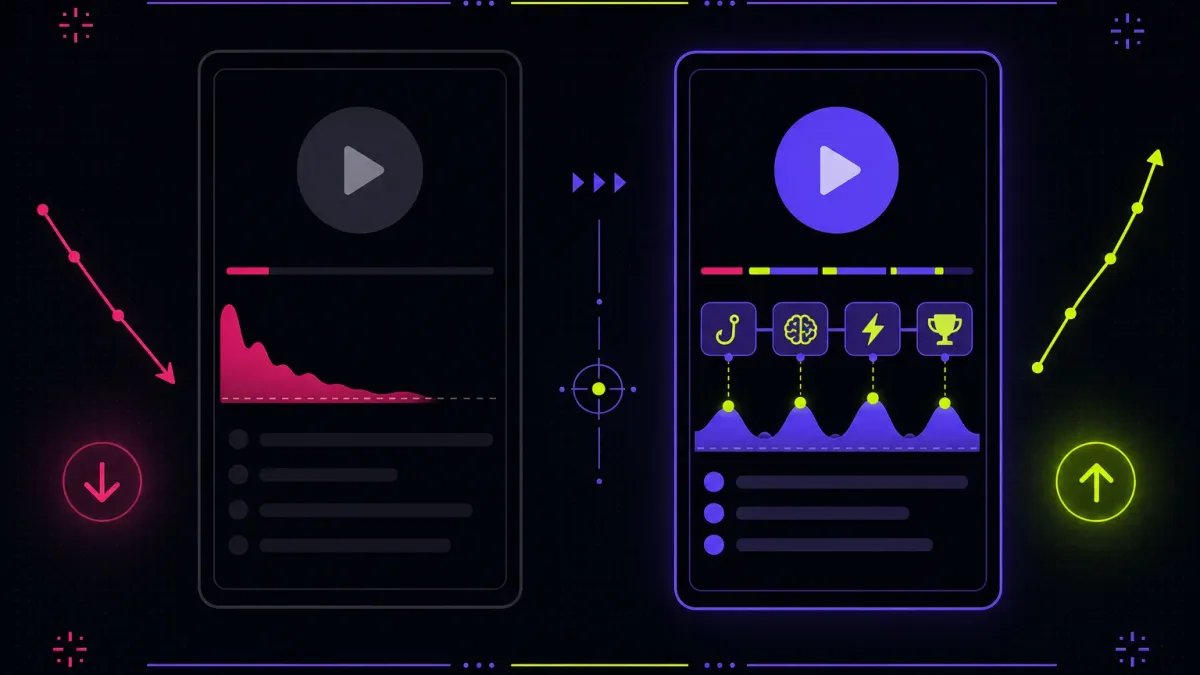
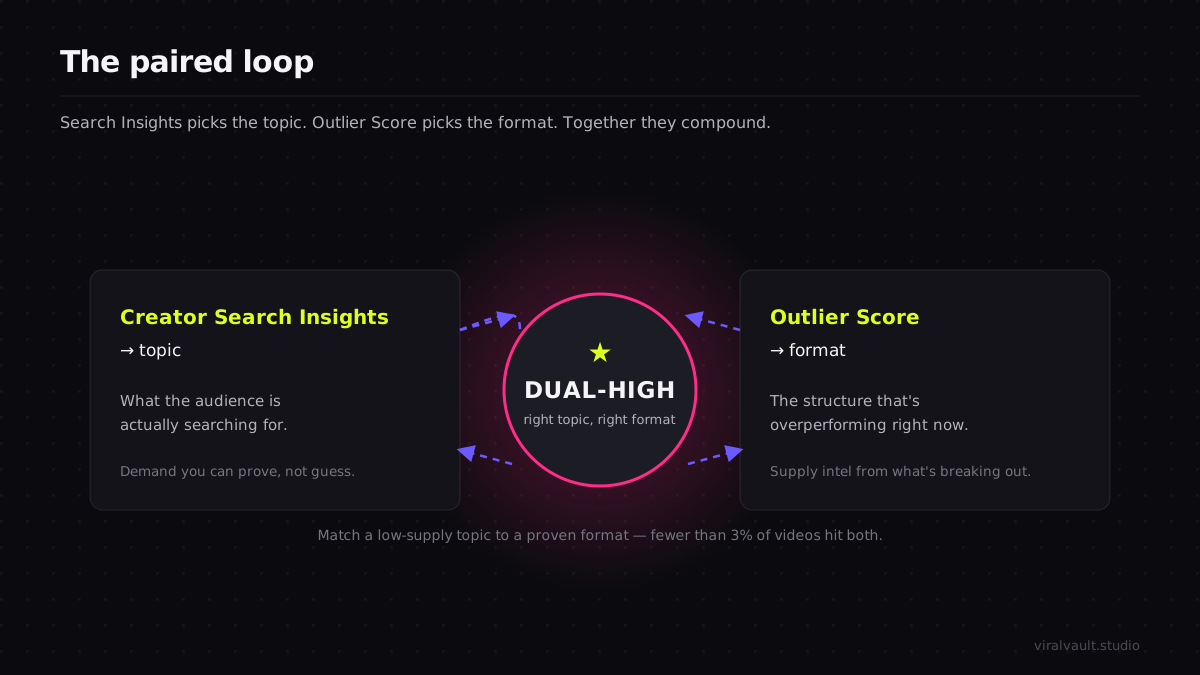
The complete loop is two tools doing two jobs. Creator Search Insights tells you which topic to make. A discovery tool with a dual-baseline score tells you which structure to make it in and whether a given video on that topic genuinely over-performed. Run them together and you stop choosing between a wanted topic and a winning format — you get both.
In practice the loop runs like this. Pull a content gap from Creator Search Insights — a topic with clear demand and thin supply. Then take that topic into ViralVault and look at the videos in that niche, sorted by Outlier Score. The Outlier Score is the sum of two parts: a Creator Score measuring a video against that creator's own 30-day median views, and a Niche Score measuring it against the niche's 30-day median. When both light up at once, ViralVault flags a Dual-High — the strongest virality signal in short-form video, rare enough that only 1,400+ videos in the whole index have cleared both. The full mechanism, including how thin niches and cold-start creators are handled, is broken down in how the Outlier Score works.
Reading those together changes what you copy. Instead of imitating the topic — which everyone reading the same search tool will also do — you imitate the structure that is proven to over-perform on that topic: the hook shape, the reveal order, the pacing of the payoff. Topics saturate; structures travel. A reverse-order reveal that pops on a finance gap works on a cooking gap too, because the tension it creates has nothing to do with the subject. You pair the wanted topic with the portable structure, and that combination is far stronger than either alone.
ViralVault tip: When you find a content gap worth committing to, set a Watchlist on that niche. If the niche's average Outlier Score jumps 50% or more in 24 hours, you get a niche-pop alert the morning the surge starts — so you catch a rising structure on an already-wanted topic while it is still early, not after the feed fills with copies. See how alerts work.
The tooling keeps the loop fast. Once you have the topic and the proven structure, the AI Hook Writer spins five hook variants — contrarian, listicle, POV, curiosity, and meme — matched to the format, so you go from a content gap to a scripted opener in minutes rather than agonizing at a blank page. If you run TikTok in the browser, the Chrome extension overlays Outlier Scores directly on the videos you are already watching which means you can validate a topic's best structure without leaving the app where you found the demand. Save the winners to a board, note the structural beat rather than the subject, and the board becomes a running shortlist of proven shapes ready to drop onto the next gap you find.
Run this paired routine for a few weeks and the two halves start reinforcing each other. Search demand keeps you pointed at topics with a guaranteed audience; the dual-baseline score keeps you building those topics in shapes that are proven to travel. Most small creators have only ever had the first half — a vague sense of what is popular — and have been guessing at the second. Closing that loop is what turns a demand tool into a growth system. For the wider playbook on catching rising structures before they saturate, the viral content discovery guide walks through the full method.
Frequently Asked Questions
Q: What is TikTok Creator Search Insights and where do I find it? A: It is TikTok's in-app tool that shows what people search on the platform, organized by topic and filterable to your niche. Most creators open it by typing "Creator Search Insights" into the TikTok search bar or finding it among the creator tools. Because TikTok moves features around, confirm the current location against TikTok's own help resources.
Q: How do small creators use Creator Search Insights content gaps? A: A content gap is a topic with high search demand but few videos answering it. Pull your niche's gaps first, cluster related terms into one pillar with supporting angles, then place the exact search phrase in your title, on-screen text, and spoken hook. Make the high-demand, low-supply topics first — that is where a small account converts effort into reach most efficiently.
Q: Is TikTok search really worth optimizing for as a small account? A: Yes. A growing share of users open TikTok to look things up, and search traffic is durable — a video that ranks keeps getting found long after the feed push fades. Search also rewards precise answers to narrow questions, which favors focused small creators over broad mass-appeal content where big accounts hold the structural edge.
Q: Does Creator Search Insights tell me which video format will win? A: No. It is a demand map — it tells you a topic is wanted, not how to structure the video. Two creators on the same searched topic can get opposite results because the hook and structure decide the outcome. Pair it with a dual-baseline tool like ViralVault to see which formats genuinely over-perform on that topic, not just which got views.
Q: How do I combine search demand with format discovery? A: Pull a content gap from Creator Search Insights, then take that topic into ViralVault and sort the niche by Outlier Score. Copy the structure of the Dual-High videos — the hook shape and reveal order — rather than just the subject. Search demand picks the topic with an audience; the dual-baseline score picks the shape that travels. Together they beat either alone.
Turn search demand into videos that over-perform
The lesson compresses to one move: read the demand, then read the format. The TikTok Creator Search Insights guide for small creators gives you the first half for free — a map of exactly which topics your audience is searching and which of those almost nobody is answering. That alone puts you ahead of every creator still picking topics from a hunch. But a wanted topic built in a weak structure still stalls, which is why the second half matters just as much: pairing each content gap with the format that is proven to over-perform on it, read against a dual-baseline score so you copy structures that travel instead of view counts that mislead. Pick the under-served topic with Creator Search Insights, find the winning shape with the index, and ship the version that gets both found and watched — start free at viralvault.studio.