Why Your TikTok Content Isn't Going Viral — and the Data-Backed Fix
You copied the audio, the caption, the cut — and it still flopped. The reason is structural, not cosmetic. Here's the data-backed fix, in five steps.
You copied the audio, matched the caption style, mirrored the thumbnail — and it still flopped. The single biggest reason why TikTok content not going viral keeps happening is not your posting time, your hashtags, or the algorithm having a grudge. It is format mismatch: you copied the surface of a video that worked, not the structure underneath that actually carried it. Across the 23,000+ videos in the ViralVault index, that mismatch is the most common cause of an underperforming post — more common than bad timing, weak audio, or thin hashtags combined. The audio is just the paint. The structure is the engine. When you replicate the paint and skip the engine, the For You page reads your video as a copy that does not deliver, and it never leaves the gate. This playbook breaks down the four real reasons your videos stall, then gives you a five-step routine to fix it.
Table of contents
- The real reason: format mismatch, not timing
- The other causes of TikTok not getting views
- Step-by-step: how to fix why TikTok content not going viral
- What changes once you fix the structure
- Frequently Asked Questions
- The fix for content that won't go viral
The real reason: format mismatch, not timing
A viral video is built from layers. On top sits the surface — the trending sound, the on-screen caption, the cover frame. Underneath sits the structure: the order information is revealed, where the payoff is withheld, how the first two seconds set a question the rest of the video answers. Creators see the surface because the surface is visible. The structure is invisible, so it gets skipped. That skip is format mismatch, and it is why a video that looks identical to a hit can pull a fraction of the views.
Here is the mechanism. The For You page does not rank a video on how closely it resembles a trending one. It ranks it on retention and completion — did viewers stay, did they finish, did they re-watch. The structure is what produces those behaviors. A reverse-order reveal creates tension that holds attention; a two-second visual hook earns the next eight seconds; a withheld payoff drives the re-watch. Copy the sound but flatten the structure, and retention collapses. The FYP reads a low completion rate and stops distributing, regardless of how on-trend the audio is.
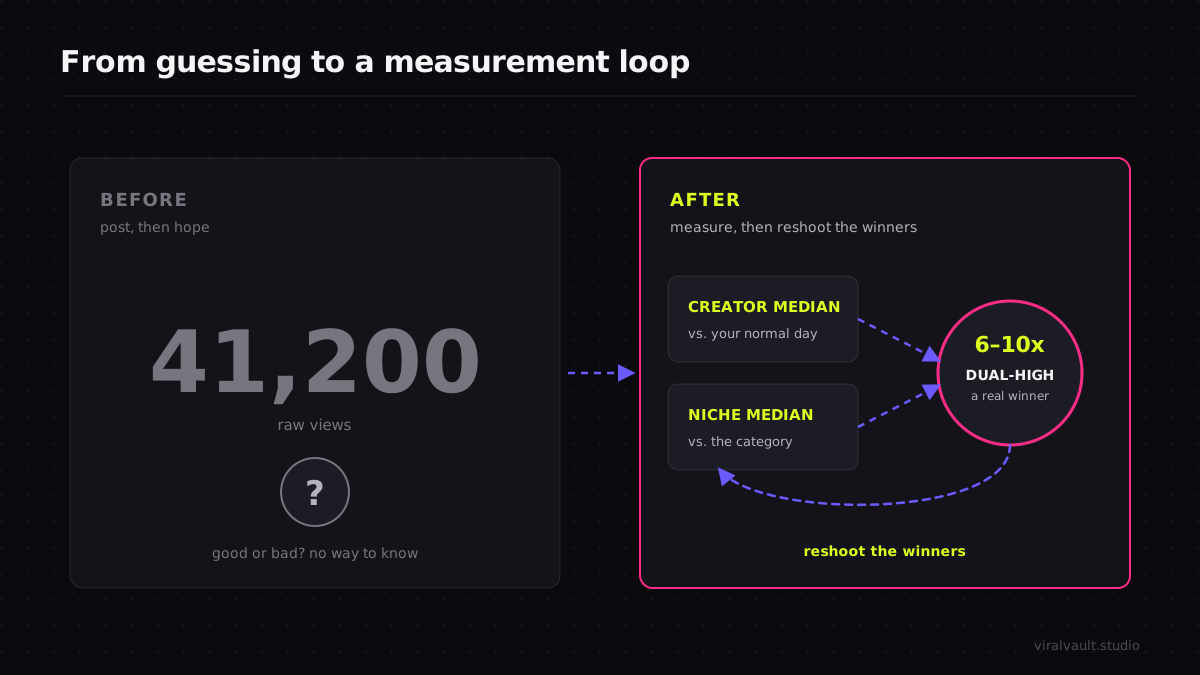
This is measurable, which is the whole point. The ViralVault index tracks 23,000+ videos across 7,800+ creators and rescores them daily, so every video can be scored against two baselines at once: how the creator normally performs and how the niche normally performs. That dual baseline is what separates a structural breakout from a video that merely borrowed a popular sound. When you study the original through that lens, the structure stops being invisible — you can see exactly which beats did the work, and copy those instead of the paint.

The reframe is simple: stop asking what a viral video was about and start asking how it was built. Topics saturate; structures travel. A reverse-order reveal that pops in a finance niche works just as well in cooking or fitness, because the tension it builds has nothing to do with the subject. Steal the recipe, not the dish.
The other causes of TikTok not getting views
Format mismatch is the largest cause, but three others compound it, and each one is a fixable measurement error rather than a creative failure.
The first is having no baseline. Most creators judge a video by raw view count, which is the one number that hides the thing you most need to know. Forty thousand views feels like a flop next to a creator who once hit two million — but if your 30-day median is twelve thousand, that "flop" did more than 3x your normal numbers and the format is worth repeating. Raw views with no reference point send you abandoning structures that were actually working and chasing ones that only looked big because a large account posted them. The fix is to judge every video against your own median and the niche median, never against a vanity ceiling. How the Outlier Score works breaks down the exact math, including how new creators and thin niches are handled so the number stays honest.
ViralVault tip: Before you write off a video as a failure, score it. If it cleared your 30-day median by 2x or more, the format worked even if the raw count looks small — keep that structure and reshoot it. ViralVault runs the Creator Score on any TikTok in your niche free, no card required, at viralvault.studio.
The second is chasing a saturated format. By the time a format is obvious enough that you noticed it, the algorithm has often already amplified it to its peak and the feed is filling with copies. A rising format with few clones is wide open; the same format sitting next to a dozen lookalikes is one you are already late to, no matter how strong the number looks. Estimate runway by counting how many near-identical videos already exist before you commit a shoot to it. The full early-detection method lives in the viral content discovery guide.
The third is a weak hook. Even a perfect structure dies if the first two seconds do not earn the next eight. The FYP gives every video a short audition window; if the open does not create a question or a reason to stay, completion craters and distribution stops before the structure ever gets a chance to work. TikTok's own newsroom has documented how watch time and completion shape what the system surfaces — the hook is not decoration, it is the gate every other beat sits behind.
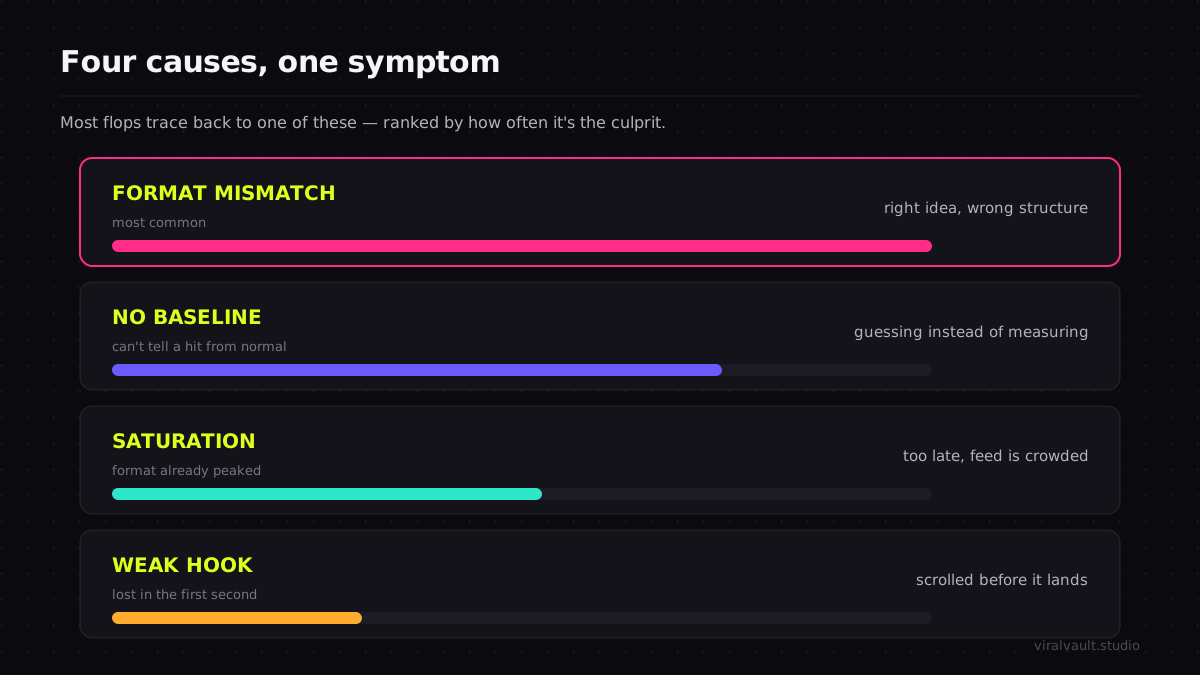
These four rarely act alone. A video copies the surface (mismatch), gets judged by raw views (no baseline), lands in a crowded format (saturation), and opens soft (weak hook). The fix below addresses all four in one pass.
Step-by-step: how to fix why TikTok content not going viral
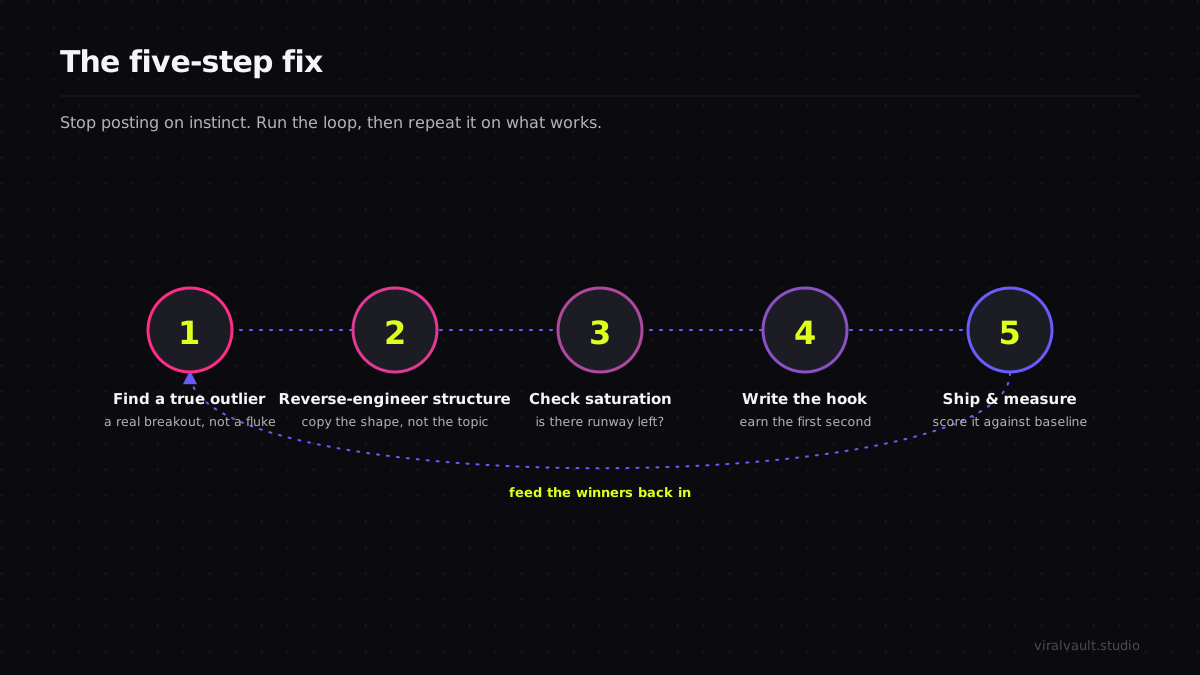
This routine takes about twenty minutes per video idea and is built to catch all four failure modes before you shoot, not after the post stalls.
Run each idea through a free ViralVault search before you commit a shoot to it — score the format against both baselines so you build on a structure proven to travel, not a hunch.
Step 1: Find a true outlier, not a big-account flex
Start from a baseline instead of the For You page. Open the Today tab, which curates what is over-performing across 12 niches and rescores them daily, and filter to your niche. Sort by Outlier Score and look for a Dual-High — a video that beats both its creator's 30-day median and the niche median at once. 1,400+ videos in the index have cleared both baselines, so a shortlist of them is a far better use of an hour than scrolling. A high Creator Score alone is a community-pull story; a high Niche Score is a format story. You want the format stories, because formats are the thing you can actually copy and ship.
Step 2: Reverse-engineer the structure
Watch the outlier three times with the sound off the second and third pass. Ignore the audio and the caption entirely and map the skeleton: where is the hook, what question does it plant in the first two seconds, in what order is information revealed, and where is the payoff withheld to drive completion or a re-watch. Write the structure down as a sequence of beats — "result first, then the three steps that produced it, payoff held to the final frame" — not as a description of the topic. This is the single step most creators skip, and skipping it is the definition of format mismatch. The audio is the paint; this skeleton is the engine you are actually copying. Capture the recipe, and it will port to your subject cleanly.
Step 3: Check saturation before you commit
A great structure copied too late still flops, so measure the runway before you shoot. Scan your niche for how many near-identical videos already exist around this format. A rising Outlier Score with almost no clones is wide open and worth a same-day shoot. A rising score sitting next to a dozen lookalikes means the format is peaking or already saturated, and your version will land as the nine-hundredth copy the feed has seen this week. If the format is crowded, do not abandon the structural beat — port it to a niche or angle where it has not been done yet. The structure travels; the saturation is local. Set a Watchlist on your niche so the next rising format reaches you the morning it starts, well before the copies arrive and the window closes.
Step 4: Write a hook that earns the next eight seconds
With the structure mapped and the runway confirmed, build the open. The first two seconds have one job: plant a question or a stake the rest of the video pays off. Match the hook to the structure you reverse-engineered — a reverse-order reveal wants a hook that teases the result, a listicle wants a hook that promises the count. Use the AI Hook Writer, which runs on GPT-4o mini and spins five variants across contrarian, listicle, POV, curiosity, and meme angles, then pick the one that fits your beat. For the craft behind sharper, higher-converting prompts, the hook writer prompt guide shows how to steer the output. A strong structure behind a soft hook never gets the audition; the hook is the gate.
Step 5: Ship same-day and measure against your median
Speed is the entire edge, so make your version the day you find the format, not the following week — a structure that was rising on Monday can be saturated by Saturday in a fast niche. After you post, ignore the raw view count and judge the video against your own 30-day median and the niche median. If it cleared either baseline by 2x or more, the structure worked; keep it, refine the hook, and reshoot the format with a new subject. If it underperformed both baselines, the mismatch is still somewhere in the skeleton — re-watch the original, find the beat you flattened, and fix that specific one. This closes the loop: you are no longer guessing why a video flopped, you are reading exactly where the structure broke and patching it.
What changes once you fix the structure
The shift is from guessing to diagnosing. Before, a flop was a mystery and the next video was a fresh roll of the dice. After, every post is measured against a baseline, so you know within a day whether the format worked — independent of whether the raw count looks big. That feedback turns posting into a system: structures that beat your median get reshot, structures that miss get autopsied for the broken beat, and your board fills with proven skeletons faster than you can use them.
The compounding effect matters more than any single hit. A swipe file of structures — captured as beats, not topics — keeps paying out long after the original sound cools, because those beats port across niches. The creators who consistently move numbers are rarely more creative than the ones who stall; they are running a tighter measurement loop and copying engines instead of paint. Fix the format mismatch once and the routine carries itself.
If you run TikTok in the browser, the Chrome extension overlays Outlier Scores directly on the videos you are already watching so the whole diagnose-and-ship loop happens without a context switch.
Frequently Asked Questions
Q: Why is my TikTok content not going viral even though I copied a viral video? A: You likely copied the surface — the audio, caption, and cover — but not the underlying structure that drove retention. The For You page ranks on completion and re-watches, which the structural beats produce, not on how closely you matched the trending sound. Map the original's hook, reveal order, and withheld payoff, then rebuild those beats with your own subject.
Q: How do I know if a flop was really a flop or just a low view count? A: Judge it against your own 30-day median and the niche median, never against a vanity ceiling. A video that cleared either baseline by 2x or more succeeded structurally even if the raw count looks small. Score it before you abandon the format — raw views hide the creator-versus-niche context that tells you whether the structure actually worked.
Q: Does posting time or hashtags fix TikTok not getting views? A: Rarely. Across the 23,000+ videos in the ViralVault index, format mismatch — copying the surface, not the structure — is a far more common cause of underperformance than timing or hashtags. Fix the structure and the hook first; timing and tags are minor adjustments that cannot rescue a video the For You page has already stopped distributing for low completion.
Q: How do I fix TikTok engagement on videos that keep stalling? A: Run the five-step loop: find a true outlier, reverse-engineer its structure with the sound off, check saturation before shooting, write a hook that earns the first eight seconds, then ship same-day and measure against your median. Each step targets one of the four causes — format mismatch, no baseline, saturation, and weak hook — that stall most videos.
Q: What is format mismatch in plain terms? A: Format mismatch is replicating what a viral video looks like instead of how it is built. You match the trending audio and caption but flatten the structural beats — the reveal order, the tension, the withheld payoff — that actually held attention. The result looks on-trend but reads as a hollow copy, so retention drops and distribution stalls.
The fix for content that won't go viral
The answer to why TikTok content not going viral keeps happening is almost never the algorithm and almost always format mismatch — copying the paint instead of the engine. Stop matching audio and captions and start mapping structure: the hook, the reveal order, the withheld payoff. Judge every result against your median, not a vanity ceiling, so you know what worked. Check saturation before you shoot, and ship while the format is still rising. None of this is talent — it is a twenty-minute measurement loop you can run before every video. Spin up a free account, set a Watchlist on your niche, and start diagnosing exactly why your videos stall instead of guessing — begin at viralvault.studio.