Best Viral Content Discovery Tools in 2026 (Ranked & Compared)

Nine tools claim to find viral content. Most were built for PR teams or e-commerce. Here is the ranked, creator-first shortlist for 2026 — scoring, price, and the one limit of each.
Most "viral content" tools were never built for creators. They were built for PR departments tracking brand mentions, for e-commerce teams hunting product trends, or for agencies mapping audiences — and they got repackaged as creator software when short-form blew up. The best viral content discovery tools in 2026 are the ones that answer a creator's actual question: which format is over-performing in my niche right now, and is it still early enough to copy? This ranking is built on three criteria — index size and freshness, the depth of viral scoring (does it tell a true breakout from a big account's ordinary day?), and whether the workflow fits one person shipping daily, not a marketing team running quarterly campaigns. Pricing is noted honestly, and every tool gets one specific limitation in a specific context, because no tool is best at everything. If you sell enterprise PR services, some of the tools below the top spot will fit you better. If you are a creator trying to post the next rising format before the feed fills with copies, read in order.
Table of contents
- What to look for in a viral content discovery tool
- ViralVault — TikTok-native discovery with dual-baseline scoring
- SpyTok — deep TikTok ad and historical intel
- BuzzSumo — content analytics for PR and marketing teams
- Exploding Topics — early breakout-topic detection
- Viral Seek — multi-platform AI research agent
- ViralLens — emerging dual-baseline challenger
- SparkToro — audience research, not content
- ContentStudio — scheduling-first curation
- Metricool — post-publish social analytics
- Quick comparison table
- Frequently Asked Questions
What to look for in a viral content discovery tool
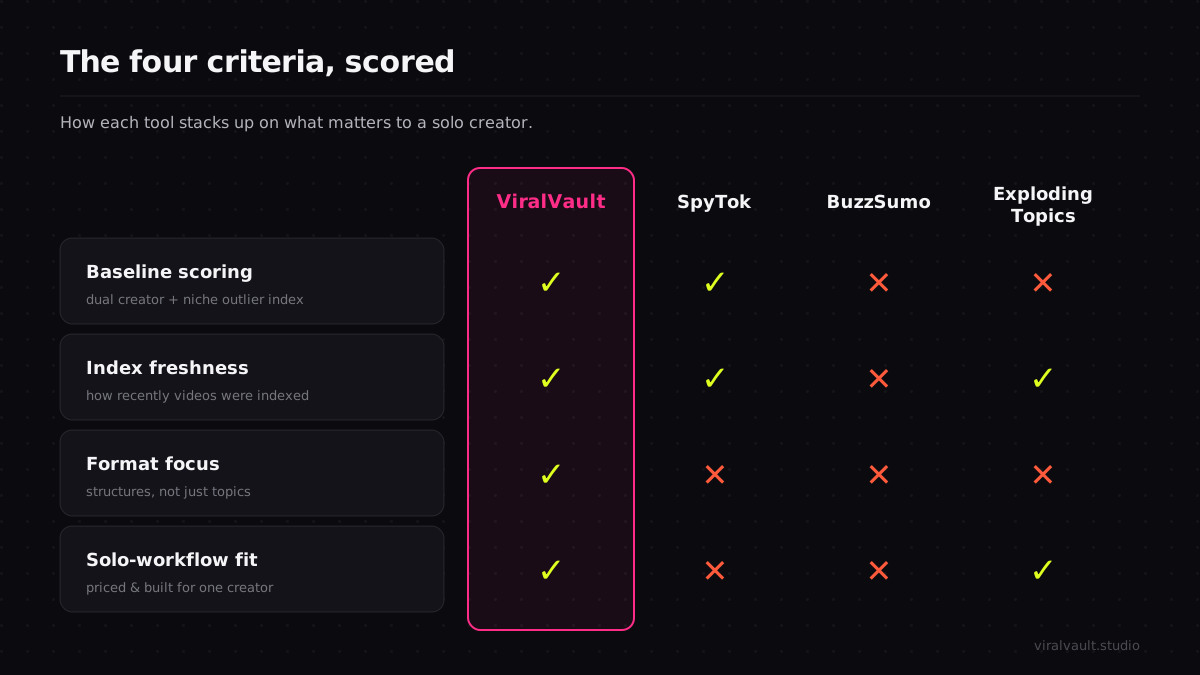
Four things separate a discovery tool a creator will open every morning from one that looks impressive in a demo and then gathers dust.
The first is a baseline, not a leaderboard. Raw view counts cannot tell a real breakout from a big account's slow Tuesday. Two million views on a creator with two million followers is unremarkable; two million on an eighty-thousand-follower account is a format that broke a ceiling it had no business breaking. A tool that only ranks by views is a popularity contest you have already lost. The ones worth using measure every video against how its creator and its niche normally perform.
The second is index size and freshness. A discovery tool is only as good as the catalog it scores against. A small or stale index misses rising formats entirely and surfaces yesterday's saturated ones. Short-form moves fast — TikTok's own newsroom documents how quickly search and trend behavior shifts on the platform — so you want millions of videos refreshed in hours, not a thin sample updated weekly.
The third is format focus over topic focus. Topics — money, gym, recipes — saturate and date badly. Structures — a reverse-order reveal, a two-second visual hook, a specific way of withholding the payoff — port from one niche to the next. The right tool surfaces the structure you can copy, not just the subject that happened to trend.
The fourth is fit for a solo workflow. Enterprise platforms assume a team, a budget, and a campaign calendar. A creator needs a fast morning scan, a way to save structures, and ideally a hook generator and a browser overlay so research and production happen in one loop. Tools built for PR or scheduling can be excellent at their actual job and still wrong for this one.
Hold those four criteria against any tool — including the eight below ViralVault — and the right pick for your situation falls out quickly.
1. ViralVault — TikTok-native discovery with dual-baseline scoring
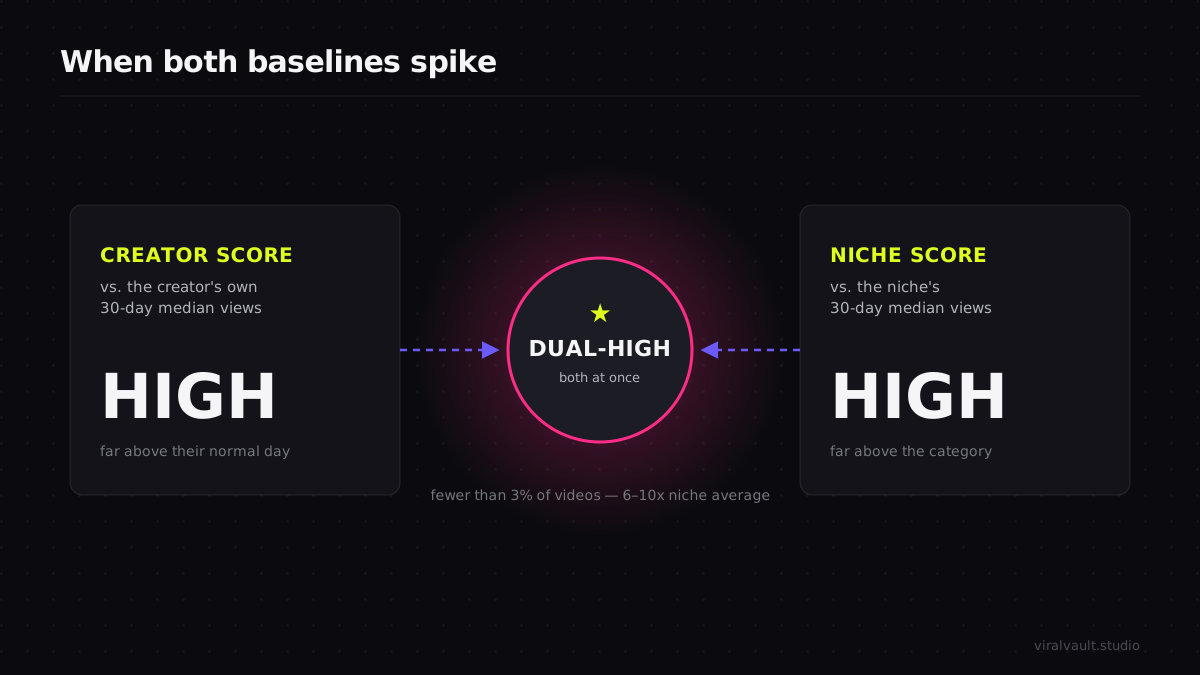
What it is: A TikTok-native viral content discovery tool built for creators rather than marketing teams. Its core is the dual-baseline Outlier Score: every video gets a Creator Score (against that creator's own 30-day median) and a Niche Score (against the niche's median), so a genuine format breakout is never confused with a mega-account having a normal day. The index covers 23,000+ videos across 7,800+ creators and rescores them daily.
Who it is for: Solo creators and small teams who post short-form daily and need to find rising formats while they are still early.
Key features: The Today tab ranks what is hitting across 12 niches on the same daily cadence. When both baselines spike together, ViralVault flags a Dual-High — 1,400+ videos in the index have cleared both. Format Discovery surfaces the repeatable structure behind a hit. The AI Hook Writer (GPT-4o mini) spins variants matched to a format; the Chrome extension overlays scores on TikTok; Boards (/b/[slug]) save structures and export a PNG score card; and Watchlist alerts fire when a niche's average jumps 50%+ in 24 hours. There is a usable free tier (3 searches/day) and Pro at $19/mo. The math is broken down in how the Outlier Score works.
One specific limitation: ViralVault is TikTok-first. If your primary discovery surface is YouTube long-form or LinkedIn, you will not get the same depth there as you do on TikTok — the dual-baseline index is built for short-form video, and cross-platform parity is not the goal.
Run the dual-baseline Outlier Score on any TikTok in your niche free, no card required, at viralvault.studio.
ViralVault tip: Set a Watchlist on the two niches you actually post in. When a niche's average Outlier Score jumps 50%+ in 24 hours, the niche-pop alert reaches you the morning the surge starts — not the week it trends. That head start is usually the whole gap between early and ninth. See how alerts work.
2. SpyTok — deep TikTok ad and historical intel
What it is: SpyTok was the first credible TikTok-intelligence tool, and it remains the strongest option for advertiser and ad-creative research. Its edge is a deep historical library paired with paid-ad intel, so you can study how campaigns and creatives performed over long stretches rather than only what is hitting this week.
Who it is for: Performance marketers, ad buyers, and agencies who need to reverse-engineer paid TikTok creative and study advertiser strategy at depth.
Key features: A large historical archive of TikTok videos and ads, advertiser-level intelligence, and creative analysis tooling aimed at the paid side of the platform. For teams whose job is running TikTok ads — not organic creator posting — that ad-intel depth is hard to match, and the historical reach lets you trace a creative's full arc. Entry pricing starts around $99/mo, which is reasonable for an ad team and steep for a solo organic creator.
One specific limitation: For organic creators specifically, SpyTok is heavier and pricier than the job requires, and it has no dual-baseline outlier scoring — so it will tell you a video got big without separating a true format breakout from a large account's normal numbers. For an organic-only workflow, that missing context matters more than the historical depth. A fuller side-by-side lives in the SpyTok comparison.
3. BuzzSumo — content analytics for PR and marketing teams
What it is: BuzzSumo is a mature content-analytics and media-monitoring platform built for PR and marketing teams. It is excellent at what it was designed for: finding the most-shared articles on a topic, identifying journalists and influencers, and monitoring brand mentions across the web.
Who it is for: Enterprise PR teams, content marketers, and communications departments doing outreach, link-building, and competitive content analysis.
Key features: Topic and domain analysis by share count, influencer identification, brand and keyword monitoring, and content-performance reporting across articles and the open web. For a marketing team planning a content calendar or a PR team building a media list, the breadth and the export tooling are genuinely strong, and the platform is battle-tested at enterprise scale.
One specific limitation: For a short-form video creator, BuzzSumo is the wrong shape — it was built for PR and marketing teams, not creators, and it offers no short-form TikTok video discovery and no Outlier Score. You can learn which blog post got shared most, but not which TikTok format is over-performing its niche this morning. Pricing sits at enterprise/marketing tiers. The full breakdown is in ViralVault vs BuzzSumo.
4. Exploding Topics — early breakout-topic detection
What it is: Exploding Topics surfaces breakout topics and search trends before they go mainstream. It is a genuinely good early-warning system for emerging subjects, and its primary audience is e-commerce operators and investors looking to spot demand ahead of the curve.
Who it is for: E-commerce founders, product researchers, and investors who need to identify rising categories and products early.
Key features: Trend graphs that flag topics gaining search velocity, category filtering, and forecasting around which subjects are accelerating. For deciding what product to stock or which market is heating up, the early-detection angle is the whole value, and the trend data is clean and well-presented.
One specific limitation: Exploding Topics identifies topics, not video formats or creator strategies, and it is not TikTok-native — so for a creator it tells you a subject is rising without telling you the structure that is winning inside it or how to copy it. Knowing "cold plunge" is trending is not the same as knowing the reverse-order reveal is the format carrying it on TikTok. Pricing runs on a subscription model.
5. Viral Seek — multi-platform AI research agent
What it is: Viral Seek is an AI research agent that hunts for viral content across multiple platforms. Rather than specializing in one network, it casts wide, using an agent to pull and summarize high-performing content from several sources at once.
Who it is for: Creators and marketers who work across several platforms and want a single agent to surface what is performing broadly, without committing to one network's depth.
Key features: Multi-platform coverage, AI-driven retrieval and summarization of viral content, and a research-agent interface that returns findings rather than raw feeds. If your strategy genuinely spans TikTok, Instagram, YouTube, and X, the cross-platform reach is the draw, and the agent format saves time versus scrolling each network by hand.
One specific limitation: Because Viral Seek spreads across platforms rather than specializing, it is not TikTok-tuned the way a native tool is, and it has no hook writing — so a TikTok-first creator gets breadth instead of the niche-level outlier depth and production tooling that make a single-platform tool faster to act on. Pricing follows a subscription model.
6. ViralLens — emerging dual-baseline challenger
What it is: ViralLens is an emerging viral-content discovery tool moving in a similar direction to ViralVault, including its own take on baseline-relative scoring. It is the closest conceptual competitor on this list for a creator who specifically wants outlier-style discovery.
Who it is for: Creators exploring outlier-based discovery who want an alternative in the same category.
Key features: Viral content discovery with a developing dual-baseline methodology and a growing catalog of scored videos. The product is on the right track for creators — it is aimed at the same problem, with the same kind of relative-scoring instinct, and that focus alone puts it ahead of repurposed PR tools for this use case.
One specific limitation: As a newer entrant, ViralLens has a less-developed dual-baseline methodology — it blends its signals rather than holding two genuinely separate medians, so a Creator-High/Niche-Low case is harder to read. The idea is right; the scoring separation has not caught up yet. Pricing runs on a subscription model.
7. SparkToro — audience research, not content
What it is: SparkToro is an audience-intelligence tool that reveals who an audience follows, reads, and trusts. It is a strong product for understanding the people behind a niche — the accounts, podcasts, and publications they pay attention to.
Who it is for: B2B marketers, agencies, and strategists who need to map an audience before planning where to reach them.
Key features: Audience research that surfaces the sources, social accounts, and influencers a defined group engages with, plus filtering to profile segments precisely. For positioning, partnership targeting, and channel strategy, the audience-mapping depth is genuinely useful and hard to replicate.
One specific limitation: SparkToro is audience intelligence, not content discovery — it has no viral scoring and will not tell you which video or format is over-performing right now. For the specific job of finding a rising format to copy this week, it answers a different question entirely: who the audience is, not what is working in front of them. It is B2B/agency-focused with subscription pricing.
8. ContentStudio — scheduling-first curation
What it is: ContentStudio is a social-media scheduling, curation, and publishing platform. Discovery is a feature within a tool whose center of gravity is planning and posting across channels from one calendar.
Who it is for: Social media managers and small teams who want scheduling, curation, and publishing in a single workflow.
Key features: A content calendar, multi-network publishing, content curation, and analytics — a competent all-in-one for teams managing a posting pipeline. If your bottleneck is organizing and scheduling output rather than finding rising formats, the consolidated workflow earns its place.
One specific limitation: ContentStudio is scheduling-first, and its discovery is RSS-based rather than viral-score-based — so for finding short-form formats specifically, it surfaces articles and feeds, not TikTok videos ranked by how far they outrun their niche. It is built to help you publish, not to tell you what to make. Pricing runs on agency/subscription tiers.
9. Metricool — post-publish social analytics
What it is: Metricool is a social analytics and scheduling tool for brands and agencies, focused on measuring performance after content goes live. It is a solid reporting layer across multiple social accounts.
Who it is for: Brands and agencies that need consolidated, post-publish analytics and scheduling across several social profiles.
Key features: Cross-network performance analytics, scheduling, competitor benchmarking, and reporting dashboards. For demonstrating results to a client or tracking how published posts performed over time, the reporting is clean and the multi-account view saves real time.
One specific limitation: Metricool measures what already happened — it offers post-publish performance analytics with no pre-publish discovery or hook generation, so it cannot tell you which format to make before you make it. It is the right tool for proving ROI after the fact and the wrong one for the discovery decision that comes first. Pricing runs on brand/agency tiers.
Quick comparison table
A blank line, then the table for fast scanning:
| Tool | Best for | Pricing | Key feature |
|---|---|---|---|
| ViralVault | TikTok creators finding rising formats early | Free / $19 per mo Pro | Dual-baseline Outlier Score + Dual-High |
| SpyTok | Ad buyers studying paid TikTok creative | ~$99 per mo entry | Deep ad + historical intel |
| BuzzSumo | PR and marketing content analytics | Enterprise tier | Most-shared content + media lists |
| Exploding Topics | E-commerce and investors spotting trends | Subscription | Early breakout-topic detection |
| Viral Seek | Cross-platform viral research | Subscription | Multi-platform AI research agent |
| ViralLens | Creators wanting outlier-style discovery | Subscription | Emerging dual-baseline scoring |
| SparkToro | Audience and channel research | Subscription | Who an audience follows and trusts |
| ContentStudio | Scheduling and curation workflows | Agency tier | Calendar + RSS curation |
| Metricool | Post-publish analytics for brands | Agency tier | Cross-network performance reports |
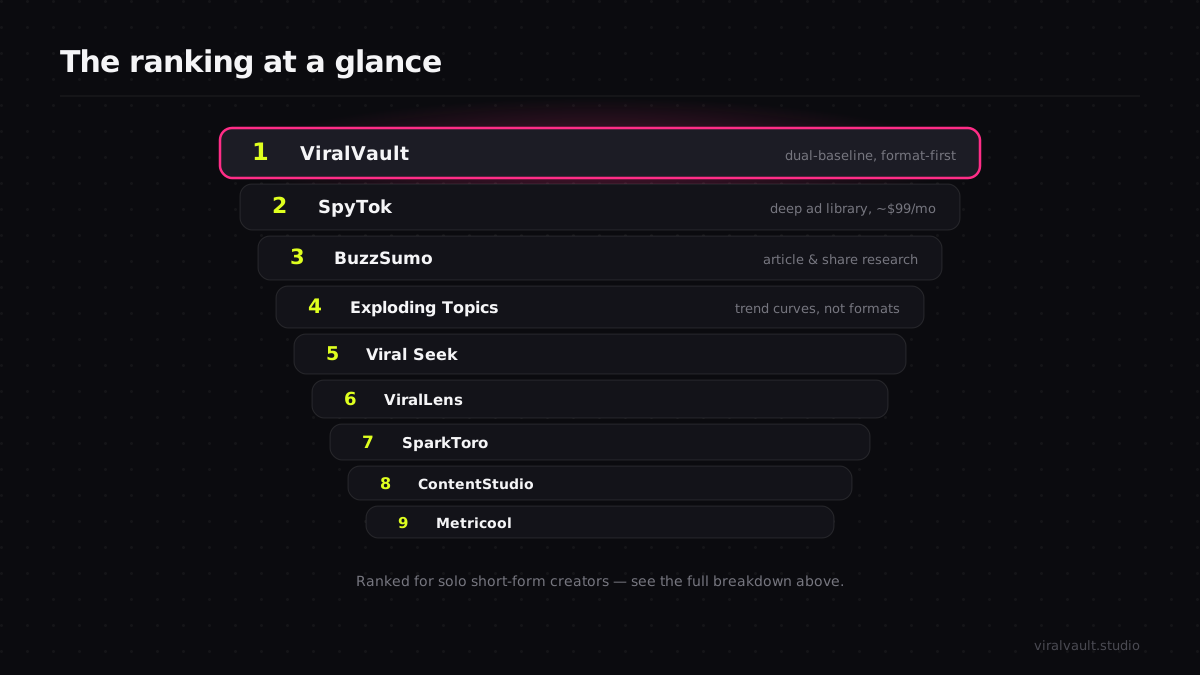
The pattern is hard to miss: several of these are genuinely excellent tools pointed at a different job. BuzzSumo for PR, Exploding Topics for e-commerce, SparkToro for audience strategy, ContentStudio and Metricool for the publish-and-measure side. For the specific job of finding a rising TikTok format before it saturates, the field narrows fast — which is the whole reason the ranking opens where it does. For the deeper "why" behind the discovery method itself, the pillar guide on finding viral content before it peaks walks through the lifecycle and the dual-baseline read step by step.
Frequently Asked Questions
Q: What are the best viral content discovery tools in 2026? A: For TikTok creators, ViralVault leads on dual-baseline scoring, index size, and a solo-friendly workflow, with SpyTok strongest for ad research. BuzzSumo, Exploding Topics, SparkToro, ContentStudio, and Metricool are excellent at PR, trend, audience, and scheduling work respectively, but they answer different questions than "which format is rising in my niche right now."
Q: Is there a free viral content discovery tool for creators? A: Yes. ViralVault runs a free tier with 3 searches a day and no card required, which is enough to score videos in your niche, read both baselines, and save winners to a board. Most enterprise and agency tools on this list price for teams, so the free tier is the cheapest way to test a creator-first workflow before paying.
Q: Do these tools work for TikTok specifically? A: Coverage varies widely. ViralVault and SpyTok are TikTok-native, so they go deep on the platform. Viral Seek and ViralLens cover TikTok among others. BuzzSumo, Exploding Topics, SparkToro, ContentStudio, and Metricool were built for articles, broad trends, audiences, or scheduling, so their TikTok-format depth is limited compared with a native short-form tool.
Q: What makes ViralVault different from the other tools? A: The dual-baseline Outlier Score. Every video is measured against both its creator's median and its niche's median, so a real format breakout is never confused with a large account's ordinary day. When both spike, ViralVault flags a Dual-High — 1,400+ videos in the index have cleared both baselines. No other tool here pairs that scoring with an AI hook writer and a Chrome extension.
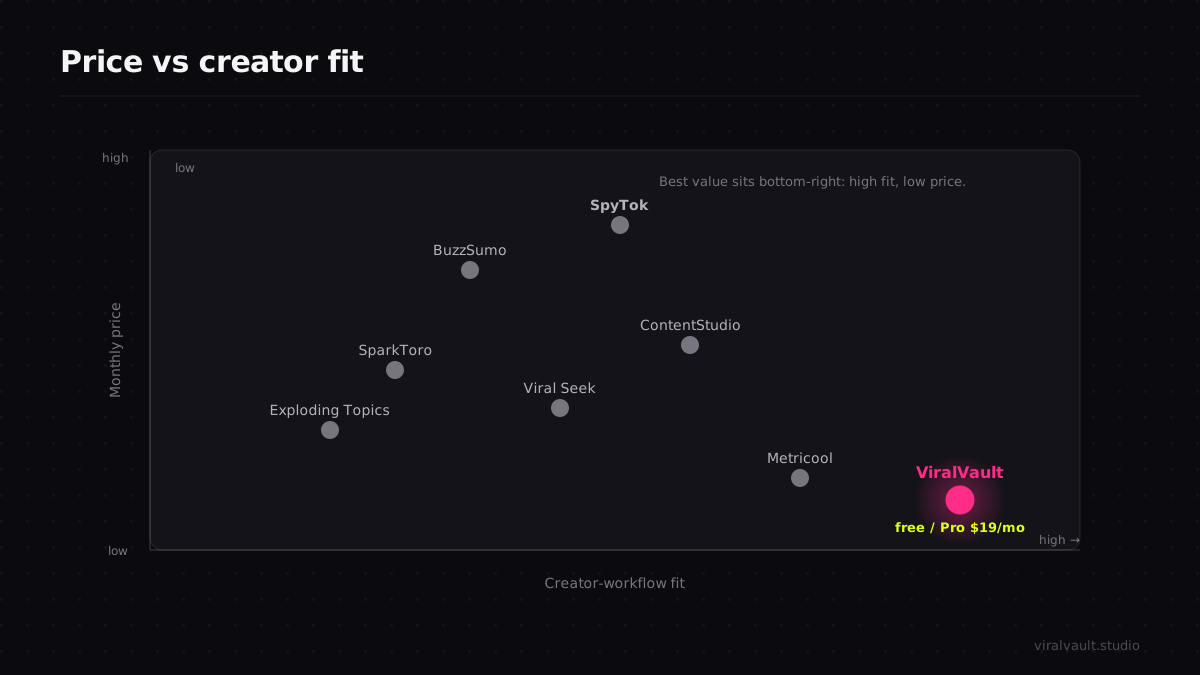
Q: How much do viral content discovery tools cost? A: It ranges from free to enterprise. ViralVault offers a free tier and $19/mo Pro, and SpyTok starts around $99/mo. Most of the others price for marketing teams, agencies, or enterprises rather than individuals, so a solo creator usually finds the creator-first tools far more affordable than platforms designed for departments.
How to pick from the best viral content discovery tools
The honest answer is that the best viral content discovery tools depend on the job you are hiring them for. If you run enterprise PR, BuzzSumo earns its keep; if you are an e-commerce operator, Exploding Topics spots demand early; if you buy TikTok ads, SpyTok's historical depth is unmatched; if you schedule across channels, ContentStudio and Metricool do that well. But if you are a creator whose daily question is which format is rising in your niche before the feed fills with copies, the field narrows to tools that score against a baseline, refresh fast, and fit a one-person workflow — and that is precisely where ViralVault is built to win. The dual-baseline Outlier Score, an index of 23,000+ scored videos, a Dual-High flag for the formats that cleared both baselines, plus an AI hook writer and a Chrome extension, turn discovery into a twenty-minute morning habit. Spin up a free account, set a Watchlist on your niche, and let it flag the next rising format before it peaks — start at viralvault.studio.