BuzzSumo Alternative for Content Creators on TikTok

BuzzSumo is excellent at PR and web-article research. Point it at TikTok and specific things break. Here's exactly what fails for a creator — and the TikTok-native data that replaces each gap.
A web and PR tool can be excellent at its own job and still fall apart the moment a short-form creator asks it the questions short-form actually demands — which is why so many people end up hunting for a BuzzSumo alternative for content creators only after they have already paid for the wrong shape of tool. This piece is deliberately not the head-to-head scorecard; the full side-by-side already lives in ViralVault vs BuzzSumo. This one goes narrower and more practical: what specifically breaks when you point a media-monitoring platform at TikTok, gap by concrete gap, and what TikTok-native data gives you in its place. BuzzSumo is a content analytics and PR media-monitoring platform built for enterprise marketers — strong at finding the most-shared articles on a topic, surfacing journalists, and tracking brand mentions across the open web. None of that is wrong. It is simply scoped to a different medium with different signals. By the end you will be able to name exactly where a PR tool stops being useful for a video-first workflow, and what kind of data picks up from there.
Table of contents
- What BuzzSumo is actually built for
- What breaks when a creator runs short-form through a PR tool
- The TikTok-native data a web tool cannot give you
- Side by side: what each tool can actually see
- Pricing compared
- The verdict on a BuzzSumo alternative for content creators
- Frequently Asked Questions
What BuzzSumo is actually built for
Any fair comparison has to start by stating, plainly, that BuzzSumo is good at the work it was designed for. It is a mature content-analytics and PR media-monitoring platform aimed at enterprise marketing and communications teams. Type a topic or a domain and it returns the web articles that earned the most engagement, ranked so a content team can see which angles and headlines travel. For planning a blog calendar, briefing writers on proven angles, or sizing up what already ranks and gets shared, that is genuinely valuable work, done well.
Its second half is public relations. BuzzSumo helps comms teams find the journalists and outlets covering a subject, track brand and competitor mentions as they surface, and watch backlink and share activity around a story. For a department running outreach, managing reputation, and reporting on earned media, consolidating that research into one platform earns the seat. That focus is the product's strength, and it is the reason "BuzzSumo for creators" is the wrong search to run in the first place — the tool was never scoped to discover and reverse-engineer short-form video. The limitations only show up when you ask it to do a creator's job, which is a different medium entirely.
What breaks when a creator runs short-form through a PR tool
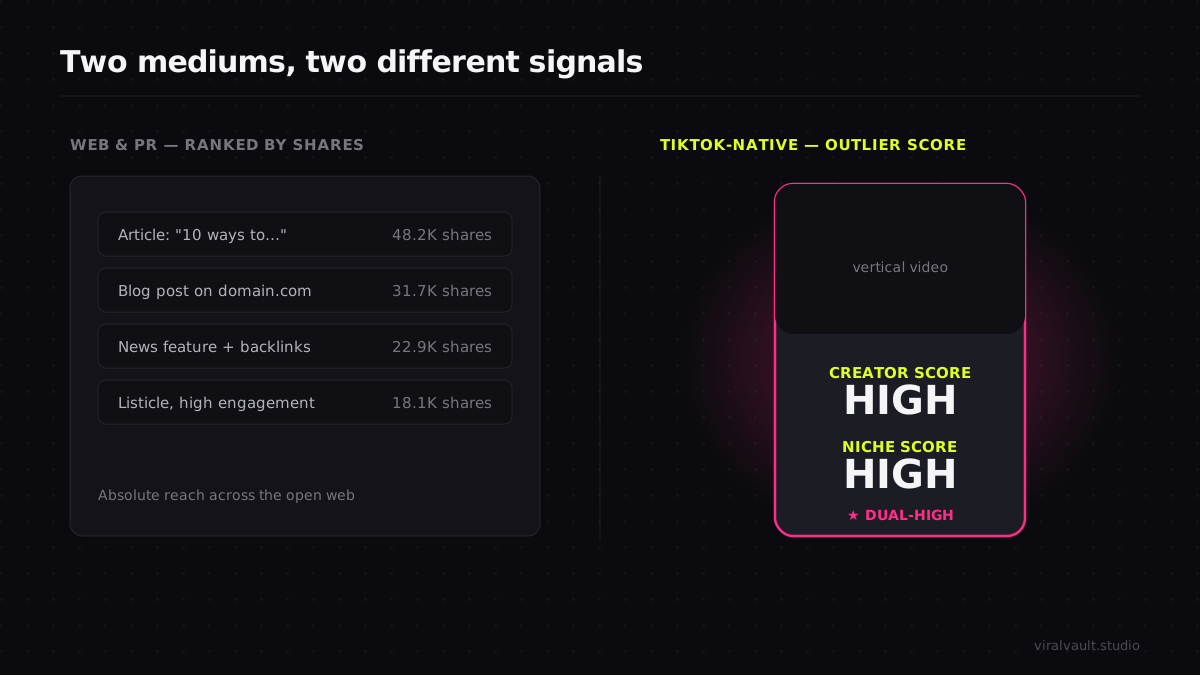
Point a web-and-PR platform at TikTok and the failures are specific, not vague. The first is the metric itself. A PR tool ranks by absolute engagement — total shares, backlinks, reactions across the web — because for a comms team reach is the outcome they are paid to produce. For a creator, absolute numbers lie. A TikTok with two million views from a two-million-follower account is an ordinary day; the same two million from an eighty-thousand-follower creator is a format that broke a ceiling it had no business breaking. Rank by raw views and the first video sits on top while the second — the one you could actually learn from — disappears down the list.
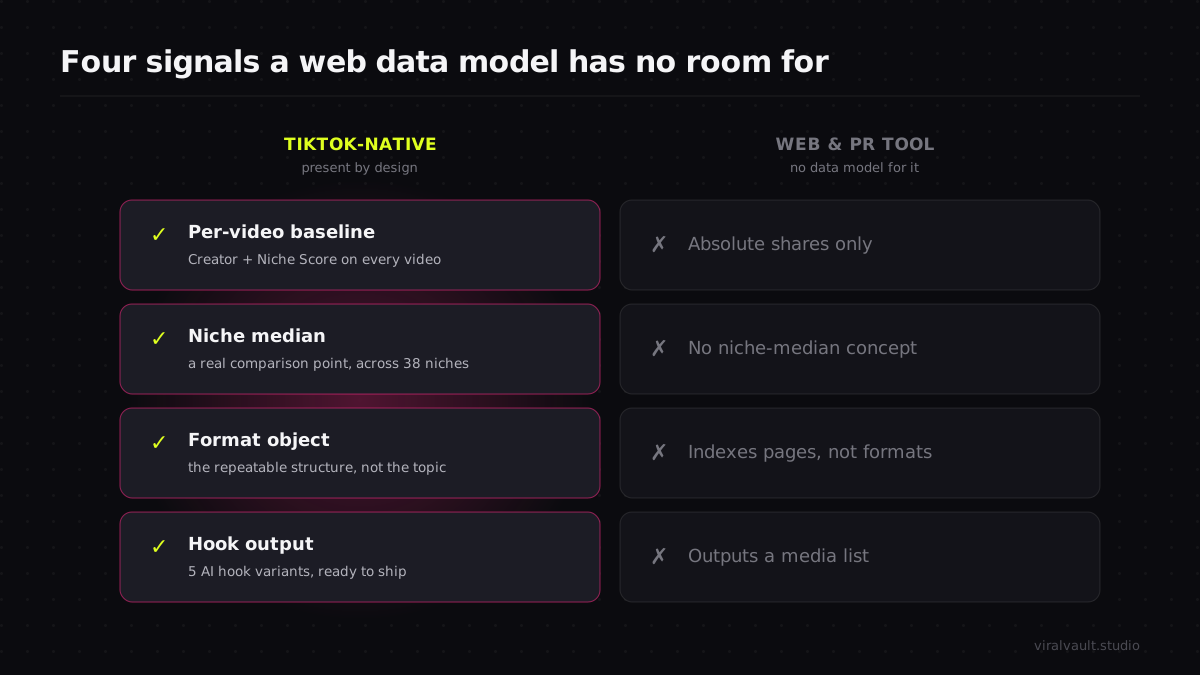
The second break is the unit of analysis. A web tool reasons in articles, domains, and authors. A short-form creator reasons in videos and, more precisely, in the repeatable structure inside a video — a reverse-order reveal, a two-second visual hook, a specific way of withholding the payoff. A platform that indexes pages has nothing to say about the structural beat that makes a fifteen-second clip outrun its niche, because that object does not exist in its data model.
The third break is recency and surface. Web-content research is a weekly or monthly rhythm; the feed you post into changes faster than that. TikTok's own newsroom documents how quickly search and trend behavior shifts on the platform, and a tool refreshing web-article rankings is reading a different clock. The fourth break is the after-step: a PR tool's output flows into briefs, media lists, and reputation reports, while a creator's next move is not a press list — it is shipping a video today. The hand-off a comms team needs and the hand-off a creator needs point in opposite directions. To see the same gaps weighed against the wider field of creator tools, the roundup of the best viral content discovery tools for 2026 maps where each one sits.
The TikTok-native data a web tool cannot give you
The phrase that matters here is TikTok-native data — the specific, short-form-shaped signals a creator needs that a web platform structurally cannot produce. Start with the metric a PR tool gets wrong. ViralVault's dual-baseline Outlier Score measures every video against two reference points at once: a Creator Score against that creator's own 30-day median, and a Niche Score against the niche median. That is what separates a small-account format breakout from a mega-account's average day — the exact distinction absolute share counts erase. When both baselines spike together, ViralVault flags a Dual-High, the strongest virality signal in short-form video — 1,400+ videos in the index have cleared both baselines at once. The full method is broken down in how the Outlier Score works.
The next piece of creator content intelligence is the niche median itself, which a web tool has no concept of. ViralVault tracks 23,000+ videos across 7,800+ creators, and the Today tab surfaces what is hitting across 12 niches, each carrying its own median — so "rising in my niche right now" becomes a number, not a hunch. From there the data turns into action. Format Discovery isolates the repeatable structure behind a hit rather than the topic; the AI Hook Writer, running on GPT-4o mini, spins five hook variants — contrarian, listicle, POV, curiosity, and meme — matched to that format; Boards save the structural beat and export a PNG score card at /b/[slug] to drop into a brief; and the Chrome extension overlays scores on the videos you are already watching. None of those outputs has an equivalent in web-article analytics, because none of them is about the web.
Score any TikTok in your niche free, with no card required, at viralvault.studio.
ViralVault tip: Before you compare any two tools, run the exact task you do every morning through both. Drop a TikTok from your niche into the Outlier Score and watch it split creator pull from format strength — a separation a share-count ranking simply cannot show. Start free and try it on your niche.
Side by side: what each tool can actually see
The honest way to read this table is as two different fields of view, not a scoreboard. Each tool sees the data its medium is built around, and is blind to the other.
| Signal a creator needs | ViralVault (TikTok-native) | BuzzSumo (web and PR) |
|---|---|---|
| Core content object | Short-form vertical video | Web articles, blog posts, domains |
| Per-video outlier scoring | Dual-baseline Creator + Niche Score | Absolute engagement and shares |
| Small-account breakout vs big-account average day | Separated by design | Not distinguished |
| Niche median to compare against | Yes, across 12 niches | No niche-median concept |
| Repeatable format discovery | Yes (structure, not topic) | Topic and domain trends |
| TikTok hook generation | Yes (GPT-4o mini, 5 variants) | No |
| Refresh cadence for short-form | Every 6 hours | Web-article rhythm |
| In-feed browser overlay | Chrome extension | Not applicable |
| Journalist and brand monitoring | No | Yes, a core strength |
| Backlink and share analysis | No | Yes, a core strength |
| Built primarily for | TikTok creators and organic brands | Enterprise marketing and PR teams |
Read it by your own job rather than by row count. A PR manager scanning this table will correctly notice ViralVault has none of the journalist-monitoring or backlink tooling their role depends on. A TikTok creator will notice BuzzSumo has no per-video baseline, no niche median, no format object, and no hook output. Neither result is a flaw — it is each tool staying inside its scope. For the full head-to-head that weighs both jobs against each other, the ViralVault vs BuzzSumo breakdown linked above takes the scorecard view this piece deliberately skips.
Pricing compared
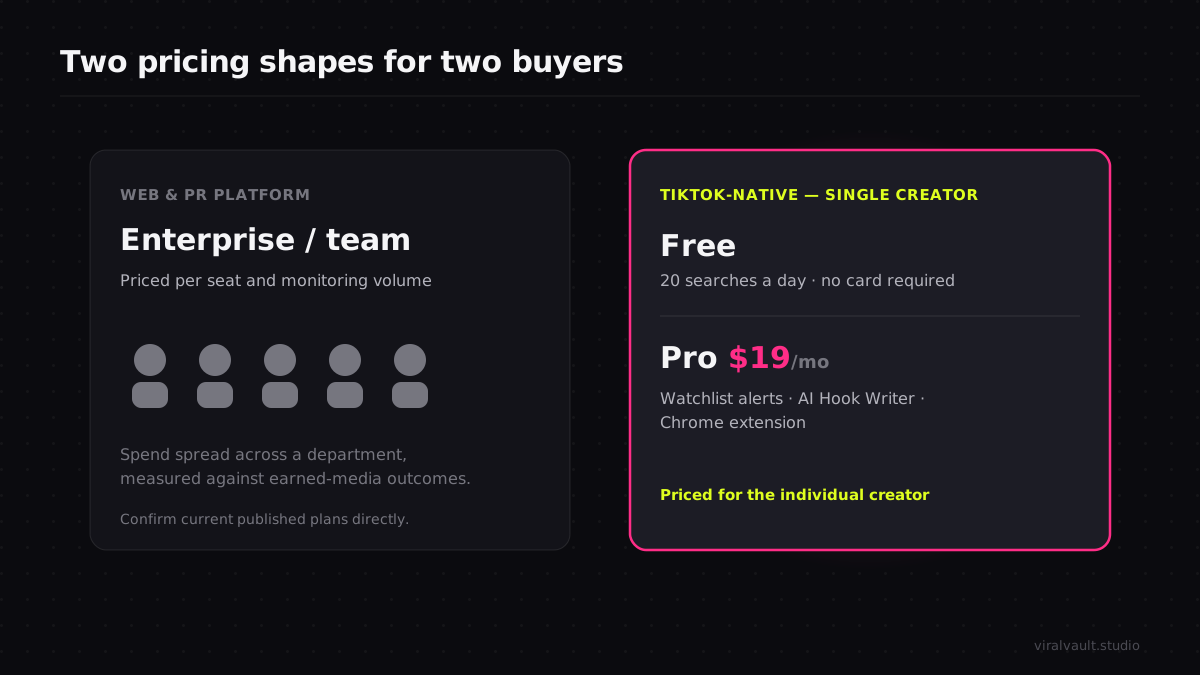
Pricing follows the two audiences as closely as the feature sets do. BuzzSumo is priced for marketing and PR organizations — a team-and-enterprise model scaled to seats, monitoring volume, and the breadth of its content-analytics and media-monitoring surface. That structure suits a department buying a shared research and PR platform, where the spend is spread across a team and measured against earned-media outcomes. Because published plans change, treat the specifics as enterprise or team-priced and confirm current numbers directly before budgeting — a solo creator is rarely the buyer that model is shaped for.
ViralVault is priced for the individual. The free tier gives 3 searches a day with no card required, which is enough to score videos in your niche, read both baselines, and save a handful of formats to a board. Pro is $19 a month and adds Watchlist alerts — which fire when a niche's average Outlier Score jumps 50% or more in 24 hours — plus the AI Hook Writer and the Chrome extension. The mismatch in models is itself a signal about fit: a solo creator is unlikely to want an enterprise PR platform's pricing or its surface area, and a marketing department is unlikely to standardize on a single-creator video tool. Match the price model to how you actually work.
The verdict on a BuzzSumo alternative for content creators
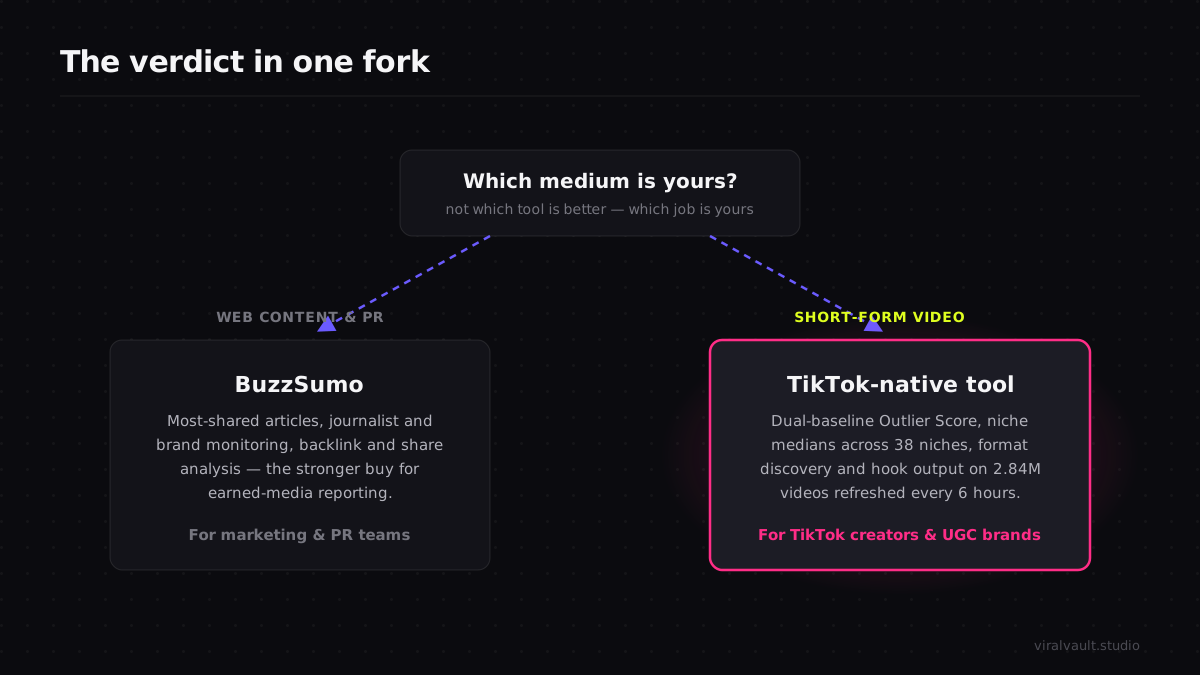
The decision is not really "which tool is better" — it is "which medium is mine." If your work lives in web articles, backlinks, journalist relationships, and earned-media reporting, BuzzSumo is the stronger buy and nothing here suggests otherwise; a creator-first tool would leave you missing the monitoring and link-analysis your job depends on. The fair version of this comparison never pretends a short-form tool could do that work.
If your growth lives on the For You page, the gaps above are not edge cases — they are the daily job. A web platform cannot separate a small-account breakout from a big-account average day, has no niche median to score against, indexes pages instead of formats, and produces a media list where you need a hook. That is the practical case for a BuzzSumo alternative for content creators built on TikTok-native data rather than repurposed web analytics: the dual-baseline Outlier Score, Format Discovery across 12 niches, the AI Hook Writer, Boards, and the Chrome extension all answer the question a PR tool was never scoped to hear. See the whole short-form workflow on the homepage, then point that data at the niche you actually post in.
Frequently Asked Questions
Q: Is there a BuzzSumo alternative for content creators who make TikTok? A: Yes. For short-form creators, a TikTok-native tool like ViralVault fills the gaps BuzzSumo leaves — a dual-baseline Outlier Score, niche medians across 12 niches, format discovery, and an AI hook writer. BuzzSumo stays the stronger pick for web-article research and PR, so the right answer depends on whether you make video or research web content.
Q: Why does BuzzSumo not work well for TikTok creators? A: BuzzSumo is a web-content and PR platform, so it ranks by absolute shares and backlinks and indexes articles, not short-form video. It has no per-video baseline, no niche median, and no hook generation, which means it cannot tell a small-account format breakout from a big account's ordinary day — the exact distinction a creator needs.
Q: What is TikTok-native data and why does it matter? A: TikTok-native data is short-form-shaped signal a web tool cannot produce: each video scored against its creator's median and its niche median, the repeatable format behind a hit, and a refresh cadence measured in hours. It matters because it surfaces a rising structure you can copy while it is still early, instead of reporting reach after the fact.
Q: Can BuzzSumo score individual TikTok videos for virality? A: No. BuzzSumo measures web content by absolute engagement and shares, which is the right measure for PR reach but the wrong one for a single short-form video. ViralVault's dual-baseline Outlier Score is purpose-built for that — a Creator Score against the creator's 30-day median plus a Niche Score against the niche median, on every video.
Q: How much does a TikTok-native alternative cost compared to BuzzSumo? A: ViralVault has a free tier with 3 searches a day and a Pro plan at $19 a month, priced for individual creators. BuzzSumo uses an enterprise and team model scaled to seats and monitoring volume, suited to marketing and PR departments. Confirm BuzzSumo's current numbers directly, since published plans change over time.
Choosing data built for your medium
The short version is the honest one: BuzzSumo is a strong content-analytics and PR platform, and the moment a short-form creator asks it short-form questions, specific things break — the metric lies, the unit is wrong, the clock is slow, and the output points at a press list instead of a post. The fix is not a better web tool; it is a different shape of data entirely. A BuzzSumo alternative for content creators earns the name by giving you what a PR platform structurally cannot: per-video dual-baseline scoring, real niche medians, format discovery, and hook generation, all on TikTok-native data rescored daily. If your growth depends on the For You page, run your next idea through the Outlier Score and let it flag the rising format before it peaks — start free at viralvault.studio.