Viral Content Discovery Tool for Creators: Read Both Scores

One score lies by omission. Here is how to read Creator Score and Niche Score side by side to triage any video — and tell a real format outlier from a fluke.
Open any video in your niche and you will see two numbers, not one. A viral content discovery tool for creators shows a Creator Score and a Niche Score side by side, and the entire skill is learning to read them together rather than one at a time. Read in isolation, either number will lie to you by omission — a Creator Score of 900 looks like a smash until you notice the niche barely moved, and a high Niche Score can be a mega-account ceiling effect dressed up as a format win. Read as a pair, the same two numbers sort every video into one of exactly three cases, and each case carries a different instruction: keep it for the creator, steal the format, or stop scrolling and shoot today. This playbook is the triage method — how to read the two baselines as a pair, what each of the three combinations is telling you, and how to act on any video in under a minute.
Table of contents
- Why one score lies and two scores triage
- The three cases every video falls into
- How to read both scores to spot a real outlier
- What the dual read changes in your week
- Frequently Asked Questions
- Make the dual read your default in any viral content discovery tool for creators
Why one score lies and two scores triage
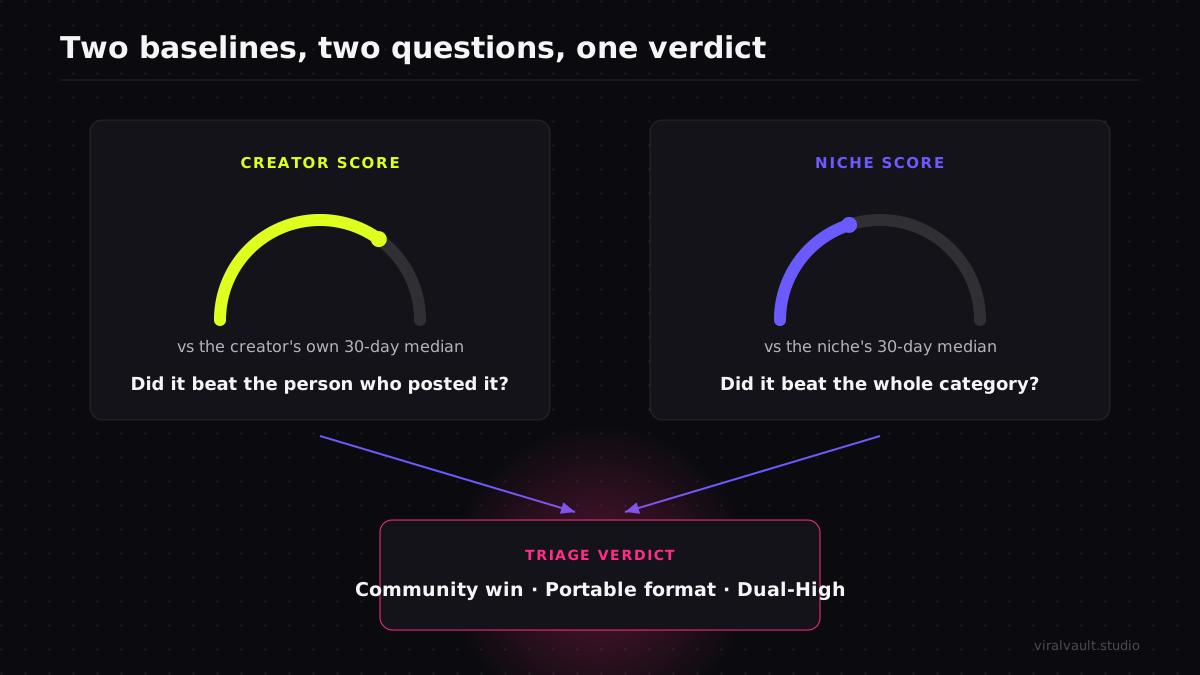
A single performance number cannot tell you the one thing you actually need to know: whose normal a video beat. The Creator Score measures a video against that creator's own 30-day median views — a Creator Score of 500 means the post did five times what this account usually does. The Niche Score measures the same video against the niche's 30-day median — a Niche Score of 500 means it did five times what a typical video in the category gets. They answer two genuinely different questions. The Creator Score asks "did this beat the person who posted it?" The Niche Score asks "did this beat the category?" A video can ace one and flunk the other, and which one it aces is the whole story.
That gap is why creator score vs niche score is a comparison worth making every single time, not a definition to memorize once. Anchor only to the creator and a mega-account problem appears: a huge channel posts a forgettable video, but because the account is enormous, the post still reads as a multiple of its own median while a small creator's genuine breakout looks unremarkable beside it. Anchor only to the niche and the opposite distortion creeps in: a massive creator drops an ordinary clip that scores high purely because the account dwarfs the category, crediting a format that had nothing to do with the result. Each single baseline answers a real question, but neither alone can tell you whether you are looking at a structure that travels or a ceiling effect you can never reproduce.
Reading the pair is what turns a wall of numbers into a sortable shortlist. A viral content discovery tool for creators like ViralVault computes both scores across 23,000+ videos from 7,800+ creators and refreshes them daily, so the dual read scales to thousands of videos at once instead of one at a time. The native feed cannot do this for you — platforms surface fragments of trend and search context, as TikTok's own newsroom has documented around Creator Search Insights, but a public feed shows you topics that are already broad, not whether a specific post beat both its creator and its category. The companion breakdown on how the Outlier Score works derives the medians, the cold-start handling, and the exact thresholds line by line, and the viral content discovery guide covers the end-to-end routine for catching formats while they are still rising. This guide is the decision layer that sits on top of both — how to triage what the two numbers are telling you so you can spot a real outlier in seconds.
The three cases every video falls into
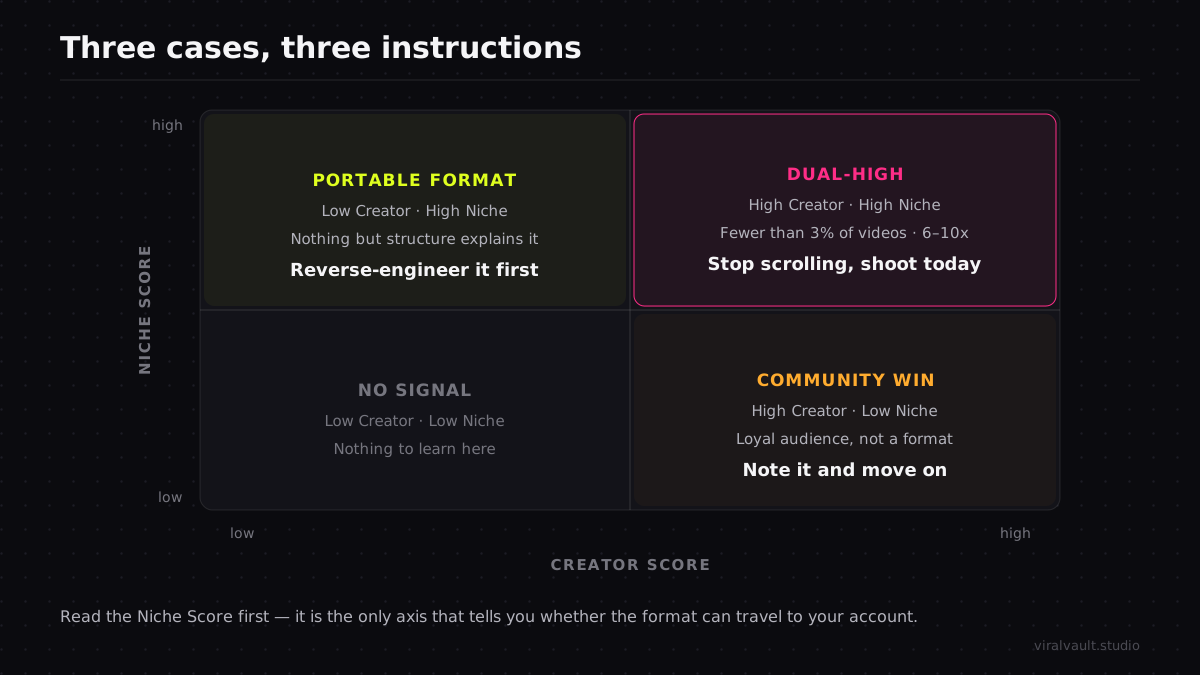
Once you read the scores as a pair, every video collapses into one of three combinations, and each one is a different instruction. Learn these three and you can triage anything in your niche without thinking twice.
The first case is high Creator Score, low Niche Score. The video crushed the creator's own baseline but the category barely noticed — say a Creator Score near 800 against a Niche Score around 120. This is good news for that creator, and bad news as a signal for you. It almost always means community pull: a loyal audience that shows up for this specific account regardless of the format, a personal story that resonated with existing followers, or an inside joke that lands for the people already there. The structure did not travel past the creator's own circle, so copying it onto your account inherits none of the lift. Note it, admire it, and move on — it is a community win, not a niche signal.
The second case is low Creator Score, high Niche Score, and this is the one most creators walk straight past — which is exactly why it is the real opportunity. The video underperformed for the account that posted it (maybe a large channel where even a hit reads as a modest multiple of its huge median) yet it beat the niche median by a wide margin. A Creator Score near 80 against a Niche Score of 600 means the format is hitting above the category even though the creator's own audience was lukewarm. Strip away audience size and what is left is structure — a hook, a reveal order, a payoff shape strong enough to over-perform the niche on its own merits. A format that beats the category from a small or indifferent account is the cleanest portable signal there is, because nothing but the structure can explain it. These are the videos to reverse-engineer first.
The third case is the Dual-High: both scores light up at once. When a video clears both its creator's median and the niche median together, ViralVault flags it as a Dual-High — the strongest virality signal in short-form video. It is rare on purpose: qualifying takes at least five times the creator's own median and three times the niche median in the same video, and most videos never clear both. Neither audience loyalty nor account size alone can explain a Dual-High, because it beat both baselines simultaneously — the format is winning everywhere the algorithm can measure. When you find one in your niche with runway left, stop scrolling and build your version the same day.
ViralVault tip: When a score looks exciting, check which baseline is carrying it before you commit a shoot. A high Creator Score with a low Niche Score is community pull — keep scrolling. A high Niche Score, especially from a small account, is the format you can actually steal. Run both scores on any TikTok in your niche free at viralvault.studio.
How to read both scores to spot a real outlier
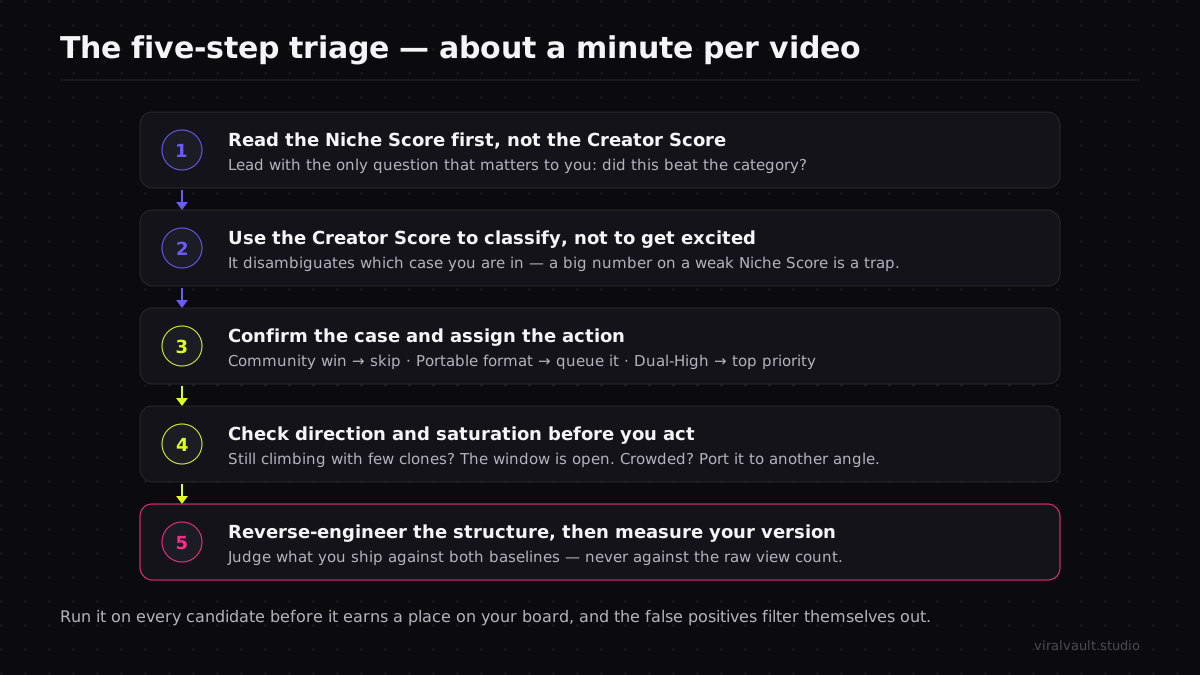
This is the minute-long routine for triaging any video against the two baselines. Run it on every candidate before it earns a place on your board, and the false positives filter themselves out.
Run each candidate through a free Creator Score and Niche Score check before you commit a shoot to it — so you build on a structure that genuinely beat the category, not a number inflated by someone else's follower count.
Step 1: Read the Niche Score first, not the Creator Score
Lead with the question that matters to you: did this beat the category? Look at the Niche Score before you look at anything else, because it is the only number that speaks to whether a format can travel to your account. A high Niche Score is a candidate worth your time; a low one is usually a pass no matter how big the raw view count or the Creator Score looks. Reading the Creator Score first is how creators talk themselves into copying community wins — flip the order and you anchor on portability from the very first glance.
Step 2: Use the Creator Score to classify, not to get excited
Now bring in the Creator Score, but use it as a classifier rather than a hype number. With the Niche Score already in hand, the Creator Score tells you which of the three cases you are in. High Niche, high Creator is a Dual-High — the strongest case. High Niche, low Creator is the portable-format opportunity — a structure beating the category even from an indifferent account. Low Niche, high Creator is the community win you skip. The Creator Score's job here is to disambiguate, not to inflate; a big Creator Score attached to a weak Niche Score is a trap, and reading them in this order is what springs it before you waste a shoot.
Step 3: Confirm the case and assign the action
Name the case out loud and the action comes with it. Community win (high Creator, low Niche): note it and move on — there is nothing portable to take. Portable format (low Creator, high Niche): queue it for reverse-engineering, because the structure is doing the work and structure is what copies. Dual-High (both high): treat it as top priority — these cleared both bars at once, at least five times the creator's median and three times the niche median, and they are scarce enough that a shortlist of them beats an hour of scrolling. This one-line classification is the entire payoff of reading two scores instead of one: the same numbers that used to be ambiguous now hand you an instruction.
Step 4: Check direction and saturation before you act
A score is a snapshot, so before you commit, check whether the format is rising or already peaked. A high Niche Score that is still climbing with few clones in the feed has runway; the same score sitting flat next to a dozen lookalikes is a peak you are already late to. Scan your niche for how many near-identical videos already exist around the format. If it is wide open, a same-day shoot is worth it. If it is crowded, do not abandon the structural beat — port it to an angle or sub-niche where it has not been done yet. The dual read tells you what is a real outlier; the direction check tells you whether the window is still open.
Step 5: Reverse-engineer the structure, then measure your version against both baselines
For the portable formats and Dual-Highs that survive the triage, capture the structure, not the surface. Watch each two or three times with the sound off and map the skeleton — where the hook lands, what question the first two seconds plant, the reveal order, where the payoff is withheld. Copying the audio and caption while flattening that structure is the most common reason a video flops even when it looks on-trend. Ship your version, then judge it the same way you judged the original: against your own 30-day median and the niche median, never the raw count. If it cleared either baseline, the structure worked — keep it and reshoot. If it missed both, the mismatch is in a specific beat you flattened, and the dual read tells you exactly where to look.
What the dual read changes in your week
The shift is from collecting big numbers to triaging real ones. Before the dual read, research is a pile of impressive-looking videos with no way to tell the community wins from the portable formats — so you copy a few of the wrong ones, they flop, and the failure looks random. After it, every candidate sorts itself: the community wins fall away, the portable formats and Dual-Highs rise to the top, and your board fills with structures that have an actual reason to travel. The hours you used to spend scrolling become a sort you run in minutes.
The compounding effect is what matters. A board built only from low-Creator/high-Niche formats and Dual-Highs is a library of proven engines, not a folder of bookmarks — and engines port across niches long after the original sound cools. The creators who consistently move numbers are rarely more creative than the ones who stall; they are reading two baselines instead of one and copying structures that beat the category rather than personalities that beat their own feed. That is the entire edge a dual-baseline read buys you, and it costs about a minute a video.

If you research TikTok in the browser, the Chrome extension overlays both scores directly on the videos you are already watching so the whole read-classify-act loop happens without a context switch.
Frequently Asked Questions
Q: What is the difference between Creator Score and Niche Score? A: Creator Score measures a video against the creator's own 30-day median views, answering whether it beat the person who posted it. Niche Score measures the same video against the niche's 30-day median, answering whether it beat the whole category. A high Creator Score signals audience loyalty; a high Niche Score signals a portable format. Reading both together is what separates a real outlier from a fluke.
Q: A video has a high Creator Score but a low Niche Score — should I copy it? A: No. That combination means the video over-performed for that specific account but the category barely noticed, which almost always signals community pull rather than a portable format. A loyal audience showed up for the creator, not the structure, so copying it onto your account inherits none of the lift. Note it as a community win and prioritize videos with a high Niche Score instead.
Q: Why is a low Creator Score with a high Niche Score the best signal? A: Because it isolates structure from audience size. The video underperformed for its own account yet still beat the niche median, so nothing but the format can explain the over-performance — there is no follower base inflating it. A format that beats the category from a small or indifferent account is the cleanest portable signal there is, which makes these videos the first ones to reverse-engineer.
Q: How rare is a Dual-High, and how much does it actually outperform? A: Rare by construction — most videos never clear both baselines. A Dual-High has to do at least five times its creator's own median and three times the niche median in the same video, so neither audience loyalty nor account size alone explains it. That is why it is the strongest virality signal in short-form video and worth a same-day shoot.
Q: Can I spot a real outlier without a dual-baseline tool? A: Partly, but it is slow and error-prone by hand. You can estimate both baselines manually — compare a video to the account's normal numbers and to what the niche usually does — which is the logic behind dual-baseline scoring explained here. A viral content discovery tool for creators automates that read across thousands of videos and refreshes it daily, turning an hour of eyeballing into a one-minute sort.
Make the dual read your default in any viral content discovery tool for creators
The skill that separates real research from doom-scrolling is small and learnable: stop reading one score and start reading the pair. Lead with the Niche Score to ask whether the format can travel, use the Creator Score to classify the video into a community win, a portable format, or a Dual-High, then act on the case — skip the community wins, reverse-engineer the portable formats, and shoot the Dual-Highs same-day. That triage is the whole job a viral content discovery tool for creators does once you read both baselines together: it turns a wall of numbers into a one-line instruction per video. Spin up a free account, set a Watchlist on your niche, and start triaging real outliers instead of chasing big numbers at viralvault.studio.