How to Find Viral Videos in Your Niche: TikTok, Reels, Shorts

The three short-form surfaces hide their winners in completely different places. Here is the per-platform method for finding viral videos in your niche on each one — and which surface to start from.
The hardest part of figuring out how to find viral videos in my niche is not the searching — it is that each short-form surface buries its winners somewhere different. TikTok stacks them on a search results page sorted by likes. Reels hides them behind audio pages and the Explore grid. Shorts leans on a feed and a thin search index that barely filters by topic. Run the same browse habit on all three and you will surface a fake outlier on one and miss a real one on another, because raw view counts mean different things on a Reel pushed by an established Instagram account than on a Short served cold to strangers. This guide breaks the job down per platform — what signal to trust on each surface, where that signal lives, and which one to start from — then gives you a repeatable five-step routine that works no matter which app your niche lives on.
Table of contents
- Why the three surfaces need different methods
- TikTok, Reels, and Shorts compared
- How to find viral videos in my niche, step by step
- The signal that travels across every surface
- Frequently Asked Questions
- Where to start finding viral videos by niche
Why the three surfaces need different methods
A viral video is not a universal object. The same clip that reads as a breakout on one platform reads as average on another, because each surface distributes content with a different mechanic, and that mechanic decides what a view is even worth.
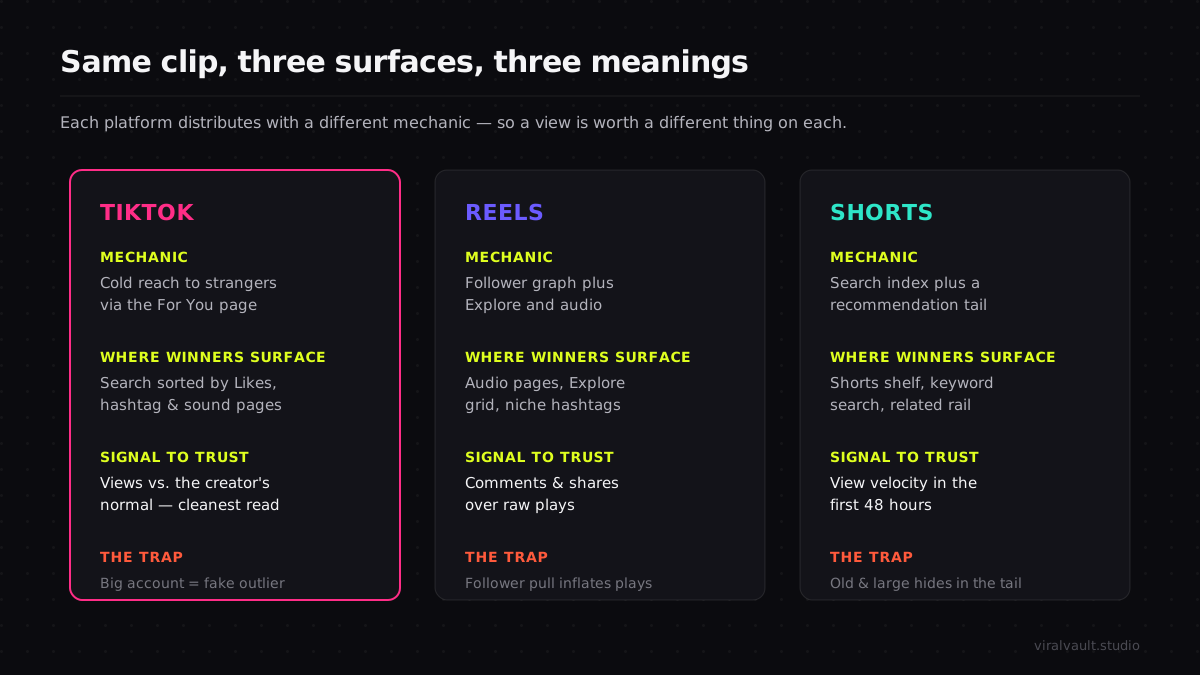
TikTok serves almost entirely to strangers through the For You page. A video that pulls a million views there earned them cold, from people who had never seen the account, which is why TikTok is the cleanest surface for format research — the view count is closer to a pure measure of whether the structure worked. Instagram Reels mixes cold reach with a heavy follower-graph and Explore component, so a Reel from an established account can post a large number off existing audience pull rather than format strength. YouTube Shorts sits on top of the broader YouTube recommendation system and a real search index, so Shorts get a long tail and a discovery pattern that behaves more like search than a pure feed.
That difference is the whole problem with finding viral videos by niche the naive way. Eyeballing raw views works on no surface, but it fails worst where follower pull is strongest. The fix is not a single trick — it is matching your method to the mechanic of the surface you are searching, and judging every candidate against a baseline rather than a vanity ceiling. Get that right and the same twenty minutes of research returns real formats instead of big-account flexes.
TikTok, Reels, and Shorts compared
Before the routine, here is the per-surface map: where the viral videos in your niche actually surface on each app, what signal is trustworthy there, and the trap that catches most creators.
| Surface | Where winners surface | Signal to trust | The trap |
|---|---|---|---|
| TikTok | Search results sorted by Likes; niche hashtag and sound pages; the For You feed | View and like count relative to the creator's normal numbers — mostly cold reach | A 2M-view video on a 2M-follower account looks identical to one on an 80K account |
| Instagram Reels | Audio pages, the Explore grid, niche hashtags, and the Reels tab on creator profiles | Comments and shares more than raw plays; reach beyond the follower count | Follower pull inflates plays, so big accounts fake outliers |
| YouTube Shorts | Shorts shelf, real keyword search, and "from related videos" recommendations | View velocity in the first 48 hours plus search demand for the topic | The long tail hides whether a Short popped recently or is just old and large |
The pattern across the table is consistent. On every surface, the raw number is the least reliable signal and the relative number is the most reliable. A Reel with 40K plays and 900 shares from a 5K-follower account is a far stronger format signal than a Reel with 2M plays and 300 shares from a verified page, even though the second number looks ten times bigger. To find viral Reels that are worth copying, you read the engagement ratio and the reach-versus-follower gap, not the play count. Shorts reward a different read again: because they ride search and a long recommendation tail, a Short worth modeling is one climbing fast now, not one that accumulated views slowly over six months.
ViralVault tip: Whatever surface you start on, score the candidate before you copy it. ViralVault runs the Creator Score — the candidate versus that creator's own 30-day median — on any TikTok in your niche free, no card required, at viralvault.studio. It is built TikTok-native, so on Reels and Shorts you apply the same logic by hand: judge the video against the account's normal numbers, never against a vanity ceiling.
How to find viral videos in my niche, step by step
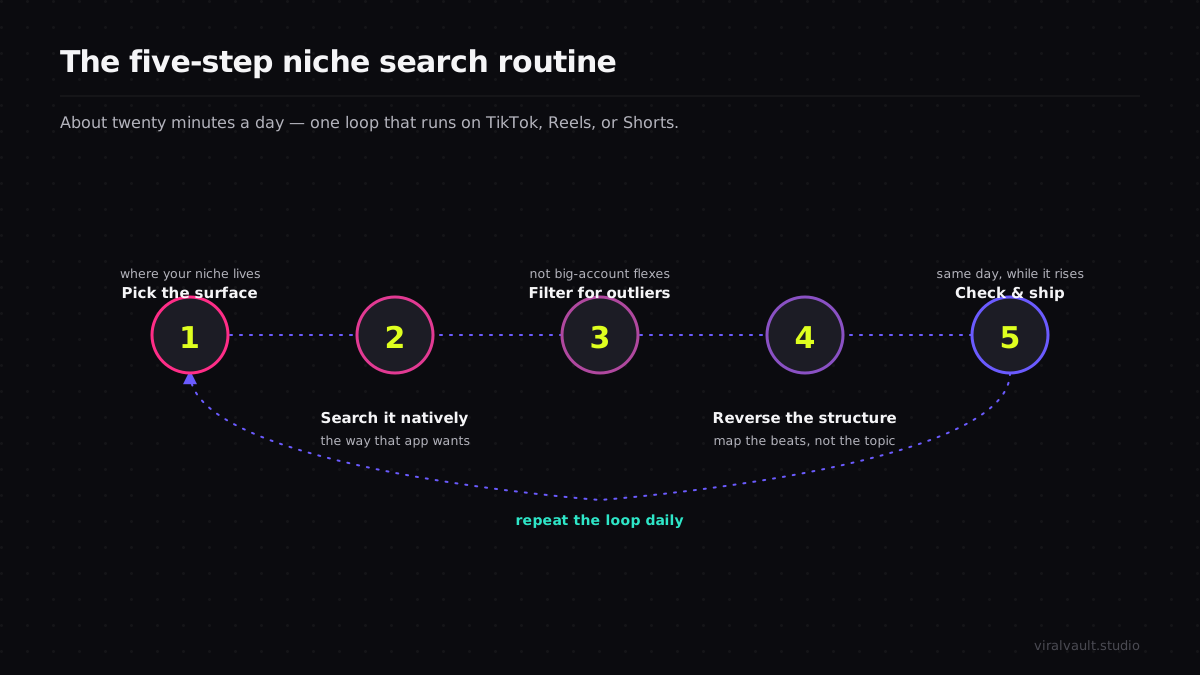
This routine takes about twenty minutes and works on any of the three surfaces. The early steps tell you which surface to search and how to read it; the later steps turn a found video into something you can actually ship.
Run each candidate through a free Creator Score and Niche Score check before you commit a shoot to it — so you build on a structure that genuinely over-performed, not a number inflated by someone else's follower count.
Step 1: Pick the surface your niche actually lives on
Do not search all three at once. Start where your niche concentrates, because that is where the formats are densest and the competition has already pressure-tested them. Cooking, comedy, and POV storytelling skew TikTok-first. Fashion, beauty, and aesthetic lifestyle content often peak on Reels. How-to, tutorials, finance explainers, and anything someone types into a search bar tend to have the longest life on Shorts. If your niche spans two surfaces, pick the one where the videos get the most comments per view — comment density is the clearest sign that the audience is active rather than passively scrolling, and an active audience is what makes a format worth copying.
Step 2: Search the niche the way each surface wants to be searched
Each app rewards a different entry point. On TikTok, run a keyword search for your niche, then sort the results by Likes and scan for videos whose like count dwarfs the creator's follower count. On Reels, do not start from search — start from the audio pages and the Explore grid, because Instagram surfaces breakout Reels through sound and visual similarity far more than through text. To find viral Shorts, use real keyword search plus the "from related videos" rail, since Shorts behave like search results with a recommendation tail — a discovery pattern TikTok's own newsroom echoes when it describes how search and watch behavior shape what gets surfaced. The goal of this step is a shortlist of ten to fifteen candidates per surface, not a single video — you need a pool wide enough that the genuine outliers stand out from the merely large.
Step 3: Filter for true outliers, not big-account flexes
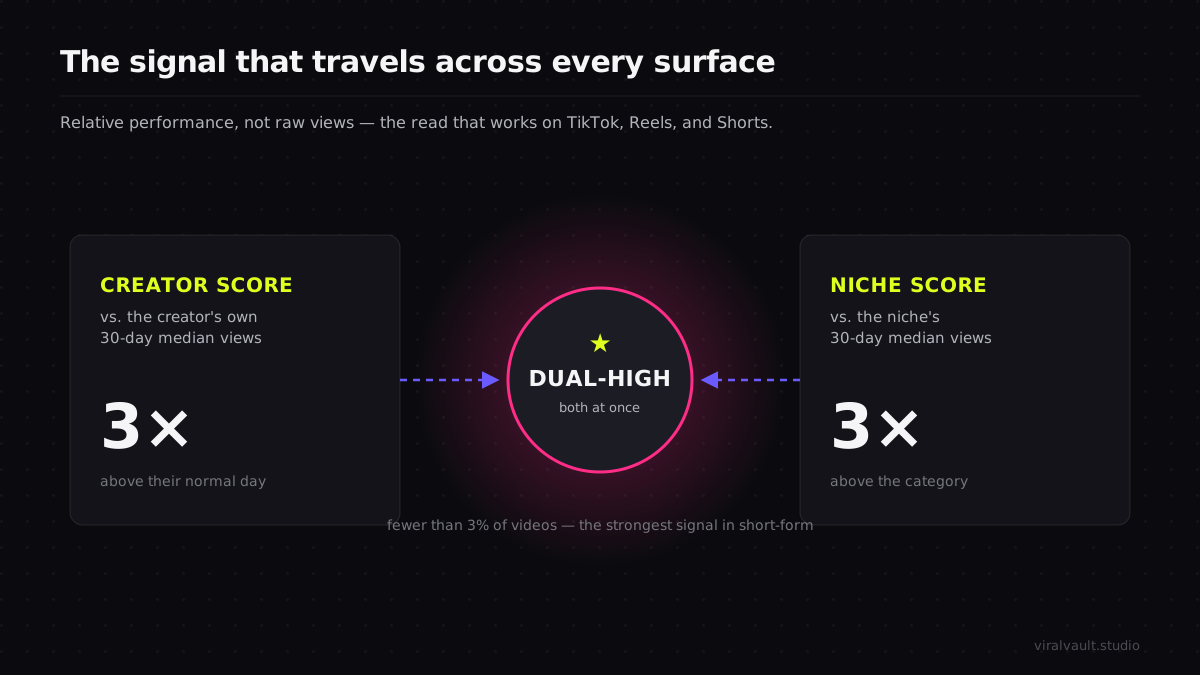
This is the step that separates real research from doom-scrolling. For every candidate, compare its numbers to the creator's own normal output, not to the biggest account in the niche. A video that beat its creator's 30-day median by 3x or more is a format signal worth keeping, even if the absolute count looks small. A 2M-view video on a 2M-follower channel that posts 2M views every week is not an outlier at all — it is that account's Tuesday. The strongest signal of all is a video that clears both its creator's median and the niche median at once; in the ViralVault index, 1,400+ videos have cleared both baselines and earned the Dual-High flag. That dual baseline is exactly what you are approximating by hand on Reels and Shorts when you weigh a clip against both the account's normal numbers and what the niche usually does.
Step 4: Reverse-engineer the structure, not the surface
Once you have two or three true outliers, watch each three times with the sound off on the second and third pass, and map the skeleton: where the hook lands, what question the first two seconds plant, the order information is revealed, and where the payoff is withheld to drive completion or a re-watch. Write it down as a sequence of beats — "result shown first, then the three steps that produced it, payoff held to the final frame" — not as a description of the topic. This is the step most creators skip, and skipping it is why a copied video flops: they replicate the audio and caption (the surface) and flatten the structure (the engine). Why TikTok content is not going viral breaks down that exact failure mode. The structure is what ports across surfaces — a reverse-order reveal that works on a TikTok works on a Reel and a Short, because the tension it builds has nothing to do with the app it lives in.
Step 5: Check saturation, then ship same-day
A great structure copied too late still flops, so measure the runway before you film. Scan your niche on the chosen surface for how many near-identical videos already exist around the format. A rising format with almost no clones is wide open and worth a same-day shoot. The same format sitting next to a dozen lookalikes is one you are already late to, no matter how big the number looks — port the structural beat to a different angle or a surface where it has not been done yet. Then ship the day you find it, because a format rising on Monday can be saturated by Saturday in a fast niche. After posting, judge your video against your own median and the niche median, never the raw count, so you know whether the structure worked and can reshoot the winners.
The signal that travels across every surface
Strip away the platform differences and one rule survives all three apps: the relative number beats the raw number every time. TikTok, Reels, and Shorts disagree on where winners surface and what a view is worth, but they agree completely that a video which over-performs its own creator's baseline is a format signal, and a video that is merely large is noise. Everything in the routine above is a way of computing that relative number under each surface's specific mechanic.
That is also where a TikTok-native tool earns its place and where the honesty matters. ViralVault scores TikTok automatically because TikTok's cold-reach distribution makes the dual baseline cleanest there — the Outlier Score is the Creator Score (versus the creator's 30-day median) plus the Niche Score (versus the niche median), and the Today tab surfaces the over-performers across 12 niches, rescored daily. On Reels and Shorts you run the same logic manually: read the engagement ratio, weigh reach against follower count, and discount anything a big account could have posted on audience pull alone. The math does not change across surfaces; only how much of it is automated does.
The compounding payoff is a swipe file of structures instead of a feed of half-remembered clips. Capture outliers as beats, not topics, and they keep paying out long after the original sound cools — because beats port across niches and across surfaces. The creators who consistently move numbers on every platform are rarely more creative than the ones who stall on one; they are running a tighter measurement loop and copying engines, not paint.

Frequently Asked Questions
Q: How do I find viral videos in my niche on TikTok specifically? A: Run a keyword search for your niche, sort the results by Likes, and scan for videos whose engagement dwarfs the creator's follower count. TikTok serves mostly to strangers through the For You page, so its view counts are the cleanest format signal of the three surfaces. Then judge each candidate against the creator's own 30-day median, not the biggest account in the niche.
Q: How is finding viral Reels different from finding viral Shorts? A: To find viral Reels, start from audio pages and the Explore grid rather than search, and weigh comments and shares over raw plays, since follower pull inflates Reel views. To find viral Shorts, use real keyword search and view velocity in the first 48 hours, because Shorts ride YouTube's search index and recommendation tail rather than a pure feed.
Q: Why do raw view counts mislead when finding viral videos by niche? A: A view means different things on each surface. A 2M-view video on a 2M-follower account is that account's normal Tuesday, not an outlier, while a 40K-view video on a 5K-follower account may be a genuine breakout. Raw counts hide the creator-versus-niche context, so a video that over-performs its own baseline is the real format signal, regardless of absolute size.
Q: Which surface should I start with when researching my niche? A: Start where your niche concentrates and the audience is most active. Cooking, comedy, and POV skew TikTok-first; fashion, beauty, and aesthetic content peak on Reels; tutorials, finance, and search-driven topics live longest on Shorts. If your niche spans two surfaces, pick the one with the highest comments-per-view ratio, since comment density signals an active audience worth creating for.
Q: Can one tool find viral videos across TikTok, Reels, and Shorts at once? A: No single tool scores all three cleanly today, and any that claims to is flattening real differences. ViralVault is TikTok-native because TikTok's cold-reach distribution makes its dual-baseline scoring most accurate. On Reels and Shorts you apply the same logic by hand — relative performance over raw views — which is the signal that actually travels across every surface.
Where to start finding viral videos by niche
The honest answer to how to find viral videos in my niche is that the search changes shape on every surface, but the signal underneath never does: judge each video against its own creator's baseline and the niche baseline, never against a vanity ceiling, and the real formats separate themselves from the big-account noise. Pick the one surface your niche actually lives on, search it the way that app wants to be searched, filter for true outliers, reverse-engineer the structure rather than the surface, and ship while the format is still rising. ViralVault automates that read on TikTok and gives you the dual-baseline logic to run by hand on Reels and Shorts — spin up a free account, set a Watchlist on your niche, and start finding viral videos worth copying instead of scrolling past them at viralvault.studio.