How to Write a Viral Hook in 5 Formats (With TikTok Examples)
Five hook formats carry almost every winning TikTok: contrarian, listicle, POV, curiosity, and meme. Here is how to write each one from a video that already worked.
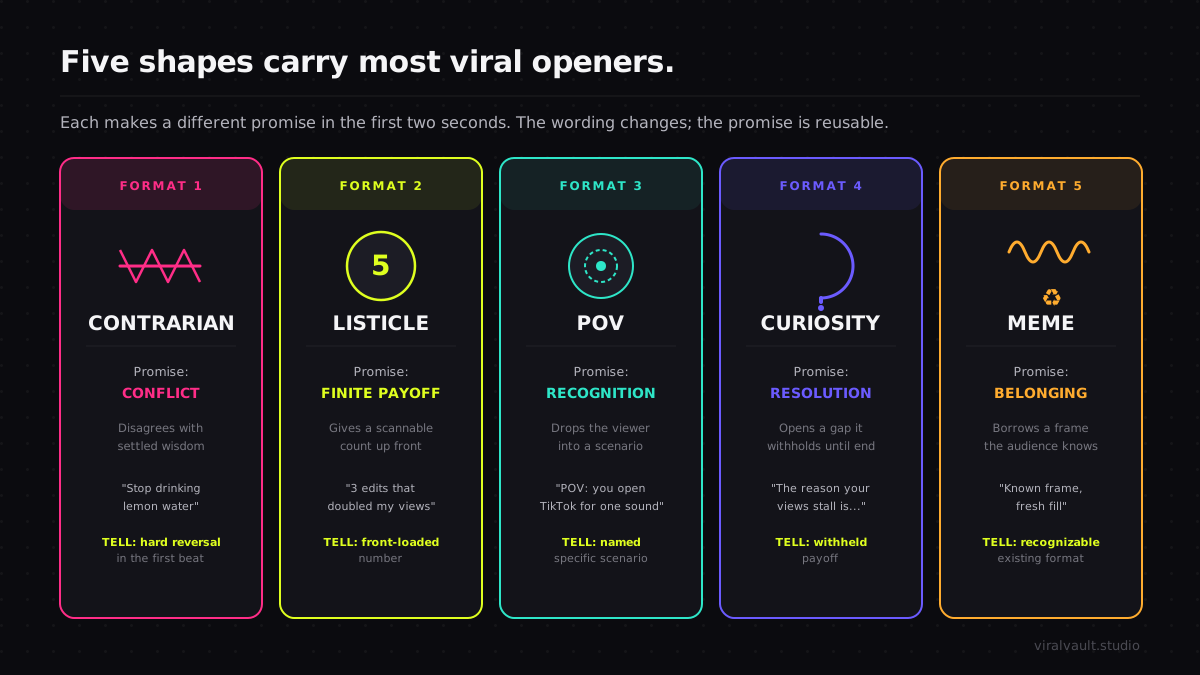
The first two seconds decide everything, and most creators waste them. A viral hook generator for TikTok is not a magic phrase machine — it is a way to copy the shape of an opener that already worked and refit it to your own video. Across the 23,000+ videos in the ViralVault index, almost every breakout opens in one of five recognizable shapes: contrarian, listicle, POV, curiosity, or meme. The AI Hook Writer spins those exact five angles for a reason — they are the patterns that consistently earn the next eight seconds of watch time. This tutorial walks all five TikTok hook formats one at a time, and for each one shows you how to lift the structure from a winning video and rebuild it with your subject. By the end you will be able to look at any high-performing opener, name its format, and write your own version in under a minute.
Table of contents
- Why hook format beats hook wording
- How to read the format off a winning video
- The five formats, step by step
- Step 1: Write a contrarian hook
- Step 2: Write a listicle hook
- Step 3: Write a POV hook
- Step 4: Write a curiosity hook
- Step 5: Write a meme hook
- Frequently Asked Questions
- Building your own viral hook generator for TikTok
Why hook format beats hook wording
Most advice on how to write a viral hook stops at the words: punchier verbs, a number, an emoji. That is paint. The thing that actually carries a hook is its format — the underlying promise it makes to the viewer in the first beat. A contrarian hook promises a fight with conventional wisdom. A curiosity hook promises a gap that only finishing the video will close. The wording changes with every video; the promise is reusable, which is exactly why it travels across niches.
This matters because the For You page does not rank your opener on cleverness. It ranks the video on whether viewers stayed — TikTok's own newsroom has documented how watch time and completion shape what the system surfaces — and the hook's only job is to buy the next eight seconds so the rest of the structure can do its work. A hook that makes a clear, specific promise sets up tension the body pays off, and that tension is what holds attention. A hook that just sounds catchy makes no promise, the viewer feels no pull, and completion craters before the format ever gets a chance. Format-first thinking is also why copying the surface of a hit so often flops — the data-backed reason your TikToks stall is almost always that creators replicate the words and skip the structure underneath.
So the skill is not inventing lines from nothing. It is recognizing which of the five shapes a winning hook used, then refilling that shape with your own subject. That is what every good viral hook generator for TikTok does under the hood, and it is what you are about to learn to do by hand.
How to read the format off a winning video
Before you can write in a format, you have to identify it, and the cleanest source of examples is a video you already know overperformed — not one that merely looks big. Start from a baseline instead of the For You page. Open the Today tab in the ViralVault index, which curates what is overperforming across 12 niches and rescores them daily, filter to your niche, and sort by Outlier Score. Look for a Dual-High: a video that beats both its creator's 30-day median and the niche median at once. 1,400+ videos in the index have cleared both baselines, so their hooks are the ones worth studying.
Once you have a true outlier, watch only its first two seconds and ask a single question: what promise is this making? If it picks a fight with the niche's accepted wisdom, it is contrarian. If it counts something, it is listicle. If it drops you into a character's shoes, it is POV. If it opens a loop it refuses to close yet, it is curiosity. If it leans on a shared in-joke or format the audience already recognizes, it is meme. Naming the promise is the whole move — once you can name it, you can rebuild it.
Run any winning video through a free ViralVault search before you write, so you are reverse-engineering a hook that beat both baselines instead of one that only looked viral — start scoring formats free at viralvault.studio.
The five formats, step by step
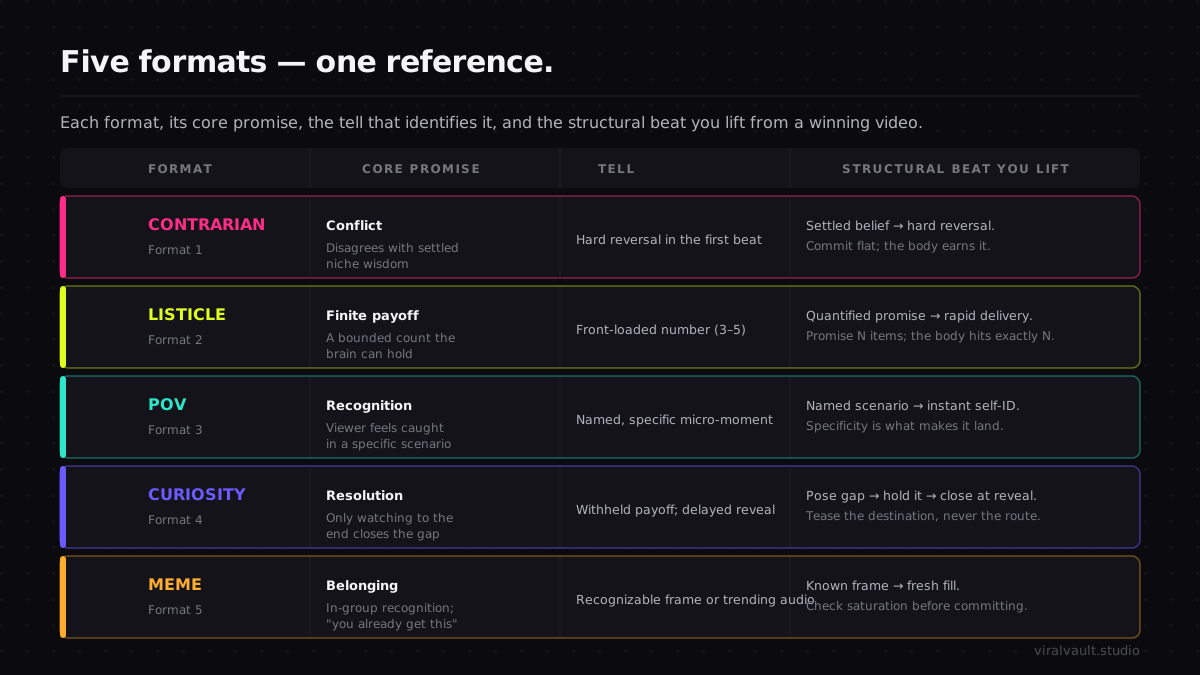
Each of the five steps below is one TikTok hook format. For every format you get its core promise, the tell that identifies it in the wild, and a repeatable way to write your own version from a video you have already scored. Work them in order the first few times; after that you will recognize the shape on sight and reach for whichever one fits the structure you reverse-engineered. The AI Hook Writer runs the same five angles on GPT-4o mini, so if you get stuck on any single format you can generate variants and study how the model fills that shape.
Step 1: Write a contrarian hook
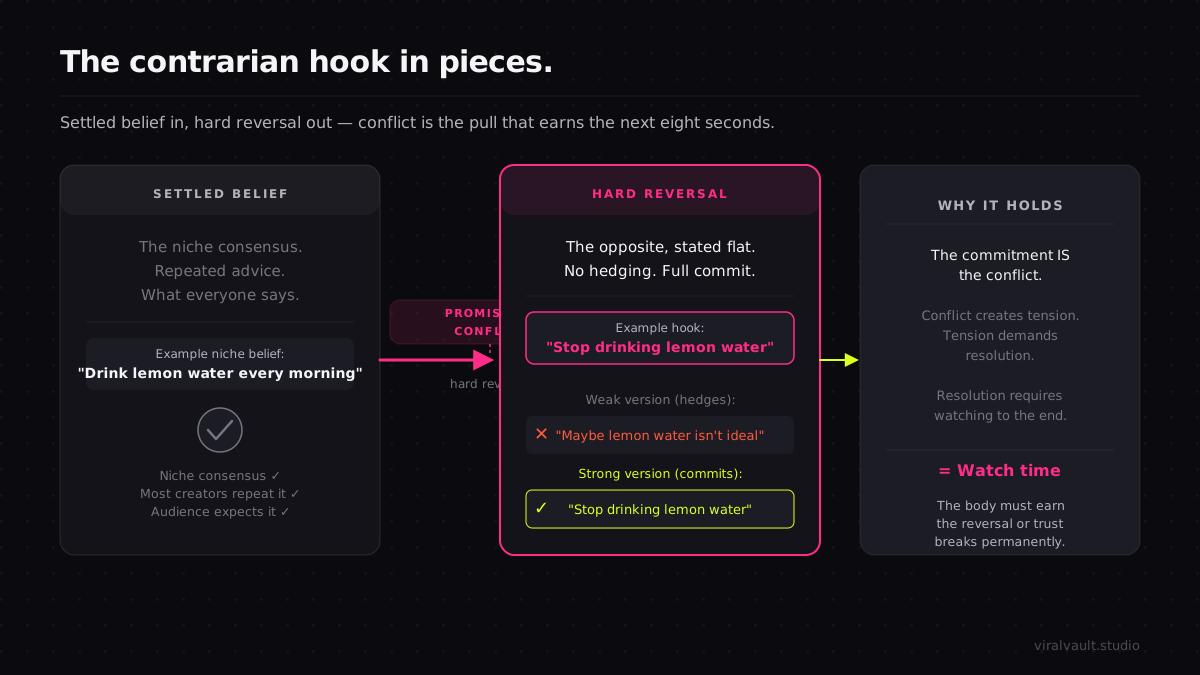
A contrarian hook leads by disagreeing with something your niche treats as settled, and its promise is conflict — the viewer stays to see you defend a stance they did not expect. To write one, find the most repeated piece of advice in your niche, state the opposite as a flat claim, and resist softening it. "Stop drinking lemon water in the morning" works because it attacks a habit the wellness niche treats as gospel; "you don't need a cold plunge" works because it picks a fight with an expensive consensus. The structure you are copying from the winning video is settled belief, then a hard reversal — keep the reversal specific and let the body earn it. A weak contrarian hook hedges ("maybe lemon water isn't ideal"); a strong one commits, because the commitment is the conflict, and the conflict is the pull.
Step 2: Write a listicle hook
A listicle hook front-loads a number, and its promise is a finite, scannable payoff the viewer can see the edges of before they commit. The format works because a count tells the brain exactly how much attention the video will cost and guarantees a payoff at each item. To write one from a winning video, identify the payoff the original delivered, then frame your version as a bounded count of those payoffs: "3 edits that doubled my watch time," "5 niches that are wide open right now." Keep the number small — three to five reads as deliverable, ten reads as a chore. The structural beat you are lifting is quantified promise, then rapid delivery, so the hook must name a number the body actually hits; promising five and showing three breaks the contract and tanks completion. The number is the hook; the items are the proof.
Step 3: Write a POV hook
A POV hook drops the viewer into a specific scenario as if it is happening to them, and its promise is recognition — "this is you" or "this is someone you know." The format succeeds when the scenario is precise enough that the right viewer feels personally caught. To write one, pull the exact situation the winning video dramatized, then sharpen it to your niche's most relatable micro-moment: not "when you're tired" but "when you open TikTok to find one sound and lose an hour." The beat you are copying is named scenario, instant self-recognition, so resist generic setups — specificity is what makes a POV land. Used well it is the most intimate of the TikTok hook formats; overused with vague "POV:" labels slapped on unrelated footage, it reads as filler, which is exactly why a good hook writer reserves it for videos where the scenario genuinely fits.
ViralVault tip: Do not guess which format a video used — read it off the data. Score the video first, confirm it is a Dual-High, then name the promise in its opening two seconds before you write a single word of your own. ViralVault scores any TikTok in your niche free, no card required, at viralvault.studio.
Step 4: Write a curiosity hook
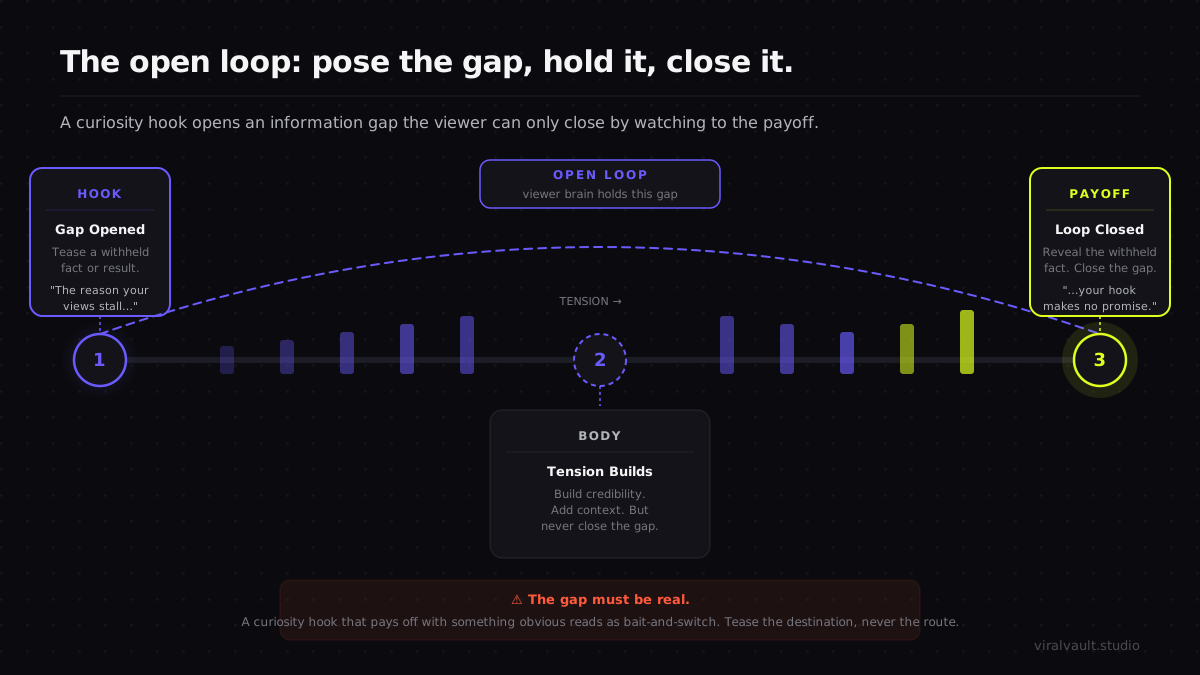
A curiosity hook opens an information gap and refuses to close it until the payoff, and its promise is resolution the viewer can only get by staying. The format weaponizes the open loop: the brain dislikes an unanswered question and keeps watching to resolve it. To write one from a winning video, find the single most surprising fact or result the original withheld, then tease its existence without revealing it: "the reason your videos stall has nothing to do with timing," "I changed one thing and my views tripled." The structural beat is withheld payoff, delayed reveal, so the gap must be real and the body must actually close it — a curiosity hook that pays off with something obvious feels like a bait-and-switch and trains viewers to scroll past your next one. Tease the destination, never the route.
Step 5: Write a meme hook
A meme hook borrows a format, sound, or phrasing the audience already recognizes, and its promise is in-group belonging — "you already get this." It works because recognition is instant; the viewer does not have to be sold on a new idea, only on your spin on a familiar one. To write one, identify the recognizable element the winning video rode — a trending audio, a repeating caption template, a running joke in your niche — and map your subject onto that template without breaking its rhythm. The beat you are copying is known frame, fresh fill. The risk is timing: memes decay fast, so a meme hook is the one format where saturation matters as much as structure. Check how many near-identical videos already exist before you commit, because the same template that pops on day two reads as late by day six.
Frequently Asked Questions
Q: What is the best viral hook generator for TikTok? A: The best one is not a phrase generator but a format engine — a tool that identifies which of the five hook shapes a winning video used and helps you rebuild that shape with your subject. ViralVault's AI Hook Writer does this directly, spinning contrarian, listicle, POV, curiosity, and meme variants on GPT-4o mini from a video you have already outlier-scored, so every hook is modeled on a proven structure rather than guessed.
Q: How do I write a viral hook that actually stops the scroll? A: Start from format, not wording. Pick a video that beat both its creator and niche baselines, name the promise its first two seconds make, then refill that exact promise with your own subject. A hook stops the scroll when it makes a clear, specific promise the body pays off — conflict, a count, recognition, an open loop, or a familiar frame — never when it just sounds catchy without a promise underneath.
Q: What are the five TikTok hook formats? A: Contrarian (disagree with settled wisdom), listicle (front-load a number), POV (drop the viewer into a scenario), curiosity (open a loop you withhold), and meme (borrow a recognizable frame). Each makes a different promise to the viewer in the opening beat, and almost every breakout in the ViralVault index opens in one of these five shapes. Naming the shape is what lets you reuse it.
Q: When should I use a contrarian hook versus a curiosity hook? A: Use a contrarian hook when your video defends a stance the niche disagrees with — the conflict is the pull, so the body must justify the reversal. Use a curiosity hook when your video has a single surprising payoff worth withholding — the open loop is the pull, so the body must actually close it. Match the format to the structure you reverse-engineered, not to your mood.
Q: Can I reuse one winning hook format across different videos? A: Yes, and you should. The format is the reusable part — a contrarian shape that worked in finance ports cleanly to fitness or cooking because the promise of conflict has nothing to do with the subject. Lift the structural beat, swap the topic, and check saturation before you ship. That portability is the entire reason format-first hook writing beats memorizing one-off lines.
Building your own viral hook generator for TikTok
A viral hook generator for TikTok is, in the end, a habit more than a tool: pick a video that beat both baselines, name which of the five formats its opener used, and rebuild that promise with your own subject. Contrarian for conflict, listicle for a bounded count, POV for recognition, curiosity for an open loop, meme for a familiar frame — five shapes that carry almost every breakout, each one liftable from a winning video in under a minute. Do it by hand a dozen times and the recognition becomes automatic; for the prompt-engineering craft that powers the automated version, how the AI Hook Writer beats a vanilla model breaks down the system prompt behind it, and the hub guide on turning one TikTok into a full week of content shows where these hooks fit in a repurposing workflow. Stop writing hooks from a blank page — score a Dual-High in your niche, read its format, and write your first one today at viralvault.studio.