Searchable Content vs Trending Content: What Actually Grows Your Channel Faster

A trend pays out for 72 hours. A searchable video pays out for months. Here's why durable content compounds — and the step-by-step routine to build both at once.
Two videos, same niche, same week. One rides a trending sound and pulls 80K views in three days, then flatlines forever. The other answers a question people actively type into the search bar, opens slow, and gets 4K views in week one — then keeps pulling a few hundred views a day for eight months and out-earns the first by April. A searchable content strategy for TikTok 2026 is built on that second curve, and most creators never see it because they judge a video by its first 72 hours. The trend is a payday; the searchable video is an annuity. Across the 23,000+ videos in the ViralVault index, the gap between a fast-fading hit and a durable one is rarely about quality — it is about whether the video was built to be found later, or only to be served now. This playbook breaks down the real difference between searchable vs trending content, shows the data case for why searchable compounds, and gives you a five-step routine to ship both from the same idea.
Table of contents
- Two different growth curves, not two content qualities
- Searchable vs trending content side by side
- Why durable content compounds and trends do not
- How to build a searchable content strategy for TikTok 2026
- Frequently Asked Questions
- The durable channel beats the lucky one
Two different growth curves, not two content qualities
Trending content and searchable content are not better and worse versions of the same thing — they are two distinct distribution engines with opposite decay rates. Trending content is served. The For You page pushes it to a cold audience during a short window when a sound, format, or topic is hot, and when that window closes the distribution stops whether or not the video was good. Searchable content is found. It surfaces when someone types a query into TikTok search, taps a topic in Creator Search Insights, or lands on it from Google, and that demand does not expire on a 72-hour clock — it renews every time a new person needs the answer.
The mistake is treating these as a single funnel and optimizing both for the same metric. Day-one views measure trend velocity. They tell you nothing about durability, which only shows up in week three, week eight, and month six as a long flat tail of search-driven plays. Judge a searchable video by its first three days and it always looks like a flop next to a trend. Judge a trend by month two and it looks like a video that died and never came back — because it did.
This is measurable, which is the whole reason to care. The ViralVault index tracks 23,000+ videos across 7,800+ creators and rescores them daily, so each video carries two baselines: how the creator normally performs and how the niche normally performs. A trend spikes the Niche Score for a few days and collapses. A searchable winner accumulates a quieter, longer curve that a single day-one snapshot will never reveal. Reading both is how you stop confusing a payday with an asset.
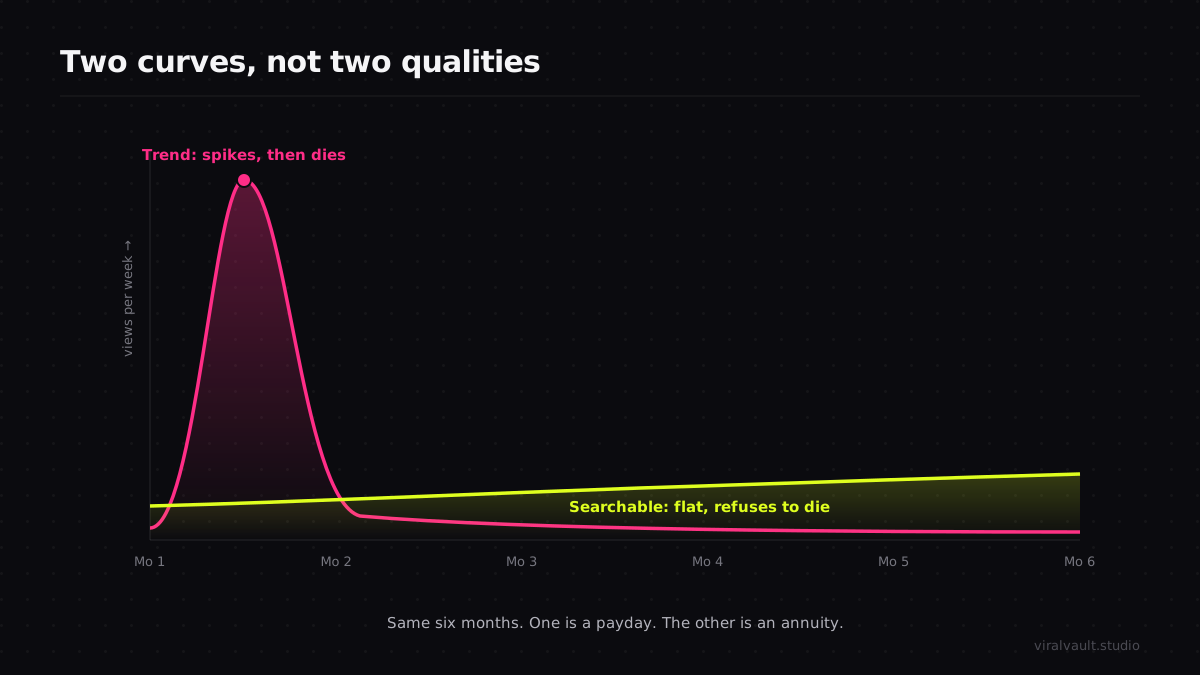
The strategic point is not to abandon trends. Trends are real distribution and they are free reach you should take. The point is that a channel built only on trends has to win the lottery again every single week to grow, while a channel that also stacks searchable content builds a base of videos that keep working after you stop posting them.
Searchable vs trending content side by side
The two formats differ on almost every axis that matters — how they get distributed, how long they pay out, how you should measure them, and how you should write the hook. Mapping the contrast directly is the fastest way to stop optimizing one as if it were the other.
| Axis | Trending content | Searchable content |
|---|---|---|
| Distribution engine | For You page push to a cold audience | Search + topic discovery, pulled on demand |
| Payout window | ~24 to 72 hours, then flatlines | Months; renews with each new searcher |
| Decay rate | Fast — dies when the trend cools | Slow — compounds as it indexes |
| Best success metric | Day-one Niche Score velocity | 30-day and 90-day view tail |
| Hook job | Stop a scroll in two seconds | Match a query and promise the answer |
| Volume needed to grow | High — must re-win weekly | Low — back catalog keeps working |
| Saturation risk | High — everyone chases the same trend | Low — most queries are under-served |
| What it builds | Reach spikes | A durable, compounding base |
Read down the right column and the case for durable content TikTok creators keep overlooking gets obvious: lower volume to maintain, lower saturation to fight, and a payout window measured in months instead of hours. The trade is patience. A searchable video will not validate itself on day one, so you have to commit to the format on evidence of demand rather than evidence of an instant spike.
Build your searchable slate from real demand, not guesses — find the questions your niche is actively searching before you script a single answer video, so every durable piece is aimed at traffic that already exists.
That is the whole reframe of searchable vs trending content: you are not choosing a better video, you are choosing a distribution engine with a different clock. The growth comes from running both clocks at once.
Why durable content compounds and trends do not
Compounding is the entire argument, so it is worth making precisely. A trending video is a one-time event: it earns its views in a burst and then the audience moves on, because the thing that made it relevant — the sound, the format, the moment — moved on too. Post fifty trend videos in a year and you have fifty bursts, each of which had to be caught at exactly the right time, and your total reach is the sum of fifty independent gambles. Miss the window on any of them and that video earns close to nothing.
A searchable video behaves like an asset instead of an event. Once it indexes against a query people keep typing, it earns a small number of views every week without you touching it, and those weekly trickles stack. Ship one durable video a week and by month six you have roughly two dozen videos all quietly pulling search traffic at the same time — a base layer of distribution that exists before you post anything new. New videos add to that floor instead of replacing last week's spike. That is the difference between adding and multiplying.
The TikTok search surface is what makes this possible at scale. TikTok has steadily expanded discovery beyond the For You feed, and TikTok's own newsroom has documented how search and topic surfaces now shape what people find — which means a meaningful share of a niche's audience is arriving through deliberate queries, not passive scrolling. TikTok SEO is the practice of being the answer those queries return, and unlike a trend, a good answer does not have an expiration date. The query "how to deglaze a pan" gets typed every week forever; the sound that was hot last Tuesday does not.
ViralVault tip: Before you write off a slow-starting searchable video, score it against your baseline at the 30-day mark, not day one. If it cleared your 30-day median on cumulative views even though it opened soft, the search tail is working and you should make three more on adjacent queries. ViralVault scores any TikTok against both its creator and niche baselines free, no card required, at viralvault.studio.
There is a measurement trap here that sinks most creators, and it is the same one that drives the reasons TikTok content stalls: they judge every video by raw day-one views. That single metric is blind to durability, so searchable winners get abandoned for "underperforming" before their tail ever arrives. The fix is to judge against your own baselines instead of a vanity ceiling; how the Outlier Score works breaks down the exact creator-versus-niche math. Fix the measurement — judge searchable content on its 30- and 90-day curve, judge trends on their day-one spike — and the compounding finally becomes visible.
How to build a searchable content strategy for TikTok 2026
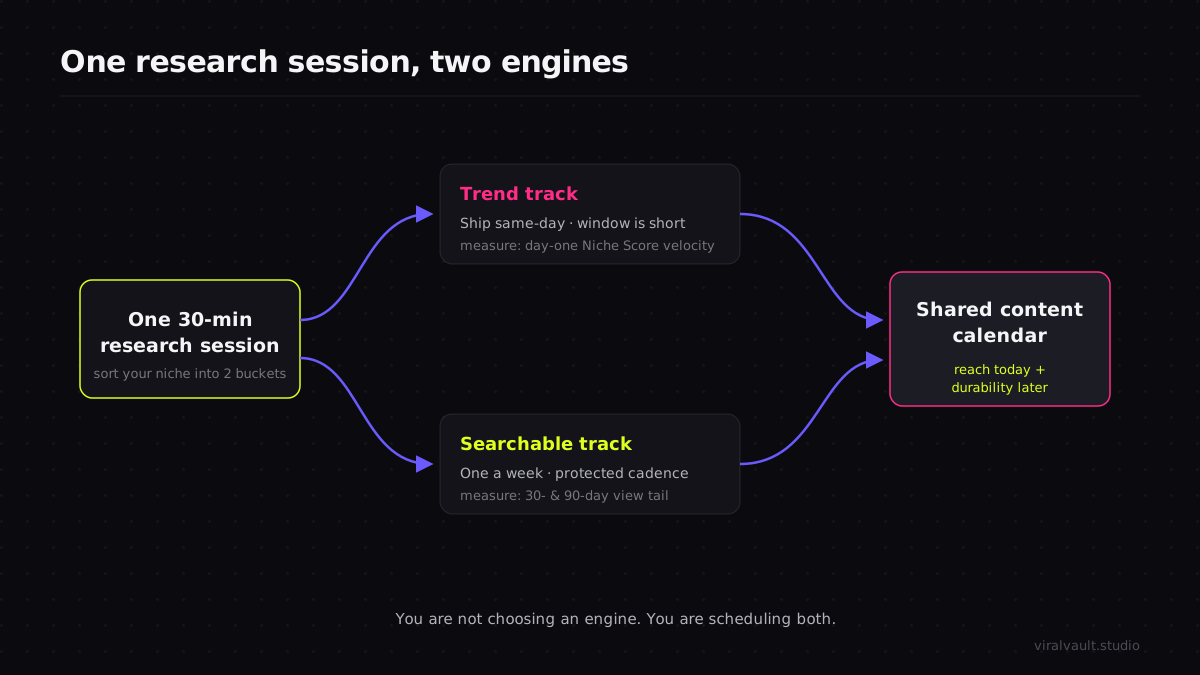
This routine runs both engines from a single research session, so you are not choosing between reach today and durability later — you are scheduling both. Budget about thirty minutes a week to set the slate, then execute against it.
Run your niche through a free ViralVault search before you plan the week — pull the rising formats and the durable demand in one pass so the trend picks and the searchable picks come from the same data, not two separate guesses.
Step 1: Separate your demand into trending and durable
Open the Today tab, which curates what is over-performing across 12 niches and rescores them daily, and filter to your niche. Sort by Outlier Score and split what you see into two buckets. Sharp, recent spikes driven by a sound or format are trend candidates — high day-one velocity, short runway. Topics that show steady over-performance without a single sound behind them, or queries that recur in Creator Search Insights, are durable candidates. The split matters because the two buckets get scripted, measured, and scheduled completely differently, and lumping them together is why most calendars are all trend and no base.
Step 2: Pick durable topics with proven, recurring demand
For the searchable bucket, choose topics where demand already exists and renews. The test is simple: would someone type this into search next month, and the month after. "How to" questions, comparisons, mistakes-to-avoid, and beginner explainers in your niche almost always pass; reactions to a specific moment almost always fail. Cross-check each candidate against the niche median so you are answering a question with real volume, not a question only you find interesting. A Dual-High video — one that beats both its creator's 30-day median and the niche median, which 1,400+ videos in the index have managed — on an evergreen topic is the strongest possible signal that the durable demand is genuine and large.
Step 3: Write a hook that matches the query, not just the scroll
Searchable and trending hooks have opposite jobs, so write them differently. A trend hook has two seconds to stop a cold scroll. A searchable hook has to name the query in the first line so both the viewer and the search system know this video is the answer — "the three-ingredient version everyone gets wrong" beats a clever cold open when the goal is to match intent. Use the AI Hook Writer, which runs on GPT-4o mini and spins five variants across contrarian, listicle, POV, curiosity, and meme angles, then pick the listicle or curiosity variant for searchable pieces and the contrarian or meme variant for trend pieces. Match the hook to the engine, not the other way around.
Step 4: Ship trends same-day and durable content on a steady cadence
Speed rules for trends: a format rising on Monday can be saturated by Saturday, so ship the trend bucket the day you find it or skip it. Durable content runs on the opposite logic — there is no window to beat, so consistency wins. Commit to one searchable video a week and protect that slot even on weeks the trends are loud, because the base layer only compounds if you keep stacking it. Set a Watchlist on your niche so a rising format reaches you the morning it starts — the alert fires when your niche's average Outlier Score jumps 50% or more in 24 hours — and you catch the trend window without abandoning the durable cadence.
Step 5: Measure each engine on its own clock
Close the loop with two different rulers. Judge trend videos on day-one Niche Score velocity — if the spike came, the trend bet paid; if it did not, move on without a second thought. Judge searchable videos on their 30- and 90-day cumulative curve against your median — a soft open that keeps climbing for two months is a win, not a flop, and it tells you to make more on adjacent queries. Reviewing both monthly turns the abstract "build durable content" advice into a concrete feedback system: you see exactly which evergreen topics are compounding and double down on those query clusters.
What a dual-engine channel looks like after ninety days
The shift is from a channel that has to win every week to a channel that wins in the background. In the first month, the trend videos still do most of the visible work — the spikes are what show up in your day-one numbers. By month two, the searchable videos you shipped in week one are indexing and starting their tails, and by month three you have a stack of evergreen pieces all pulling search traffic at once. The trends still spike on top of that floor, but they are no longer the only thing keeping the channel alive between hits.
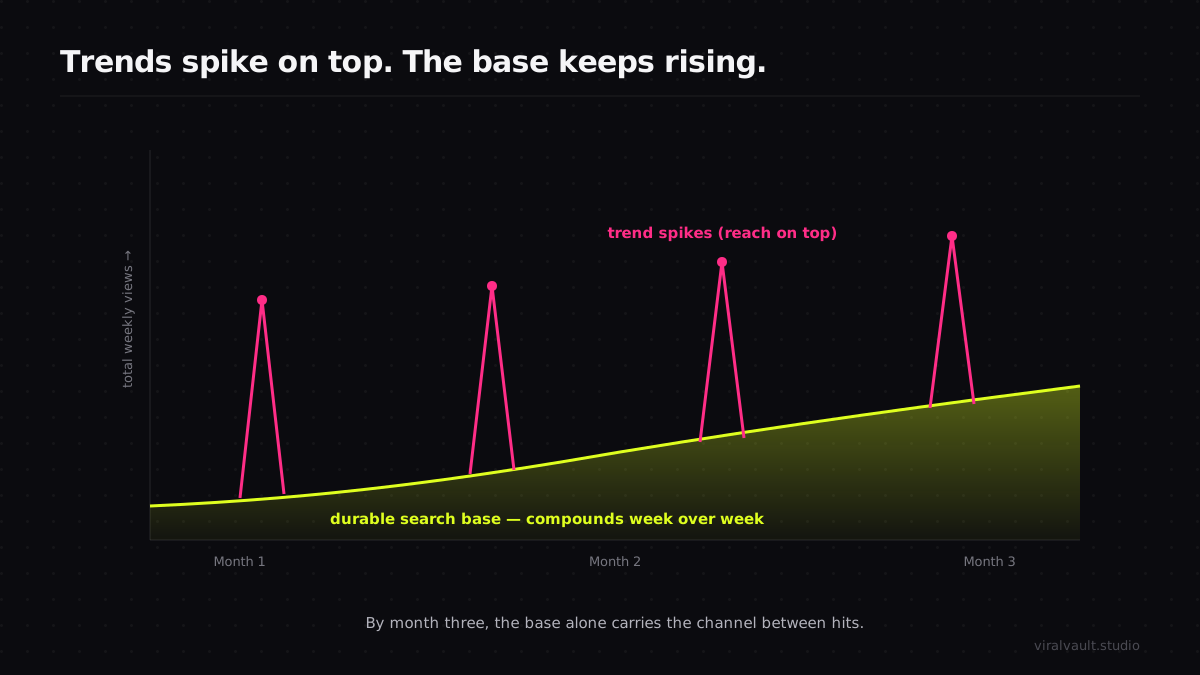
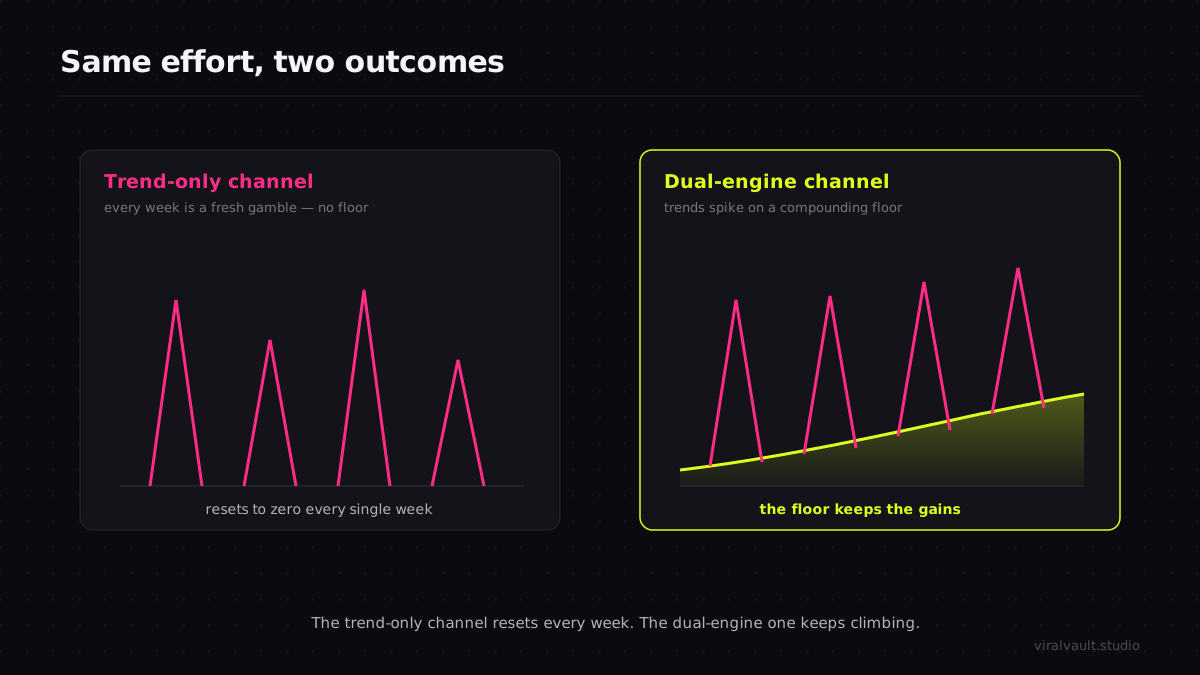
The creators who plateau are almost always running on trends alone — every week is a fresh gamble, and a slow trend week is a dead week. The creators who climb steadily are running both engines: catching trends for reach and stacking searchable content for a base that compounds. The work is not harder, it is just scheduled differently — one research session, two buckets, two clocks.
If you run TikTok in the browser, the Chrome extension overlays Outlier Scores directly on the videos you are already watching so sorting a feed into trend bets and durable bets happens without a context switch.
Frequently Asked Questions
Q: What is the difference between searchable and trending content on TikTok? A: Trending content is pushed by the For You page during a short hot window and flatlines in 24 to 72 hours. Searchable content is pulled on demand through TikTok search and topic discovery, so it keeps earning views for months as new people type the query. Trends are a payday; searchable content is a compounding asset with a far longer payout window.
Q: Does searchable content really grow a channel faster than trends? A: It grows it more durably, which compounds faster over months. A trend earns one burst; a searchable video earns a small amount every week and those trickles stack, so by month six a back catalog of durable videos pulls steady traffic before you post anything new. The fastest-growing channels run both — trends for reach, searchable content for a compounding base.
Q: How do I know if a slow video is a searchable winner or just a flop? A: Judge it on its 30- and 90-day cumulative views against your median, never on day one. Searchable content opens soft by design because it relies on search traffic that arrives over time. If the curve keeps climbing weeks after posting and clears your median, the search tail is working — make more on adjacent queries instead of abandoning the format.
Q: What is TikTok SEO and how does it relate to searchable content? A: TikTok SEO is the practice of making your videos the answer TikTok search returns for queries your niche actively types. Searchable content is the output of that practice — videos built to match recurring demand rather than a passing trend. Naming the query in the hook and caption and targeting topics with proven, repeating volume is how durable content TikTok strategies stay found long after a trend would have cooled.
Q: Should I stop making trending content entirely? A: No. Trends are free reach and you should take it. The point of a searchable content strategy for TikTok 2026 is not to abandon trends but to stop relying on them alone, because a trend-only channel has to win the lottery every week to grow. Stack searchable content underneath your trend posts so a slow trend week is no longer a dead week.
The durable channel beats the lucky one
The honest answer to searchable vs trending content is that you need both, run on two different clocks. A searchable content strategy for TikTok 2026 wins not because trends stop working but because durable content compounds while trends decay — a video built to be found keeps paying out long after the sound that powered a trend has cooled. Sort your niche into trend bets and durable bets from one research session, write each hook for its own engine, ship trends same-day and searchable content on a protected weekly cadence, then measure each on its own curve. None of this is luck — it is a thirty-minute weekly loop that stacks assets instead of chasing spikes. Spin up a free account, set a Watchlist on your niche, and start building a base that grows between hits instead of resetting every week — begin at viralvault.studio.