UGC Creators: Content Ideas That Land Brand Deals

Brands do not buy vibes — they buy formats with proof. Here's how to source UGC content ideas from viral trends, translate them into brand-safe concepts, and pitch them with data that closes the deal.
Most UGC creators pitch the same way: a friendly DM, a rate card, and a portfolio of clips that look nice but prove nothing. Brands skim past it because it answers the wrong question. The brand does not want to know that you can shoot — it wants to know that the format you are proposing already moves numbers. That is the entire unlock, and it is why sourcing UGC content ideas from viral trends beats freestyling concepts every time: you walk in with a format that is already proven in the wild, then translate it into something brand-safe and back the pitch with data the buyer can verify. Across the 23,000+ videos and 7,800+ creators in the ViralVault index, the gap between a UGC creator who books deals and one who gets ghosted is rarely talent or production value. It is whether the idea arrives as a hunch or as evidence. This playbook gives you the exact method: where to find brand-friendly outliers, how to reshape them into concepts a marketing team can say yes to, and how to turn the same data into a pitch that closes.
Table of contents
- Why brands buy formats, not vibes
- What makes a viral idea brand-friendly
- How to find UGC content ideas from viral trends
- Turning the data into a pitch that closes
- Frequently Asked Questions
- The data-backed way to land UGC brand deals
Why brands buy formats, not vibes
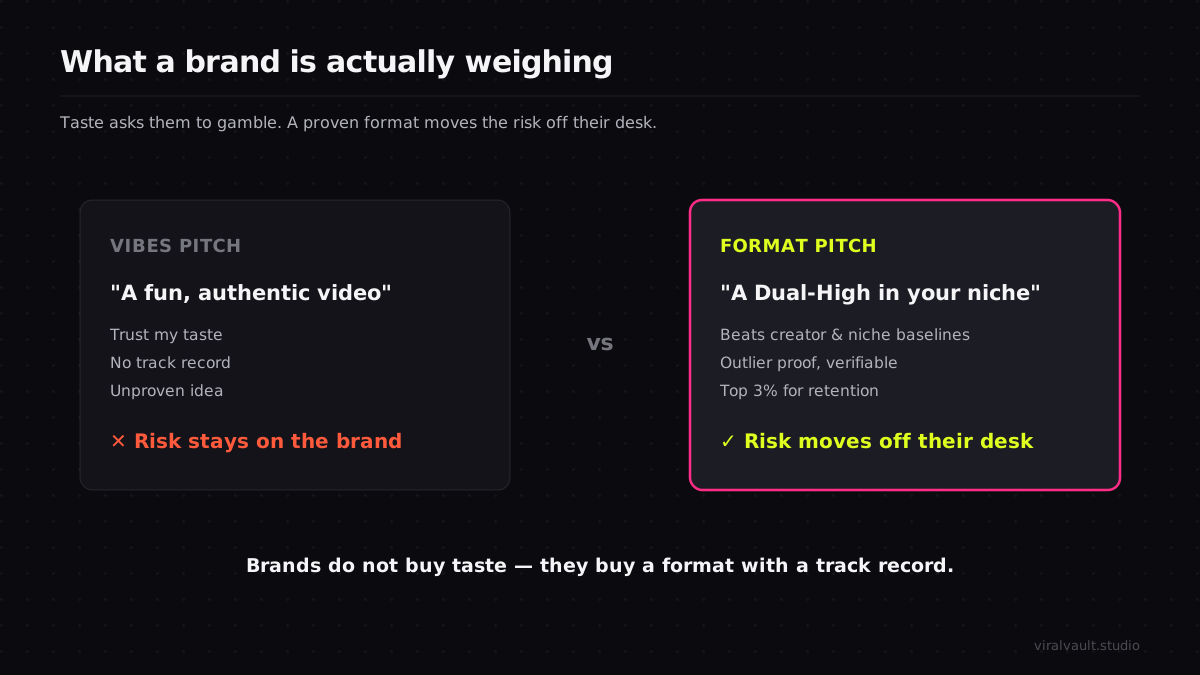
A brand hiring a UGC creator is not buying art. It is buying a reduction in risk. The marketing manager on the other end has a budget to defend and a boss who asks why a spend did not perform. When you pitch a "fun, authentic skincare video," you are asking that person to gamble on your taste. When you pitch a specific format — a reverse-order before-and-after with the payoff held to the final frame, a structure that is currently over-performing in beauty by a wide margin — you are handing them a reason their gamble is closer to a bet on a sure thing. The risk moves off their desk. That is what gets a contract signed.
This is where viral data changes the negotiation. A format that has gone viral is not a guess about what might work; it is a record of what already held attention at scale. The For You page rewards formats that drive completion and re-watches — TikTok's own newsroom has documented how watch time and completion shape what the system surfaces — and an outlier video is one that cleared that bar so decisively it beat both its creator's normal numbers and its niche's normal numbers at once. Bring that to a brand and you are no longer the cheapest option in their inbox — you are the one who did the homework. UGC brand deals close on confidence, and confidence comes from proof.
The creators who understand this stop selling production and start selling intelligence. The shooting is table stakes; everyone can shoot. The differentiator is showing up with viral content ideas for UGC that are already de-risked, mapped to the brand's exact niche, and ready to translate into their product. That shift — from vendor to strategist — is the whole reason this method works.
What makes a viral idea brand-friendly
Not every outlier is pitchable. A format that pulls millions of views on a controversy, a shock cut, or an edgy hook can be radioactive to a brand that needs its name to stay safe. The skill is filtering viral ideas through a brand lens before you ever put them in a deck. Three tests separate a brand-friendly format from one that will get your pitch deleted.
The first is tone safety. The format has to carry a positive or neutral emotional charge — curiosity, satisfaction, aspiration, humor that punches at nothing. A structure that works because it is divisive or mean travels badly into a sponsored context. The second is product fit: the format has to leave a natural, non-forced place for a product to live. A "result first, then the routine" structure is brand gold because the product slots cleanly into the routine; a pure reaction format often has nowhere for the product to go without feeling bolted on. The third is integration honesty — the best brand-friendly formats let the product earn its place inside the value the video already delivers, so the ad does not read as an ad. When a format passes all three, it is ready to translate.
ViralVault tip: Before you pitch a format, score it against both baselines. A Dual-High video — one that beats its creator's 30-day median and its niche median at once — is the strongest virality signal in short-form video; 1,400+ videos in the index have cleared both. Lead your pitch with a Dual-High in the brand's niche and you are arguing from the rarest tier of proven formats. Score any TikTok in a niche free, no card required, at viralvault.studio.
The point of these filters is not to shrink your options — it is to make sure that when you do walk into a pitch, every idea on the table can survive contact with a legal and brand-safety review. A brand-friendly viral format is the rare thing that satisfies both the algorithm and the marketing team. Find those, and you have a shortlist worth pitching.
How to find UGC content ideas from viral trends
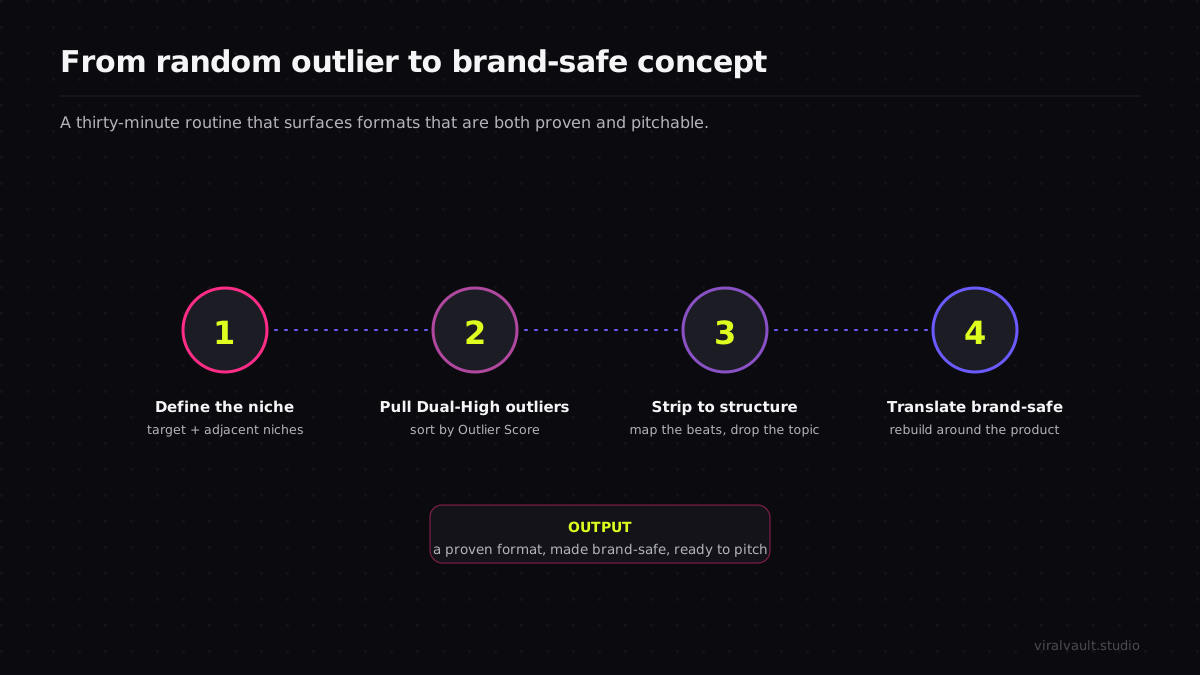
This is the repeatable routine. It takes about thirty minutes per brand and is built to surface formats that are both proven and pitchable, not just whatever is loud this week.
Run the brand's niche through a free ViralVault search before you draft a single concept — pull the proven outliers first so every idea in your pitch is backed by a real performance record, not a hunch.
Step 1: Define the brand's niche and adjacent niches
Start with precision about who you are pitching. A skincare brand lives in beauty, but its formats also borrow from wellness, "get ready with me," and dermatologist-explainer niches. Open the Today tab, which curates what is over-performing across 12 niches and rescores them daily, and map the two or three niches your target brand actually competes in. Pitching a beauty brand a format that only works in gaming is how you get ignored; pitching it a structure proven across beauty and its closest neighbors is how you sound like you already work there. Write down the niches before you search so your sourcing stays aimed at the buyer, not at the broadest possible feed.
Step 2: Pull the Dual-High outliers in those niches
Now find the proven formats. Sort the niche by Outlier Score and surface the Dual-High videos — the ones beating both their creator's 30-day median and the niche median at once. A high Creator Score alone is a fan-base story and does not travel; a high Niche Score is a format story, and formats are exactly what you can copy into a brand concept. Shortlist five to eight Dual-High videos rather than scrolling for an hour, because only 1,400+ videos in the whole index have cleared both and these are the formats most likely to repeat. This shortlist is your raw material — a set of structures that already cleared the only bar that matters, viewer retention, in the brand's own niche.
Step 3: Strip each outlier down to its structure
Watch each shortlisted outlier three times, with the sound off on the second and third pass, and ignore the topic entirely. Map the skeleton: where the hook lands, what question the first two seconds plant, the order information is revealed, and where the payoff is withheld to drive completion. Write it as a sequence of beats — "before-state in frame one, transformation teased, three-step process, result held to the final frame" — not as a description of the subject. The topic is the paint; this skeleton is the engine, and the engine is what ports cleanly from a random creator's video into a concept for your brand. This is the step most creators skip, and skipping it is why their "inspired by a trend" pitches feel like cheap copies instead of professional adaptations.
Step 4: Translate the structure into a brand-safe concept
Take the bare structure and rebuild it around the brand's product, applying the three brand-friendly filters as you go. Keep the proven beats — the hook timing, the reveal order, the withheld payoff — and swap in the product so it earns its place inside the value the video delivers. A before-and-after skeleton becomes a real result using the brand's serum; a "things I wish I knew" listicle becomes genuinely useful tips where the product is one honest answer among several. Generate hook options fast with the AI Hook Writer, which runs on GPT-4o mini and spins five variants across contrarian, listicle, POV, curiosity, and meme angles, then pick the one that fits both the structure and the brand's voice. The output of this step is a clean concept: a proven format, made brand-safe, ready to drop into a pitch.
Turning the data into a pitch that closes
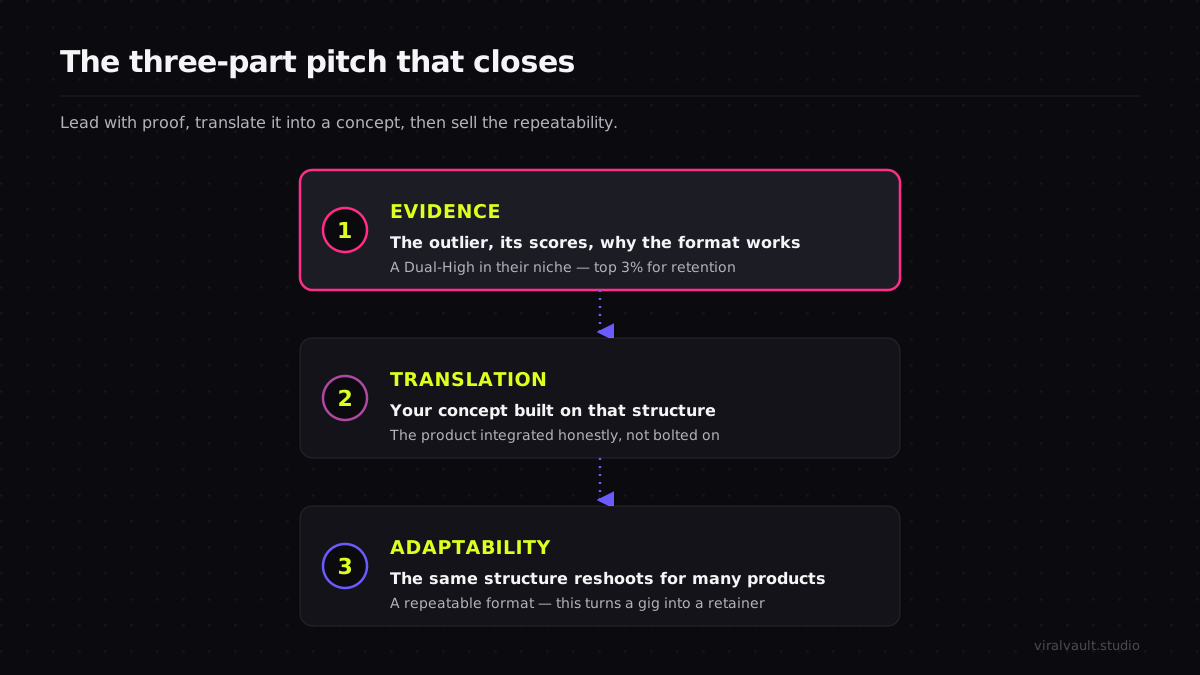
A great concept still loses if you present it like everyone else. The move that closes UGC brand deals is leading with the evidence, not the offer. Open your pitch with the proof: "This format is currently a Dual-High in your niche — it is beating both the creator's normal numbers and the niche average, one of the few hundred videos in the index that have cleared both. Here is how I would adapt it to your product." You have now reframed the entire conversation. The brand is no longer evaluating whether to trust your taste; it is evaluating a format with a track record, presented by someone who clearly understands their market.
Structure the pitch as a short, three-part case. First, the evidence — the outlier, its scores, and why the format works (the structural beats that drive completion). Second, the translation — your specific concept built on that structure, with the product integrated honestly. Third, the adaptability — note that the same structure can be reshot for several products or angles, so the brand is buying a repeatable format, not a one-off. That last part is what turns a single video deal into a retainer, because you are selling a system the brand can run with you again and again.
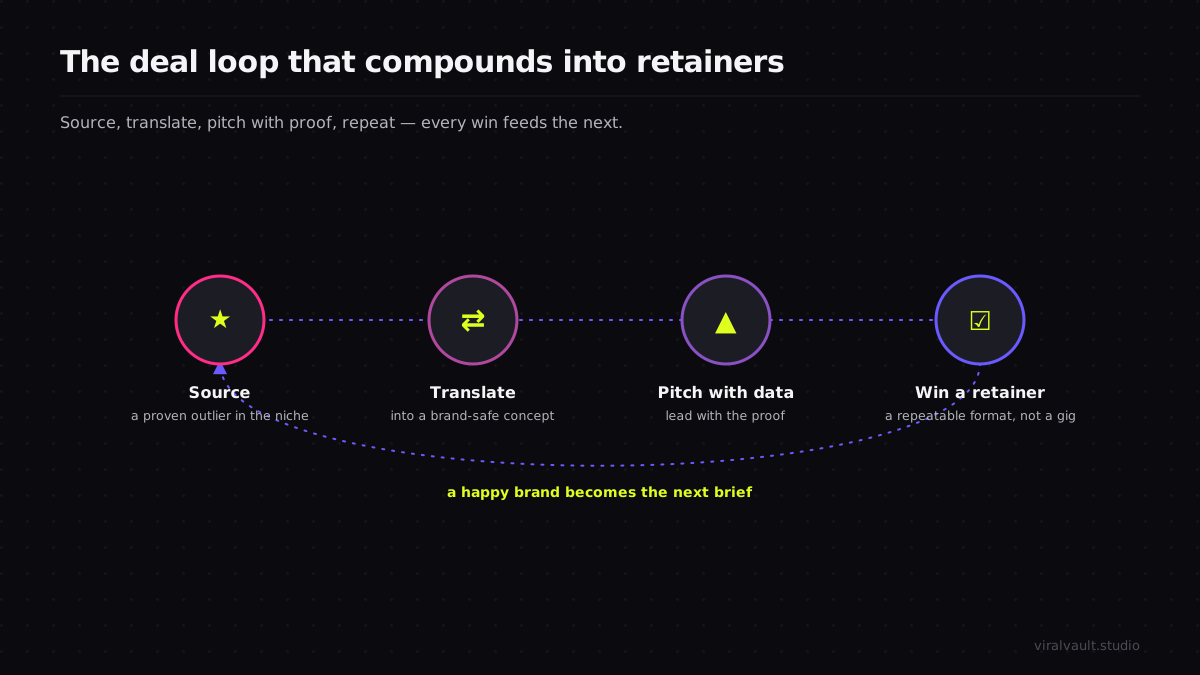
When you learn to pitch brands with data this way, your close rate stops depending on how warm the lead is. The agencies that have systematized this — sourcing proven formats and presenting them as evidence-backed concepts — book more, charge more, and keep clients longer. The full version of that operating model is broken down in the UGC agency workflow case study, and the broader shift toward data-literate creators is covered in the creator economy trends guide. The principle is the same at every scale: brands pay a premium for confidence, and confidence is just data presented well.
A quick operational note: if you run TikTok in the browser while researching for clients, the Chrome extension overlays Outlier Scores directly on the videos you are already watching so you can capture a brand-friendly format the moment you spot it without breaking your flow. You can also save the proven formats into a Board and export it as a clean PNG to drop straight into a pitch deck.
Frequently Asked Questions
Q: How do UGC creators find viral content ideas that brands will actually approve? A: Source proven outliers in the brand's niche, then filter them through three brand-safety tests — tone safety, natural product fit, and honest integration. Pull the Dual-High videos beating both their creator and niche baselines, strip each to its structure, and rebuild that structure around the brand's product. This gives you a format that already worked and can survive a brand review.
Q: Why is sourcing UGC content ideas from viral trends better than coming up with original concepts? A: A viral format is a record of what already held attention at scale, not a guess. When you pitch a proven structure instead of an untested idea, you move the risk off the brand's desk, which is what gets contracts signed. Original concepts can work, but a format with a track record gives a marketing team a defensible reason to say yes — and that is what closes UGC brand deals.
Q: How do I pitch brands with data without sounding like a spreadsheet? A: Lead with one clear proof point, not a wall of numbers. Open with the single fact that the format is a Dual-High in their niche — beating both the creator and niche averages — then immediately translate it into your specific concept for their product. One verifiable metric framed as confidence does more work than a deck of charts, because the brand cares about reduced risk, not statistics.
Q: What makes a viral format brand-safe for UGC? A: Three things: a positive or neutral emotional charge (no controversy or shock), a natural place for a product to live inside the structure, and integration that earns its place inside the value the video already delivers. A "result first, then the routine" format passes all three because the product slots into the routine. A divisive or pure-reaction format usually fails the tone or fit test.
Q: Do I need a paid tool to find viral content ideas for UGC pitches? A: No. ViralVault offers 3 free searches per day with no card required, which is enough to source proven outliers in a brand's niche and build a data-backed pitch. The Pro plan at $19 per month adds higher limits and saved Boards for creators pitching multiple clients regularly, but the free tier covers the core sourcing routine in this playbook.
The data-backed way to land UGC brand deals
The creators winning UGC brand deals in 2026 are not the best shooters — they are the best researchers. Sourcing UGC content ideas from viral trends turns every pitch from a gamble on your taste into a presentation of proof: a format already over-performing in the brand's niche, filtered for safety, translated into their product, and backed by a metric the buyer can verify. That is what moves risk off the brand's desk and gets a yes. Define the niche, pull the Dual-High outliers, strip them to structure, rebuild them brand-safe, and lead your pitch with the evidence. None of it requires more talent than you already have — it requires showing up with data instead of vibes. Spin up a free account, pull the proven formats in your next client's niche, and start pitching ideas brands can say yes to at viralvault.studio.