What Is Searchable Content on TikTok and Why It Beats Trends
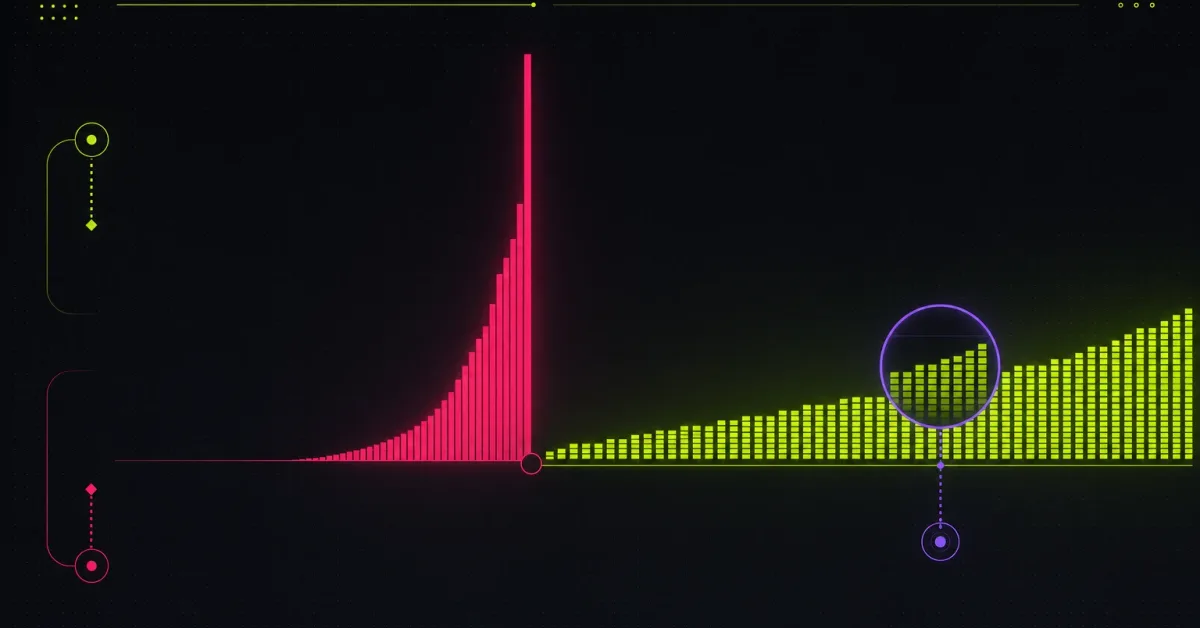
A trend pays out for three days; a searchable video pays out for months. Here's a plain-English definition of searchable content — and why it compounds while trends decay.
Searchable content is any video built to be found later through a query, not just served once through a feed — an evergreen answer to something people actively type into the search bar, that keeps getting surfaced for months. That single property is what separates it from trend content, and it is the whole foundation of a searchable content strategy for TikTok 2026. A trend video is served to a cold audience during a short hot window and then goes dark; a searchable video is pulled on demand every time a new person needs the answer, so its views accumulate long after you stop posting it. The difference is not quality and it is not effort. It is durability — one decays in days, the other compounds for months. This explainer gives you a clean searchable content definition, defines trend content next to it, shows why searchable compounds while trends churn, and tells you when each is actually worth making.
Table of contents
- The searchable content definition
- Trend content, defined next to it
- Why searchable content compounds and trends decay
- When each type is worth making
- Frequently Asked Questions
- Why a searchable content strategy for TikTok 2026 wins
The searchable content definition
The clearest searchable content definition is functional: a searchable video is one whose distribution comes from intent, not from a feed push. Someone wants an answer, types or taps a query — "how to deglaze a pan", "best lens for beginners", "why is my sourdough flat" — and your video is what the search surface returns. Because the demand behind that query renews every week, the video keeps earning plays with no further work from you. That is what makes it evergreen tiktok content: the topic does not expire, so neither does the distribution.
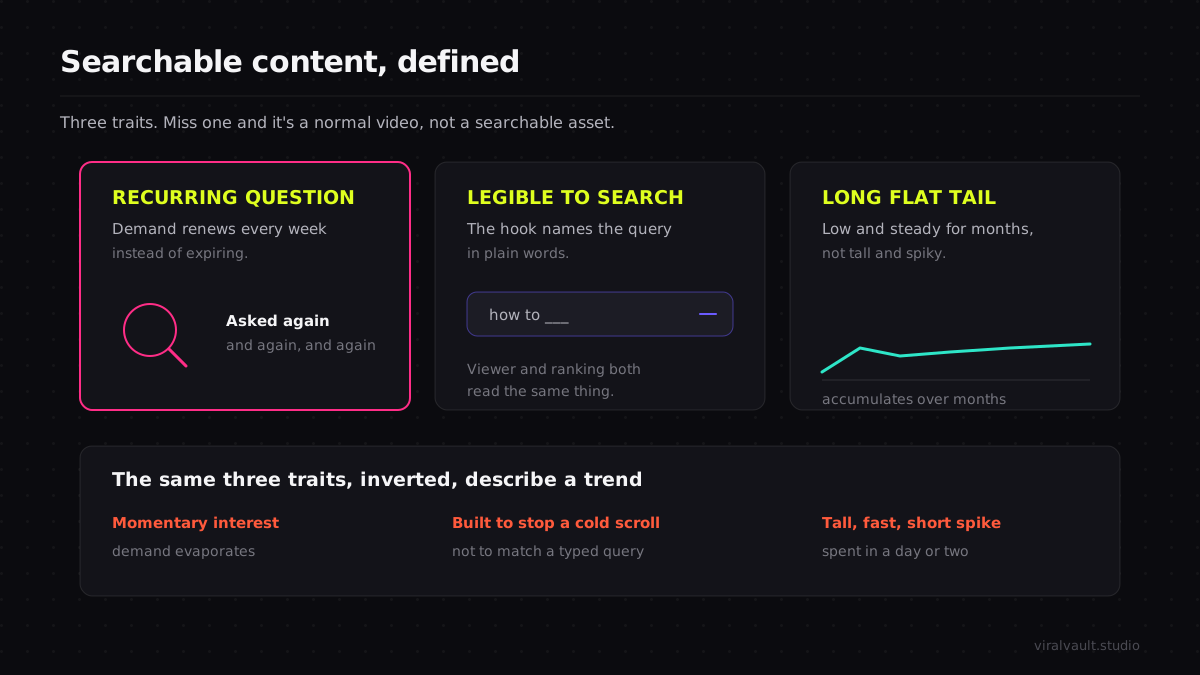
Three traits define it. First, it answers a recurring question — something a steady stream of people will keep needing, not a reaction to a single moment. Second, it is legible to search — the hook and caption name the query plainly so both the viewer and the ranking system can tell what the video answers. Third, it has a long tail — its view curve is low and flat rather than tall and spiky, accumulating over months instead of spending itself in 72 hours. Miss any one of those and you have a normal video, not a searchable asset.
The TikTok search surface is what makes the category real. TikTok has steadily expanded discovery beyond the For You feed into search and topic surfaces, and TikTok's own newsroom has documented how people increasingly arrive through deliberate queries rather than passive scrolling. Searchable content is simply the practice of being the answer those queries return — which is also why understanding what your niche is actively searching is the precondition for making it.
Trend content, defined next to it
Trend content is the opposite distribution engine, and defining it side by side makes the contrast concrete. A trend video is served, not found. The For You page pushes it to a cold audience during the brief window when a sound, format, or topic is hot, and the moment that window closes the distribution stops — whether or not the video was good. Its value is real but perishable: a burst of reach, then silence.
The defining traits invert searchable content's. A trend answers a momentary interest rather than a recurring one, so the demand behind it evaporates instead of renewing. Its hook is built to stop a cold scroll in two seconds, not to match a typed query. And its view curve is a spike — tall, fast, and short, spending its entire payout in a day or two. None of that is a flaw. A trend is free reach you should take. It is just an event, not an asset, and treating the two as one funnel is the core mistake of searchable vs trending thinking.
The honest framing is that searchable and trending are not better and worse versions of the same video — they are two engines with opposite decay rates. One spikes and dies; one trickles and stacks.
See which is which in your own niche before you script anything — score any TikTok against both its creator and niche baselines free so you can tell a perishable spike from a durable answer at a glance.
Why searchable content compounds and trends decay
Compounding is the entire case, so it is worth making precisely. A trend earns its views in one burst and then the audience moves on, because the thing that made it relevant moved on too. Post fifty trend videos in a year and you have fifty independent bursts; your total reach is the sum of fifty gambles, each of which had to be caught at exactly the right moment. Miss the window on any one and that video earns almost nothing.
A searchable video behaves like an asset. Once it indexes against a query people keep typing, it earns a small number of plays every week without you touching it, and those weekly trickles stack. Ship one durable video a week and by month six you have roughly two dozen videos all quietly pulling search traffic at the same time — a base layer of distribution that exists before you post anything new. New videos add to that floor instead of replacing last week's spike. That is the difference between adding and multiplying, and it is why the gap between a fast-fading hit and a durable one is rarely about quality.
This is measurable, which is the whole point of treating it seriously. The ViralVault index tracks 23,000+ videos across 7,800+ creators and rescores them daily, so each video carries two baselines: how the creator normally performs and how the niche normally performs. A trend spikes the niche baseline for a few days and collapses; a searchable winner accumulates a quieter, longer curve a single day-one snapshot never reveals. Reading both is how you stop confusing a payday with an asset — and how you know a slow-opening video is compounding rather than failing.
ViralVault tip: Before you write off a slow-starting searchable video, score it against your baseline at the 30-day mark, not day one. If it cleared your 30-day median on cumulative views even though it opened soft, the search tail is working and you should make three more on adjacent queries. ViralVault scores any TikTok against both its creator and niche baselines free, no card required, at viralvault.studio.
When each type is worth making
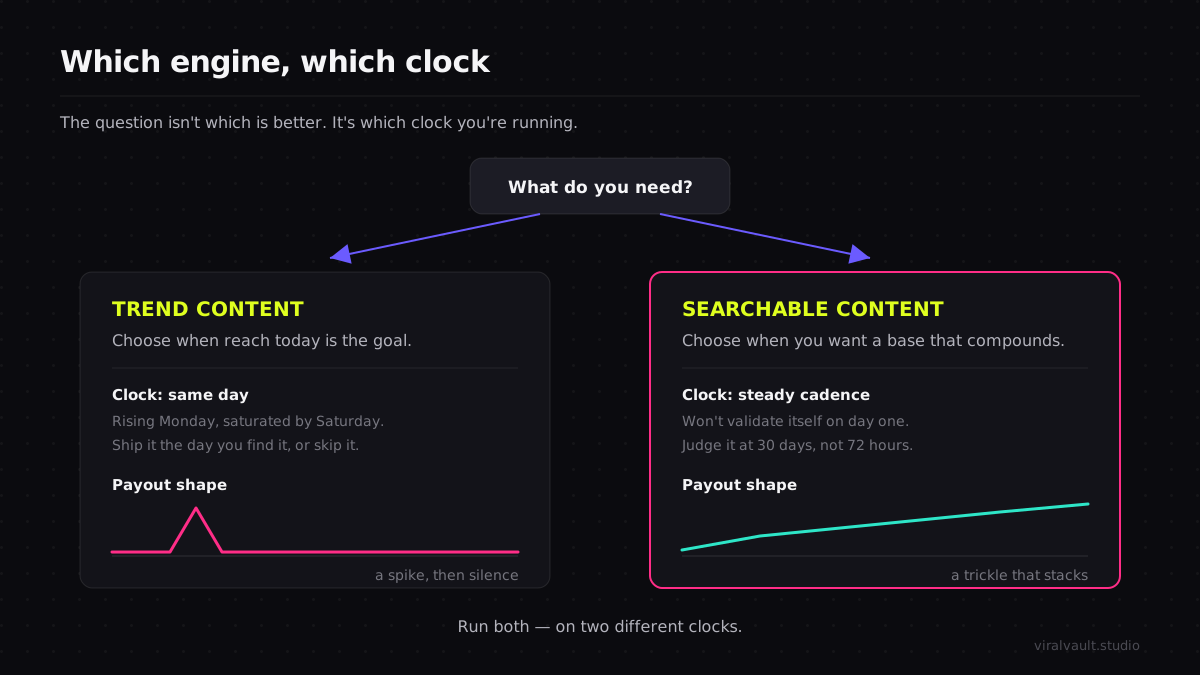
Neither type is the right answer alone; the question is which clock you are running. Make trend content when reach today is the goal — a launch, a moment you can ride, a format rising in your niche right now. Trends are real distribution and free reach, and the rule for them is speed: a format rising on Monday can be saturated by Saturday, so ship it the day you find it or skip it. The trade-off is that a trend-only channel has to win the lottery again every single week to grow.
Make searchable content when you want a base that keeps working between hits. It is worth making for any recurring question in your niche — how-to explainers, comparisons, beginner guides, mistakes-to-avoid — because that demand renews and the video keeps paying out for months. The trade-off is patience: a searchable video will not validate itself on day one, so you commit to it on evidence of demand rather than evidence of an instant spike. The strongest signal that the demand is genuine is a video that beats both its creator's 30-day median and the niche median at once — a Dual-High, which takes at least 5× that creator's own median and 3× the niche median, and which most videos never manage. On an evergreen topic, that is proof the query is large and the format travels.
The practical answer is to run both, on two different clocks — but the foundational move is to stop judging every video by its first 72 hours, because that single habit makes durable content invisible. For the broader system of spotting which formats are worth either engine, the viral content discovery guide breaks down the early-detection method end to end.
Frequently Asked Questions
Q: What is searchable content on TikTok? A: Searchable content is any video built to be found later through a query rather than served once through the feed. It answers a recurring question people actively type into search, names that query plainly in the hook and caption, and earns a long flat tail of views for months. Unlike a trend, the demand behind it renews, so the video keeps getting surfaced long after you post it.
Q: What is the difference between searchable and trending content? A: Trending content is pushed by the For You page during a short hot window and flatlines in 24 to 72 hours. Searchable content is pulled on demand through TikTok search, so it keeps earning views for months as new people type the query. Trends are a perishable burst of reach; searchable content is a compounding asset with a far longer payout window. They are two distribution engines with opposite decay rates.
Q: Is searchable content the same as evergreen content? A: Effectively yes on TikTok. Evergreen tiktok content stays relevant because its topic does not expire, and searchable content is the discoverable version of that idea — an evergreen answer made legible to search so it keeps getting found. The two overlap almost completely: a video about a question people will still type next year is both evergreen and searchable, which is exactly why its distribution compounds.
Q: Should I stop making trend content if I focus on searchable content? A: No. Trends are free reach and you should take it. A searchable content strategy for TikTok 2026 does not abandon trends — it stops relying on them alone, because a trend-only channel has to win the lottery every week to grow. Stack searchable content underneath your trend posts so a slow trend week is no longer a dead week, and run each engine on its own clock.
Why a searchable content strategy for TikTok 2026 wins
The short answer to searchable vs trending is that searchable content beats trends on the only axis that compounds: durability. A searchable content strategy for TikTok 2026 wins not because trends stop working but because a video built to be found keeps paying out for months while a trend spends itself in days. Defined plainly, searchable content is an evergreen answer to a recurring query — legible to search, low and flat in its view curve, and stacking views in the background while trends reset every week. Know the difference and you stop judging durable videos by their first 72 hours and start building a base that grows between hits. Spin up a free account and find the questions your niche is already searching, then make the answer — begin at viralvault.studio.