Free vs Paid Creator Research Tools: What You Need at Each Stage

You do not need a paid research stack on day one. Here is what's worth paying for — and what's overkill — at each creator stage, from your first 1,000 followers to brand deals.
The advice to buy a research stack before you have posted a hundred videos is how creators burn cash they do not have on dashboards they do not use yet. The best tools for content creator productivity are not the most expensive ones — they are the ones that match the problem you actually have at the stage you are actually in. A creator with 800 followers needs a fast way to find a format that works, and almost all of that is free. A creator with 80,000 needs to move faster than the people copying them, and that is where one cheap paid tool starts paying for itself. A creator closing brand deals needs proof and reporting, and that is a different shopping list again. This guide sorts free creator tools and paid creator research tools by the three stages every creator passes through — just starting, growing, and monetizing — and says plainly what is worth paying for and what is overkill at each. By the end you will know exactly which tools to open today, which to add when you grow into them, and which to ignore until you do.
Table of contents
- How to read the free vs paid line
- Stage 1 — Just starting: stay free, find a format
- Stage 2 — Growing: the first paid tool worth it
- Stage 3 — Monetizing: pay for proof and depth
- The creator tool stack by stage, compared
- Frequently Asked Questions
How to read the free vs paid line
A tool is worth paying for when it does something free tools cannot, and when the time it saves is worth more than its price at your current stage. Those two tests sort almost every purchase decision a creator faces.
The first test is capability free cannot match. A free tier that scores videos against a real baseline, or a first-party trend feed straight from the platform, already covers most of what an early creator needs. You start paying when you need speed (alerts that reach you the morning a format breaks, not the week it trends), depth (a large, fresh index instead of a thin sample), or proof (exportable reporting a brand will accept). If a paid tool only repackages what a free one already does, it is overkill no matter how good the demo looks.
The second test is time saved versus price at your stage. Twenty dollars a month is nothing to a creator earning from content and a real decision to one who is not earning yet. The same tool can be a bargain at one stage and a waste at another — not because the tool changed, but because the value of the hour it saves did. A useful rule: free until a manual workflow is visibly costing you growth, then the cheapest paid tool that removes the bottleneck, and the heavy specialist tools only when revenue justifies them.
The third test, quietly, is fit for a solo loop. Enterprise research platforms assume a team, a budget, and a campaign calendar. Most carry capability a single creator will never touch while charging for all of it. TikTok's own newsroom documents how fast search and trend behavior shifts on the platform, which is exactly why a creator needs a tight daily loop, not a quarterly enterprise rollout. Hold those three tests against any tool and the right pick for your stage falls out fast.
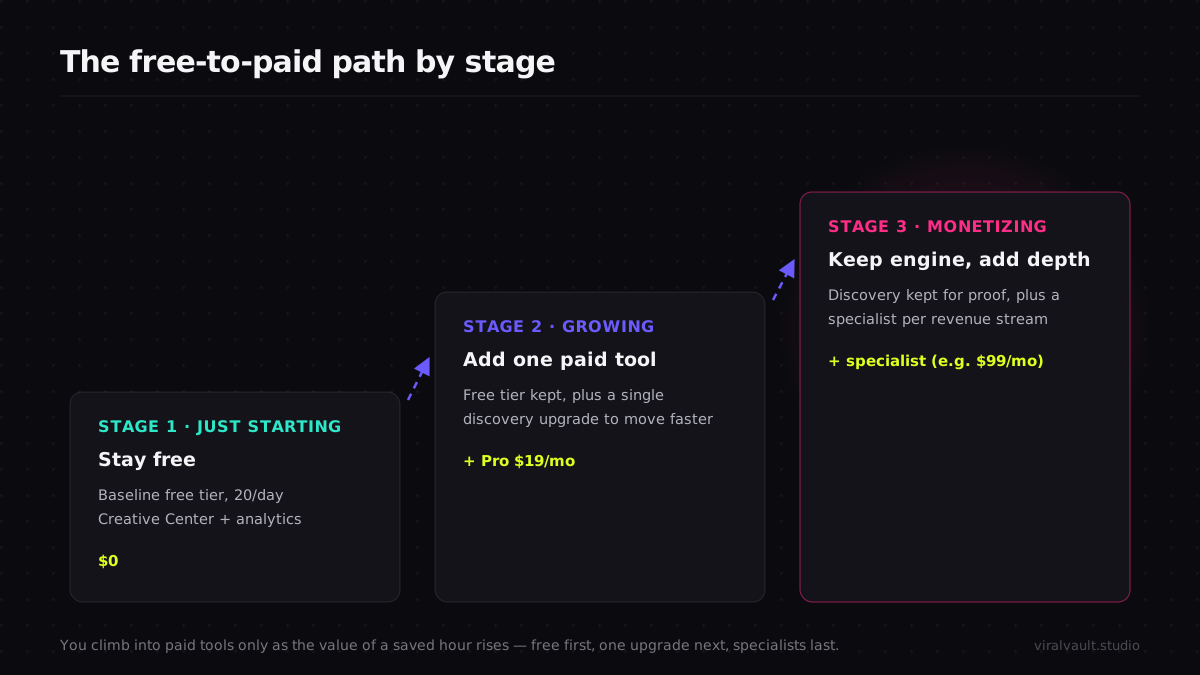
Stage 1 — Just starting: stay free, find a format
At this stage you have a small following and one real job: find a repeatable format that works in your niche and post it consistently. Almost everything you need for that is free, and spending money here is the classic early mistake. Most TikToks flop because the creator copied the output of a viral video instead of its structure — and you can fix that without paying a cent. The deeper version of that fix is in why your content isn't going viral.
What to use, free:
- A baseline-scoring free tier. ViralVault's free tier gives you 3 searches a day with no card required — enough to score videos in your niche, read both the Creator Score (against that creator's own median) and the Niche Score (against the niche median), and save the winners to a board. That dual-baseline read is the one capability that separates a real format breakout from a big account's ordinary day, and at this stage you get it for free.
- TikTok's first-party trend signal. TikTok's own Creative Center is a free, native read on trending sounds and hashtags straight from the source. It will not tell you which organic format is over-performing its niche, but for confirming a sound is genuinely lifting before you build around it, the price — free — makes it an easy first stop.
- Your own analytics. Your native TikTok analytics are free and underused. They tell you which of your own posts held attention, which is the cheapest format research you will ever do.
What is overkill here: A paid ad-intelligence platform, an enterprise content-analytics suite, or a multi-tool scheduling stack. You have nothing to schedule at volume yet and no ad spend to reverse-engineer. Paying for depth you cannot use is the fastest way to quit before you have learned what works.
Run the dual-baseline Outlier Score on any TikTok in your niche free, no card required, at viralvault.studio.
ViralVault tip: Before you spend a dollar, spend a week. Score ten videos a day in your niche on the free tier, save every Dual-High you find to a board, and look for the structure they share. Only 1,400+ videos in the index have cleared both — so a board full of them is a shortlist of formats worth copying. See where the free tier ends and Pro begins on the pricing page.
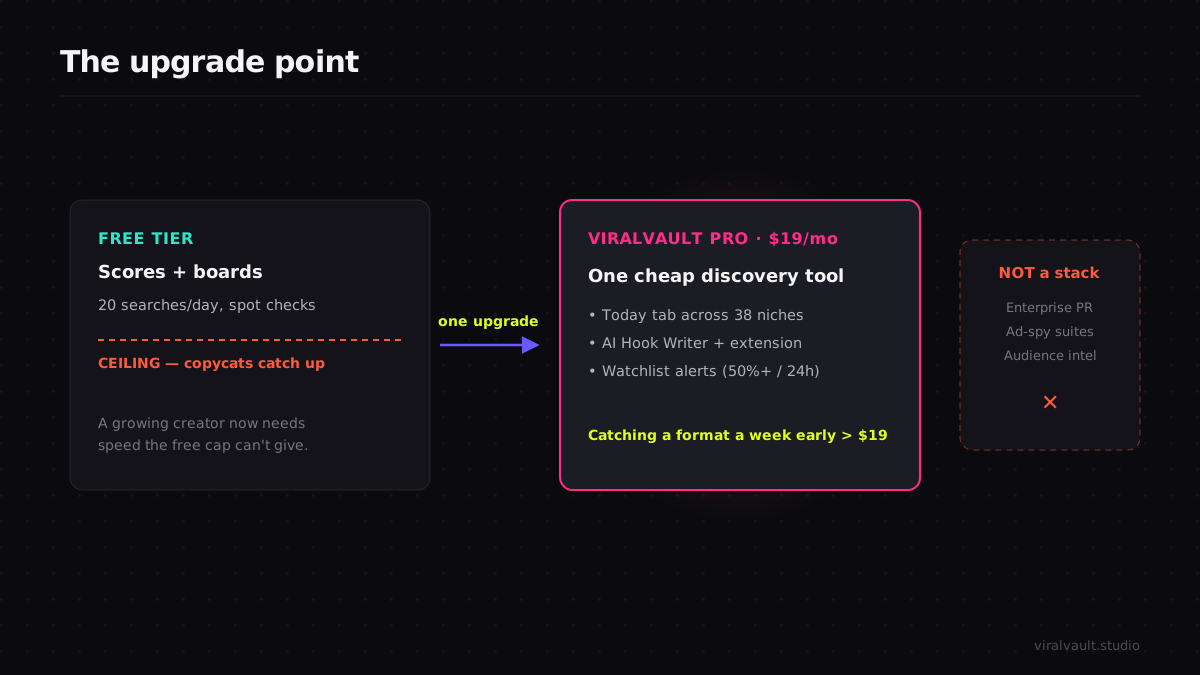
Stage 2 — Growing: the first paid tool worth it
You have found formats that work and a following that is climbing. The job changes: now you need to move faster than the creators copying you, and catch the next rising format while it is still early. This is the stage where the best tools for content creator productivity start to include a paid line item — but only one. The first paid creator research tool earns its keep here: not a stack, just one upgrade that removes the bottleneck a free tier leaves.
What is worth paying for now:
- The cheap discovery upgrade. ViralVault Pro at $19/mo lifts the search cap and turns on the tools that compress a morning of manual scrolling into twenty minutes: the Today tab ranking what is hitting across 12 niches on a daily rescoring, the AI Hook Writer (GPT-4o mini) that spins five hooks — contrarian, listicle, POV, curiosity, and meme — from any winning video, the Chrome extension that overlays scores on TikTok, and Watchlist alerts that ping you when a niche's average Outlier Score jumps 50%+ in 24 hours. At this stage the value of catching a format a week earlier is worth far more than $19, which is exactly when a paid tool clears the time-versus-price test. The wider field is ranked in the best viral content discovery tools guide.
- Light scheduling, if posting cadence is the bottleneck. If you are posting across more than one platform and the act of scheduling is eating your week, a scheduling tool starts to make sense here. Pick it for the posting bottleneck, not for discovery — its trend feeds are RSS-based, not baseline-scored.
What is still overkill: Enterprise PR and media-monitoring platforms, audience-intelligence suites, and ad-spy tools priced for agencies. These are excellent at their actual jobs — PR outreach, audience mapping, paid-creative research — and none of those is the job of a growing organic creator. Paying agency rates for capability you will not touch is overkill until your work genuinely needs it.
Stage 3 — Monetizing: pay for proof and depth
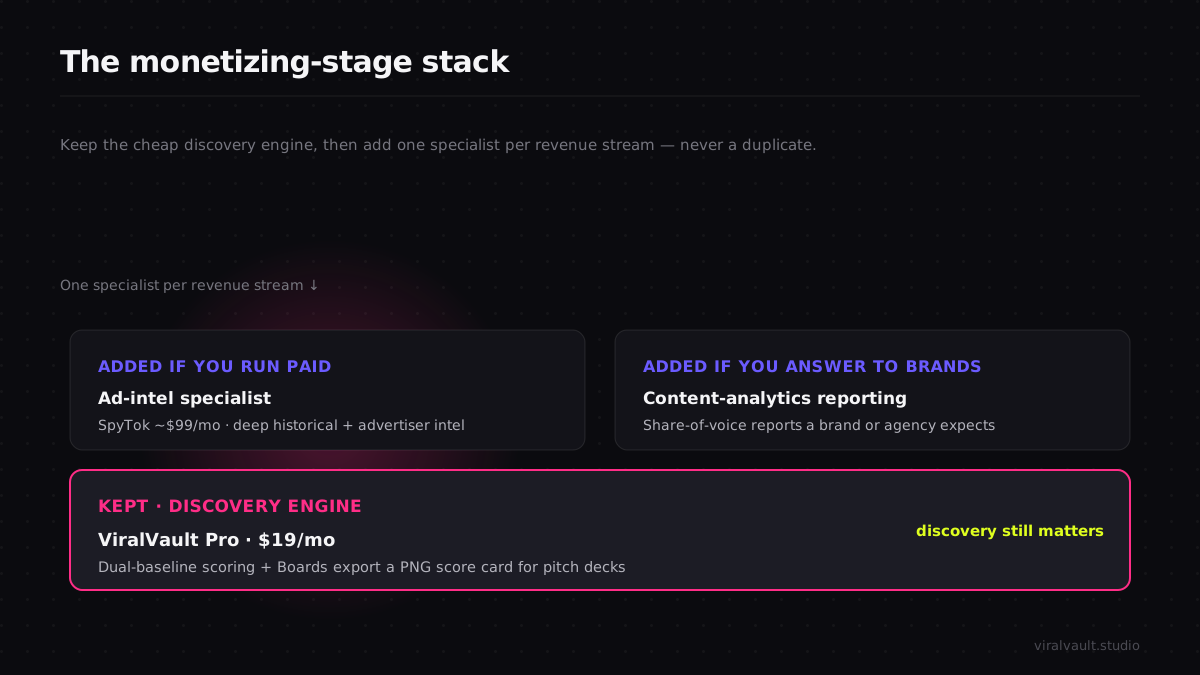
Now you are earning — brand deals, UGC contracts, maybe ad spend of your own. The shopping list changes again. You still need discovery, but you also need two things the earlier stages did not: proof you can hand a brand, and specialist depth for the paid side of the platform. This is the only stage where a heavier, pricier specialist tool genuinely earns its place.
What is worth paying for at this stage:
- Keep the discovery engine. ViralVault Pro stays in the stack — discovery does not stop mattering because you are monetizing; it matters more, because every brand deal is a bet that you can still catch what works. Boards export a PNG score card you can drop straight into a pitch deck as evidence a format is over-performing its niche.
- Ad-creative and historical intel, if you run paid. If your work now includes buying TikTok ads or producing paid creative for brands, an ad-intelligence specialist like SpyTok becomes worth it. Its edge is a deep historical archive paired with advertiser-level intel, so you can trace how a campaign or creative performed over long stretches. Entry pricing starts around $99/mo — steep for an organic creator, reasonable for someone whose income now depends on paid creative. The organic-versus-paid trade-off is broken down in the SpyTok comparison. Note that SpyTok has no dual-baseline outlier scoring, which is why it complements a discovery tool rather than replacing one.
- Content analytics for reporting, if you answer to brands. When a brand or agency wants share-of-voice and content-performance reports, a platform like BuzzSumo — built for PR and marketing teams — produces the kind of reporting they expect. It offers no short-form TikTok format discovery, so it is a reporting layer beside your discovery tool, not a substitute; the side-by-side is in ViralVault vs BuzzSumo.
What is still overkill even here: Stacking multiple tools that do the same job. You do not need three discovery tools or two scheduling platforms. Buy the specialist that matches the new revenue stream, keep the cheap discovery engine, and cut anything that overlaps.
The creator tool stack by stage, compared
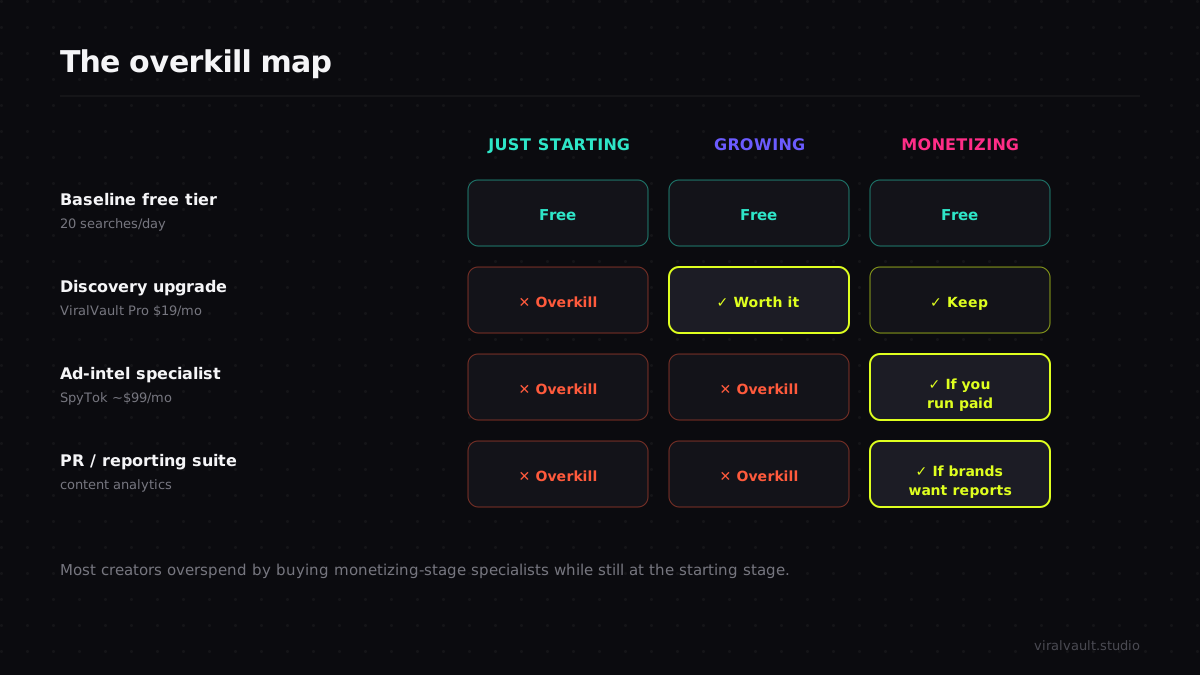
The cleanest way to see the free-to-paid path is to lay the creator tool stack by stage side by side: what is worth paying for, what stays free, and what is overkill at each step.
A blank line, then the table for fast scanning:
| Stage | Main job | Worth paying for | Stay free | Overkill at this stage |
|---|---|---|---|---|
| Just starting | Find a repeatable format | Nothing yet | Baseline-scoring free tier (3 searches/day), TikTok Creative Center, native analytics | Any paid platform |
| Growing | Catch rising formats early, move faster | One discovery upgrade — ViralVault Pro ($19/mo) | Free tier for spot checks, native analytics | Enterprise PR tools, ad-spy, audience suites |
| Monetizing | Prove results, go deep on paid | Discovery (Pro) kept + a specialist per revenue stream (e.g. SpyTok ~$99/mo for ads) | Native analytics | Duplicate tools that overlap an existing one |
The shape of the path is the takeaway: free until a manual workflow is visibly costing you growth, then one cheap discovery tool, then specialists only when a revenue stream justifies them. Most creators overspend by buying Stage 3 tools at Stage 1. The way to avoid it is to start with a free account and add paid tools only as you climb into them.
Frequently Asked Questions
Q: What are the best tools for content creator productivity when you're just starting? A: Free ones. A baseline-scoring free tier like ViralVault's 3 searches a day, TikTok's Creative Center for native trend signals, and your own platform analytics cover almost everything an early creator needs to find a format that works. Paying for an enterprise platform before you have a repeatable format is the most common early waste of money.
Q: When should a creator start paying for research tools? A: When a free workflow is visibly costing you growth — usually at the growing stage, when you are getting copied and need to catch rising formats earlier than a free cap allows. The first paid creator research tool worth it is a cheap discovery upgrade (around $19/mo), not a full stack. Heavy specialist tools come later, when revenue justifies them.
Q: Are free creator tools good enough on their own? A: For a creator just starting, largely yes. A free tier that scores videos against a real baseline plus a platform's first-party trend feed will find you a working format without any spend. Free tools hit their ceiling when you need speed (real-time alerts), depth (a large fresh index), or exportable proof for brands — that is the point to add one paid tool, not before.
Q: What's the difference between free and paid creator research tools? A: Paid tools buy speed, depth, and proof that free tiers cap. A free tier scores videos and saves boards; a paid upgrade adds real-time niche alerts, a larger refreshed index, AI hook generation, a browser overlay, and exportable score cards. The capability gap only matters once your stage makes that speed or proof worth more than the monthly price.
Q: Do I need a different tool stack as my channel grows? A: Yes — the creator tool stack by stage shifts. Just starting, you stay free and find a format. Growing, you add one cheap discovery tool to move faster than copycats. Monetizing, you keep that discovery engine and add a specialist per revenue stream (ad-intel for paid work, content analytics for brand reporting). The mistake is buying late-stage tools early.
Building the best tools for content creator productivity around your stage
The single most important takeaway is that the best tools for content creator productivity are stage-specific, not one-size-fits-all — and the cheapest path is almost always free first, one paid upgrade next, specialists last. Just starting, free creator tools that score against a real baseline are all you need to find a format that works. Growing, a single paid discovery tool like ViralVault Pro at $19/mo removes the bottleneck a free cap leaves, catching rising formats before the feed fills with copies. Monetizing, you keep that engine and add specialists — ad-intel, content analytics — only as new revenue streams justify them. The dual-baseline Outlier Score, an index of 23,000+ scored videos, a Dual-High flag for the formats that cleared both baselines, an AI hook writer, and a Chrome extension are built to carry a creator from the free first scan all the way to the paid stack without overspending. Spin up a free account, set a Watchlist on your niche, and let it flag the next rising format before it peaks — start at viralvault.studio.