How to Make Searchable Content on TikTok (Step-by-Step)
A searchable video is built on purpose, not by accident. Here's the exact production routine — query, spoken hook, on-screen text, caption, structure — that makes one video show up in TikTok search.
Most creators treat search as something that happens to a video after they post it. It is not. Knowing how to make searchable content on TikTok is a production decision you make before you press record — the difference between a clip the search bar can read and one it skips entirely. TikTok's search engine indexes the words you say out loud, the text you burn onto the screen, and the caption you write, then matches them against what people type. Skip those signals and even a perfectly shot video stays invisible to every person searching for exactly what you made. This is the production routine for one searchable video: pick a real query your niche is already typing, place that exact phrase in the spoken hook, the on-screen text, and the caption, answer the query fast enough to hold the audition, structure the rest for watch-through, and validate the topic against real outlier data before you commit a shoot to it. By the end you will have a repeatable checklist that turns a single upload into a searchable asset that keeps getting found.
Table of contents
- What makes a TikTok video searchable
- How to make searchable content on TikTok step by step
- Validate the topic before you film
- Why searchable beats trending for small accounts
- Frequently Asked Questions
- Build the searchable video before the feed fills
What makes a TikTok video searchable
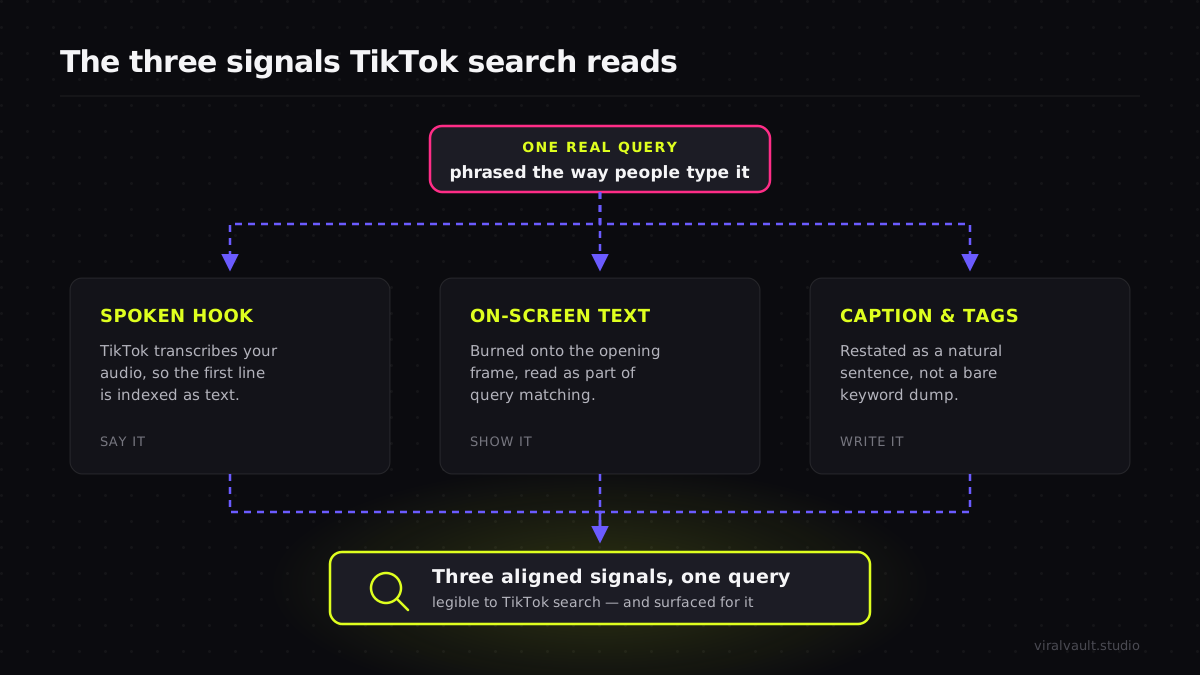
TikTok search reads three text signals from every video, and a searchable video deliberately feeds all three the same phrase. The first is your spoken audio — TikTok transcribes what you say, so the words out of your mouth in the opening seconds are indexed as searchable text. The second is your on-screen text: the captions and titles you burn onto the frame are read as part of the query-matching layer. The third is the caption and any relevant tags you write under the post. A video that says, shows, and writes the same query is legible to the search engine three times over. A video that only mentions the topic in passing, with a generic caption and no on-screen text, gives the engine almost nothing to match — so it never surfaces, no matter how good the footage is.
The reason this matters more every year is that TikTok search has become a real discovery surface, not an afterthought. A growing share of users — younger ones especially — open the app to look something up the way an earlier generation opened a search engine, typing questions about products, recipes, places, and how-tos directly into TikTok. That behavior makes searchable TikTok content durable in a way a feed spike is not: a video that answers an under-served search keeps getting found every time someone types that query, long after the For You push fades. TikTok's own framing of this shift is documented through TikTok's newsroom, and the practical read is simple — search traffic compounds while feed traffic evaporates.
The discipline that separates this from keyword stuffing is intent matching. TikTok SEO for creators is not cramming a phrase in ten times; it is making sure the video genuinely answers the exact question being asked, in the words it is being asked in. The phrase belongs in the places the engine actually reads — the spoken hook, the first line of on-screen text, the caption — and the content has to deliver on the promise that phrase makes. Stuff the words without answering the query and completion craters, which tells the For You page the video does not satisfy the search, and it stops surfacing. The full overview of how TikTok exposes this search demand lives in the TikTok Creator Search Insights guide; this playbook is about the production side — building the one video that answers it.
How to make searchable content on TikTok step by step
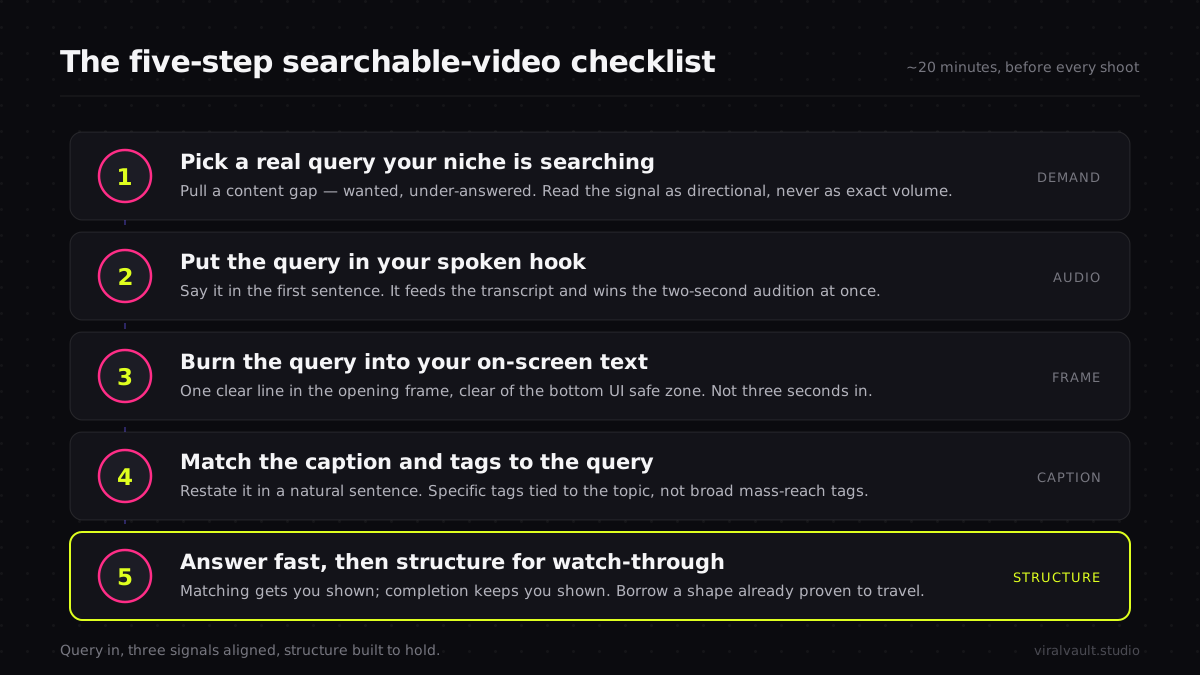
This routine takes about twenty minutes of prep before a shoot and is built to make a single video legible to TikTok search end to end — query in, hook tight, structure built to hold. Run it once per video idea and the checklist becomes muscle memory.
Before you script a word, run the query through a free ViralVault search so you build on a structure proven to over-perform on that exact topic — validate the format against both baselines first instead of guessing at a blank page.
Step 1: Pick a real query your niche is searching
Start from demand, not a hunch. Open TikTok Creator Search Insights, filter it to your niche, and pull a content gap — a topic with high search interest and comparatively few videos answering it. That gap is the query you are going to make searchable. Read the tool's signals as directional, never as exact volume: it shows relative interest and relative content levels, so the right read is "this topic is clearly wanted and clearly under-served," not "this gets N searches a month." Inventing a hard number where TikTok only gives you a relative signal is the fastest way to make a confident wrong decision. Write the query down in the exact phrasing people type it — that precise wording is what you will thread through every signal below.
Step 2: Put the query in your spoken hook
The first two seconds carry the most search weight because TikTok transcribes your audio and indexes it, and the opening line is what both the search engine and the viewer hear first. Say the query — or the question it answers — out loud in your first sentence. If the gap is "how to deadhead roses," your open is not "today I want to talk about my garden," it is "here is how to deadhead roses so they bloom twice." That single line does double duty: it feeds the exact phrase into the transcript the search engine reads, and it tells the viewer in two seconds that they landed on the answer they searched for, which earns the next eight seconds of watch time. A hook that buries the query under setup loses both the index signal and the audition.
Step 3: Burn the query into your on-screen text
TikTok reads the text you display on the frame as a search signal, so the first line of on-screen text should be the query itself or a tight variation of it. Place it in the opening frame where it is visible the instant the video starts — not three seconds in. This serves the searcher twice: the engine matches the displayed phrase against the query, and the human scanning their results sees their exact question rendered on your thumbnail-frame, which is a far stronger click signal than a generic cover. Keep the text readable and out of the bottom UI safe zone so the caption and buttons do not cover it. One clear line carrying the query beats a busy frame of decorative captions the engine has to wade through.
Step 4: Match the caption and tags to the query
The caption is the third place TikTok reads, and it should restate the query in a natural sentence rather than a bare keyword dump. "How to deadhead roses for a second bloom — the exact cut, step by step" answers the search, reads like a human wrote it, and gives the engine clean matching text. Add a small set of relevant, specific tags tied to the topic rather than broad mass-reach tags that put you in a feed of millions. The goal across hook, on-screen text, and caption is consistency: the same query, phrased naturally in three places, so TikTok has no doubt what question your video answers. This is the heart of how to make videos show up in search — three aligned signals pointing at one query, not one signal shouting and two staying silent.
Step 5: Answer fast and structure for watch-through
Search ranking is not just matching — it is matching plus satisfaction, and satisfaction is measured by completion and re-watches. So deliver the answer quickly, then structure the rest to hold attention. A reverse-order reveal that shows the result first and then the steps, or a withheld payoff held to the final frame, keeps viewers to the end and tells the For You page the video satisfied the search. Match the structure to a shape proven to travel rather than improvising: a tight answer, a clear sequence, a payoff that earns the re-watch. The breakdown of why most videos stall on structure rather than topic is mapped in why your TikTok content is not going viral — the short version is that a wanted topic in a weak structure still dies, so the format has to carry the topic across the line.
Validate the topic before you film
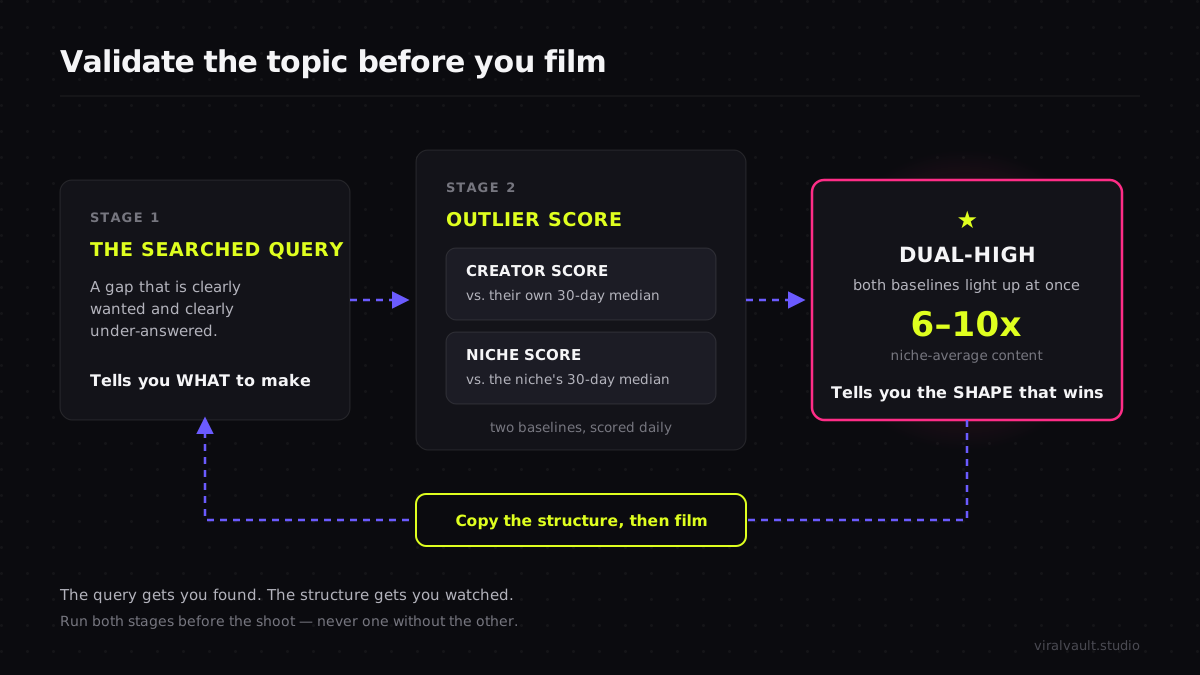
Picking a query from the search tool tells you a topic is wanted. It does not tell you which structure wins it, and on TikTok the structure usually decides the outcome. This is the step most creators skip, and skipping it is why two videos on the identical searched topic, with the identical keywords in the hook, can pull wildly different numbers — one opens flat and loses the viewer in two seconds, the other opens with a reverse reveal and holds them to the end. The topic gets you found; the structure gets you watched. Before you film, validate that the topic actually over-performs and learn the shape that makes it over-perform.
This is where a dual-baseline read replaces the guesswork. The ViralVault index tracks 23,000+ videos across 7,800+ creators and rescores them daily, scoring each video against two reference points at once: how that creator normally performs, and how the niche normally performs. The Outlier Score is the sum of two parts — a Creator Score measuring a video against that creator's own 30-day median views, and a Niche Score measuring it against the niche's 30-day median. When both light up at once, ViralVault flags a Dual-High, the strongest virality signal in short-form video. That takes at least 5x the creator's own median and 3x the niche median in the same video, and most videos never clear both — so a shortlist of them on your query is a far better use of an hour than scrolling the feed. Sort your niche by Outlier Score, find the Dual-High videos answering a query like yours, and copy their structure: the hook shape, the reveal order, the pacing of the payoff. You imitate the engine, not the paint.
ViralVault tip: When you find a query worth committing to, set a Watchlist on that niche. If the niche's average Outlier Score jumps 50% or more in 24 hours, you get an alert the morning the surge starts — so you catch a rising structure on an already-wanted topic while it is still early, not after the feed fills with copies and the search results crowd up. See how the index works.
The tooling keeps this fast enough to do before every shoot. Once you have the validated query and the proven structure, the AI Hook Writer spins five hook variants — contrarian, listicle, POV, curiosity, and meme — matched to the format, so you go from a content gap to a scripted opener that carries your query in minutes rather than agonizing at a blank page. If you run TikTok in the browser, the Chrome extension overlays Outlier Scores directly on the videos you are already watching which means you can validate a topic's best structure without leaving the app where you found the demand. Save the winners to a board, note the structural beat rather than the subject, and the board becomes a running shortlist of proven shapes ready to drop onto the next query you make searchable.
Why searchable beats trending for small accounts
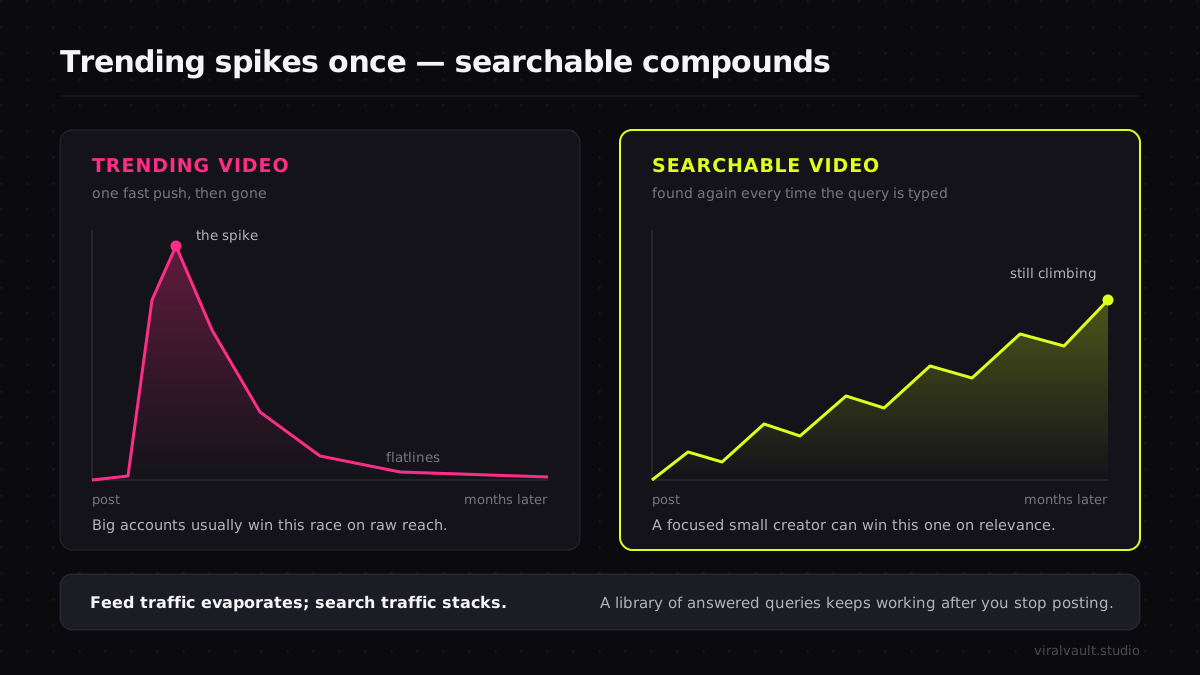
A trending video lives a fast, front-loaded life on the For You page and then fades. A searchable video keeps getting found every time someone types its query, building a back catalog that quietly keeps working months after you post. For an account without a large following, that durability is the difference between starting from zero on every upload and stacking assets that compound. Trending content is also a race big accounts usually win on raw reach; search rewards the video that most precisely answers a narrow question, which a focused small creator can win on relevance alone.
There is a compounding effect that matters more than any single hit. A library of searchable videos — each one answering a real, under-served query with a structure proven to travel — keeps pulling traffic without you posting anything new, because the demand it answers does not expire when the audio cools. The creators who build durable reach are rarely more creative than the ones chasing trends; they are pointing every upload at a query an audience is already typing and building it in a shape the search engine and the viewer both reward. The wider playbook on catching rising structures before they saturate, so your searchable videos land while the lane is still open, is in the viral content discovery guide.
Frequently Asked Questions
Q: How do I make my TikTok content show up in search? A: Place the exact query people type in three indexed signals: say it in your spoken hook, burn it into your first line of on-screen text, and restate it naturally in your caption. TikTok transcribes audio, reads on-screen text, and reads captions, so a video that aligns all three is legible to search. Then answer the query fast so completion stays high, which tells TikTok the video satisfied the search.
Q: What makes content searchable on TikTok versus just going viral? A: Searchable content is built around a specific query an audience types, with that phrase placed in the hook, on-screen text, and caption so the search engine can match it. Viral feed content chases broad reach and fades fast. A searchable video keeps getting found every time someone searches its query, building durable traffic, while a trending video spikes once on the For You page and then evaporates.
Q: Does keyword stuffing help searchable TikTok content? A: No. TikTok SEO for creators is intent matching, not repetition. Cram a phrase in without genuinely answering the query and completion drops, which signals the video did not satisfy the search, so it stops surfacing. Place the query once in each signal — spoken hook, on-screen text, caption — and make the content actually deliver on the question. Satisfaction, measured by watch-through, is what ranking rewards.
Q: How do I know a searchable topic is worth filming? A: Validate it before you shoot. Pull the query from TikTok Creator Search Insights to confirm demand, then sort that niche by Outlier Score in ViralVault to see which structures genuinely over-perform on it. Look for Dual-High videos — they clear both baselines at once, at least 5x the creator's own median and 3x the niche median, which few videos manage. Copy that structure's hook and reveal order, not just the topic.
Q: Where exactly does TikTok read text to make a video searchable? A: Three places. It transcribes your spoken audio, so the words in your opening line are indexed. It reads the on-screen text you burn onto the frame, so your first caption line counts. And it reads the post caption and relevant tags. A searchable video feeds the same query into all three; a video that only mentions the topic in passing gives the engine almost nothing to match against.
Build the searchable video before the feed fills
The whole skill of how to make searchable content on TikTok compresses to one move repeated with discipline: pick a query your niche is already typing, then feed that exact phrase into the three signals TikTok reads — the spoken hook, the on-screen text, and the caption — and answer it fast enough to hold the audition. That alignment is what turns a video from invisible into a searchable asset that keeps getting found. The half most creators skip is validating the topic before they film: confirm the demand in Creator Search Insights, then read the niche against a dual-baseline Outlier Score so you copy the structure proven to over-perform on that query instead of guessing at the shape. Pick the under-served query, build it in a winning structure, and ship the version that gets both found and watched — start free at viralvault.studio.