How to Spot a Format Before It Peaks: A Systematic Approach

Most creators bet on one big video. The durable edge is spotting the repeatable format underneath it — while it is still climbing across the niche, not after it floods.
A single viral video is a lottery ticket. A format is a printing press. The creators who reliably move numbers are not the ones who happened to nail one big post — they are the ones who learned to find trending content before it peaks by spotting the repeatable structure underneath the post, then shipping their own version while the structure is still climbing. The difference matters because a video saturates the moment a few large accounts copy it, but a format saturates only when the whole niche has flooded it — and that is a wider, readable window if you know what to watch. The unit of detection is the wrong size for most creators: they track individual videos when they should be tracking the skeleton those videos share. This playbook gives you a systematic method to detect a rising format across multiple creators, read its momentum, confirm it with clustering, and time your entry before the niche floods — so you arrive on the third wave of a format, not the ninetieth.
Table of contents
- Why a format, not a video, is the unit of detection
- The systematic signals that find trending content before it peaks
- Step-by-step: rising format detection across creators
- Timing the entry window before the niche floods
- Frequently Asked Questions
- Building a format radar that runs ahead of the feed
Why a format, not a video, is the unit of detection
A format is a repeatable structure, not a subject and not a single clip. "A creator films a problem, cuts to a result, then reveals the three steps in reverse" is a format. "A money video" is a topic, and "that one finance clip with 2M views" is an instance. The distinction is the whole game, because instances saturate fast and unpredictably while structures travel and decay slowly. When you track the structure, you can watch it spread across creator after creator and read exactly where it sits in its lifecycle — something a single video can never tell you, because one data point has no trend.
Most creators get the unit size wrong in a specific way. They find one breakout, copy that exact clip, and ship a near-identical lookalike the same week three other people had the same idea. That is how you land as the nine-hundredth copy — and copying the surface of one clip instead of the structure underneath is the most common reason a TikTok flops. To spot a format early, you have to stop asking "which video blew up" and start asking "which underlying skeleton is starting to show up under more than one creator's best post this week." The second question has a defensible answer; the first is just recognition after the fact, when the runway is already gone.
There is a measurement reason this works. The ViralVault index tracks 23,000+ videos across 7,800+ creators and rescores them daily, which means a structure does not register as one lucky clip — it registers as a pattern of over-performing videos that share a skeleton, scored against two baselines at once. That is what turns "I think I'm seeing a trend" into something you can actually count: how many creators are running the structure, how fast their scores are climbing, and whether the format has started to clone itself yet. The pillar viral content discovery guide covers the lifecycle of an individual video end to end; this playbook narrows in on the harder, higher-yield job of reading the format that connects those videos.
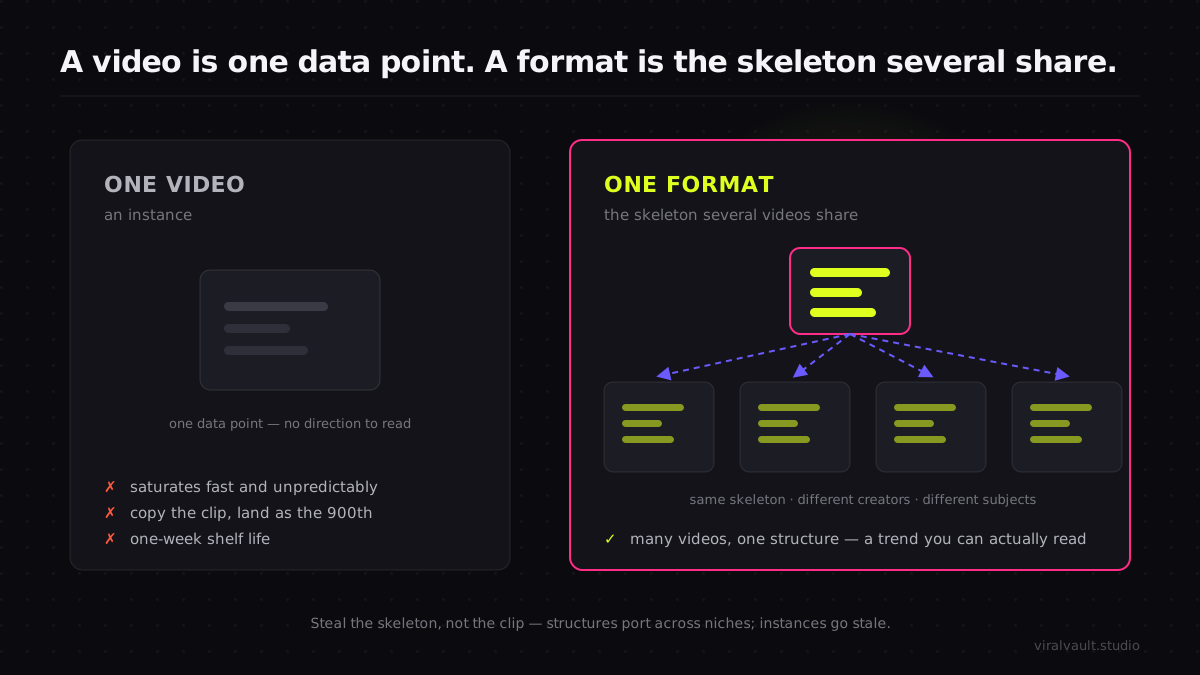
The payoff of getting the unit right is durability. A swipe file of formats keeps producing long after any single instance cools, because the same structure ports across subjects and niches. Steal the skeleton from a cooking clip and it works in finance; steal the exact cooking clip and you have a stale lookalike with a one-week shelf life.
The systematic signals that find trending content before it peaks
Three signals, read together, are how you find trending content before it peaks at the format level. None of them works alone — a single number is always ambiguous about direction — but stacked, they resolve a format's position in its lifecycle with enough confidence to commit a shoot.
The first signal is recurrence across creators. A skeleton that shows up under one creator's best post is noise; the same skeleton under three or four unrelated creators in the same niche, all over-performing, is a format taking hold. Recurrence is the difference between a fluke and a wave. You are looking for the structure to replicate across accounts that do not normally copy each other, because that independent convergence is the earliest reliable tell that a format is real and not one creator's personal hit.
The second signal is Niche-Score momentum on the cohort. Every video in ViralVault carries an Outlier Score made of a Creator Score (the video versus that creator's own 30-day median) and a Niche Score (the video versus the niche's 30-day median). For format detection, the Niche Score is the one that matters, because it strips out account size and isolates how strong the structure is relative to the category. When the Niche Scores of the videos sharing a skeleton are climbing day over day, the format is rising. When they are high but flat and copies are appearing, it is peaking. The direction of the cohort's score over the last few days is your lifecycle read.
The third signal is Dual-High clustering. A Dual-High is a video that beats both its creator's median and the niche median at once — the strongest virality signal in short-form video, and hard to clear on purpose: it takes at least 5x the creator's own median and 3x the niche median in the same video. One Dual-High is a strong instance. Several Dual-Highs sharing the same skeleton, appearing within a few days of each other, is a confirmed rising format — the structure is strong enough to break ceilings across multiple accounts at once. That clustering is the confirmation step that separates a format worth a same-day shoot from a single freak hit you would be foolish to chase.
Run the Niche Score on any TikTok in your niche free and watch which skeletons are clustering Dual-Highs — that is the fastest way to turn a vague hunch about a trend into a counted, confirmed rising format.
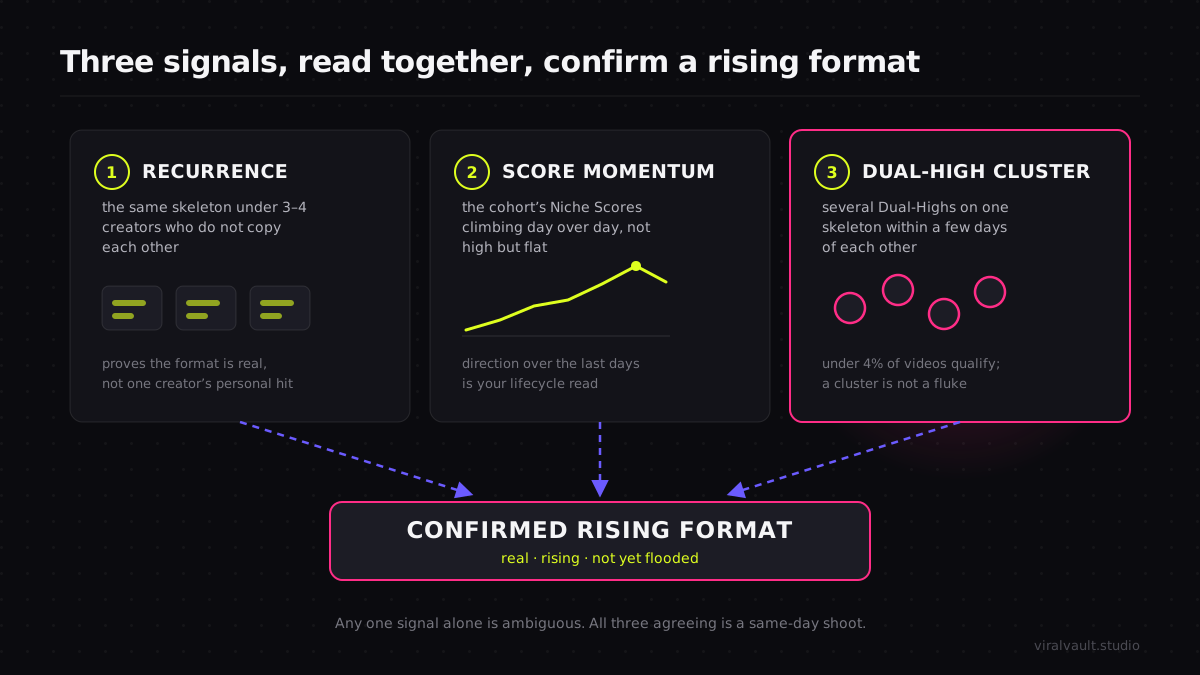
A note on what these signals are not. They are not the daily tracking habit and they are not a per-video checklist — they are format-level reads, the cohort version of the signals you would otherwise apply one clip at a time. Recurrence requires you to look across creators, momentum requires you to look across days, and clustering requires you to look across multiple Dual-Highs. All three are about the group, never the instance, which is exactly why they detect a structure earlier than watching any single video ever could.
Step-by-step: rising format detection across creators
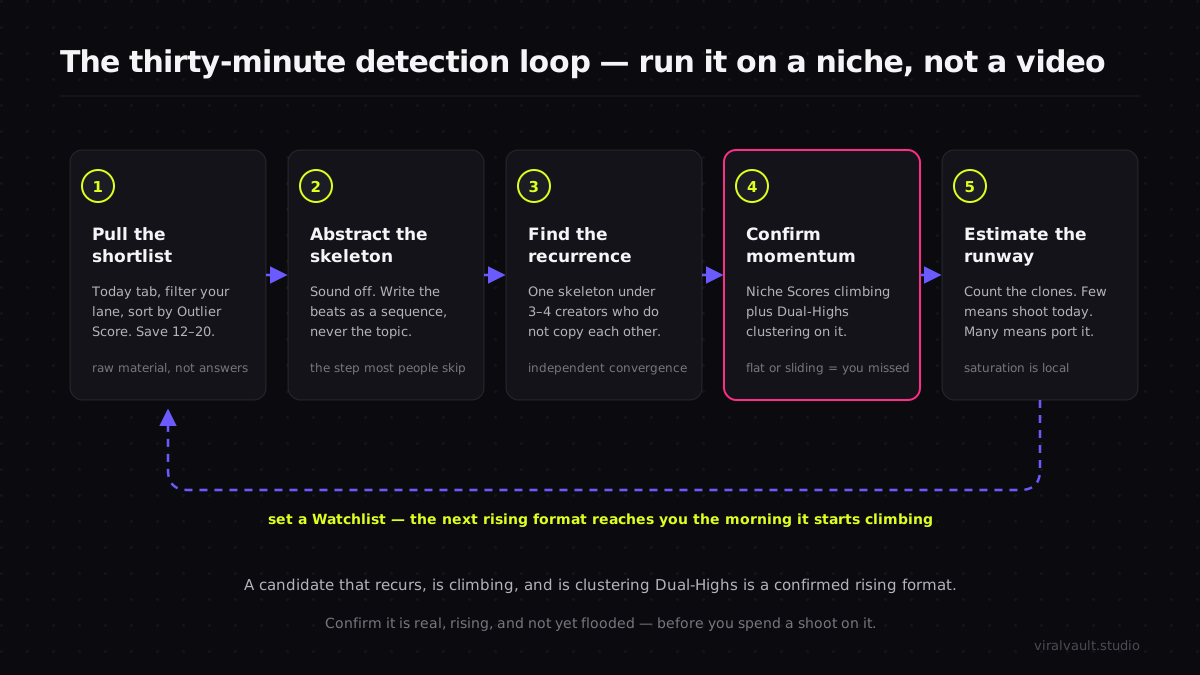
This routine is rising format detection done deliberately. It takes about thirty minutes and is built to confirm a structure is real, rising, and not yet flooded — before you spend a shoot on it. Run it on a niche, not a video.
Step 1: Pull the niche outlier shortlist
Open the Today tab, which surfaces what is over-performing across 12 active niches and rescores them daily, and filter to your lane. Sort by Outlier Score and pull the top over-performers, but read this list as raw material rather than answers — you are not picking a video to copy, you are collecting a pool of strong recent videos to inspect for a shared skeleton. A shortlist of high-Niche-Score videos is a far better starting pool than the For You page, because every entry has already cleared the niche median by a wide margin. Save twelve to twenty of them so you have enough instances to spot a pattern across creators.
Step 2: Abstract each video into its skeleton
Watch each shortlisted video with the sound off and write down its structure as a sequence of beats — "result first, then the three steps in reverse, payoff withheld to the final frame" — never as a topic. Ignore the audio, the caption, and the subject entirely; those are the paint, and paint does not define a format. The point is to translate a dozen different-looking videos into a dozen structural descriptions so that two videos running the same skeleton become obvious even when one is about money and the other about gym. This abstraction step is the one most creators skip, and skipping it is why they only ever see individual hits instead of the format underneath them.
Step 3: Find the skeleton that recurs across creators
Lay your structural descriptions side by side and look for the skeleton that appears more than once, under creators who do not normally copy each other. One creator running a structure is an instance; three or four independent creators running the same structure inside a week is a rising format. Independent convergence is the tell — when accounts that are not watching each other arrive at the same skeleton, the structure itself is doing the work, not one creator's audience. Circle the skeleton with the most independent recurrences; that is your candidate format.
Step 4: Confirm momentum and Dual-High clustering
Now confirm the candidate is rising, not fading. Check the Niche Scores of the videos sharing the skeleton over the last several days: climbing day over day means rising, high-but-flat with copies appearing means peaking. Then count the Dual-Highs in the cohort — several Dual-Highs on the same skeleton within a few days is confirmation the format is strong across accounts, not a single fluke. A candidate that recurs, is climbing, and is clustering Dual-Highs is a confirmed rising format. A candidate that recurs but is flat or sliding is one you missed; archive the skeleton and move on rather than shipping into a peak.
Step 5: Estimate the runway before you commit
Before you shoot, measure how flooded the format already is by counting near-identical clones in the feed. A confirmed rising format with almost no copies is wide open and worth a same-day shoot. The same skeleton already sitting next to a dozen lookalikes is one you are late to — the structure is fine, but this niche is filling, so port the skeleton to a different niche or angle where it has not been done yet rather than adding the thirteenth copy here. The structure travels; the saturation is local. Set a Watchlist on the niche so the next rising format reaches you the morning it starts climbing, before the clones arrive.
ViralVault tip: Do not commit a shoot to a format until you have seen the same skeleton clear the niche median across at least three independent creators with climbing scores. One Dual-High is a lucky video; a cluster of them on one structure is a rising format you can build on. Confirm the cluster free, no card required, at viralvault.studio.
Timing the entry window before the niche floods
Detecting a rising format is half the job; the other half is timing the entry so you arrive while the window is still open. This is where format-level thinking pays off, because a format's window is wider and more readable than any single video's. A video peaks the moment a handful of large accounts copy it. A format peaks only when the broad niche has flooded it — and the gap between "a few early Dual-Highs" and "every third video is this template" is usually several days, sometimes more in a slower niche. That gap is your entry window, and the three signals tell you where inside it you are standing.
The cleanest entry is the third wave. The first wave is the originators — the creators whose Dual-Highs first established the skeleton. The second wave is the early confirmers, the independent creators whose recurrence proved it was real. The third wave is you and the other readers who confirmed the cluster while scores were still climbing and clones were still scarce. By the time the format is obvious enough to trend in the broad feed, the fourth and later waves are already shipping lookalikes into a saturating niche — that is the side of the window you do not want to be on. To catch a format before it peaks, you enter on the back of confirmed clustering and climbing momentum, not on the back of "everyone is doing this now," which is the signal that the window has already closed.
Speed is the entire edge once you have decided to enter. A structure that is rising on Monday can be flooded by Saturday in a fast niche, so a confirmed format is a same-day shoot, not a next-week plan. The format-level view also gives you a second move the video-level view never does: when one niche floods, the skeleton itself is still valuable, so you port it to a niche where it has not been seen. One confirmed format can therefore become several shoots across several niches, each entered early, instead of a single race you might lose. That portability is exactly why a single confirmed format can become a full week of content — the skeleton is the asset, and it travels.
Two failure modes close the window early, and both are avoidable. Entering on a flat or sliding cohort means you confirmed the format after its peak — the recurrence was real but the momentum was already gone, so you ship into a saturating feed. Entering on a single Dual-High with no cluster means you bet on a fluke that never became a format, so your version has no rising wave to ride. The discipline is simple: enter only when recurrence, climbing momentum, and Dual-High clustering all agree, and enter the same day they do. TikTok's own newsroom has documented how watch time and completion shape what the system surfaces — a format that is still climbing is one the algorithm is still rewarding, which is precisely the window you want to be inside.
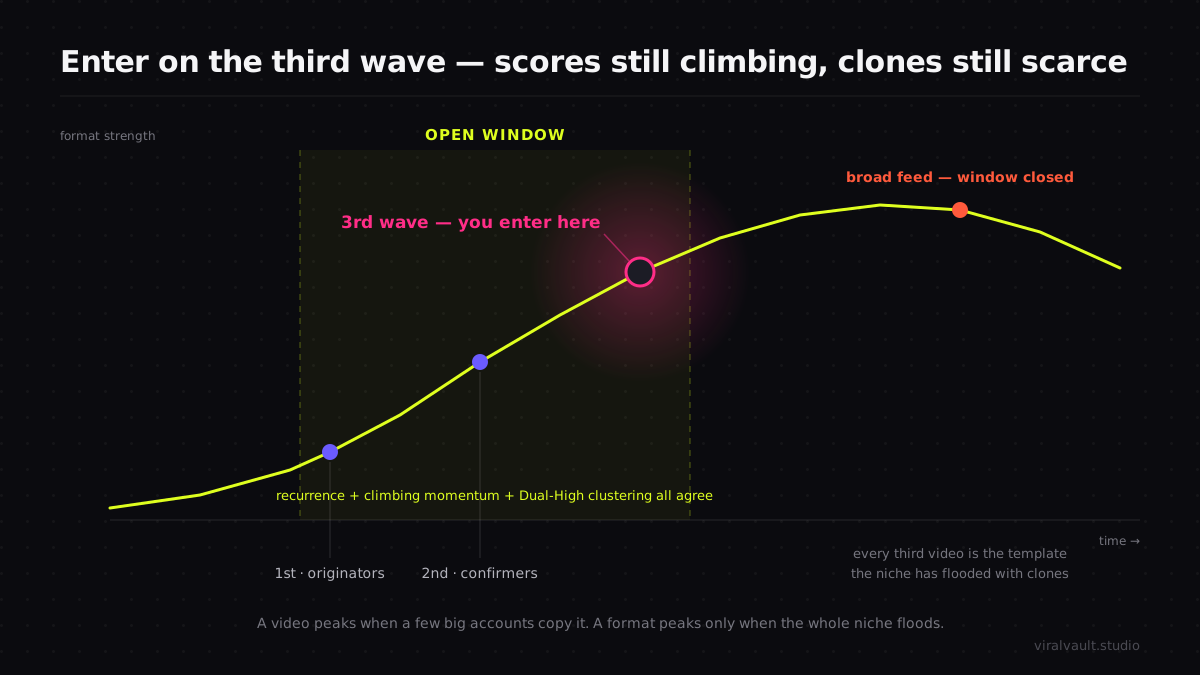
The reframe is the same one that separates creators who lead formats from creators who chase them. Chasers see a format when it is obvious — in the broad feed, with the count already huge — which is precisely when the window is closed. A systematic detector sees it three waves earlier, on the back of recurrence and clustering, and enters while the structure is still rising. The signals do the seeing; you do the shipping.
Frequently Asked Questions
Q: How do I find trending content before it peaks instead of after? A: Track formats, not individual videos. Pull a niche outlier shortlist, abstract each video into its structural skeleton, and find the skeleton recurring across several independent creators. Confirm it with climbing Niche-Score momentum and a cluster of Dual-Highs on that structure, then ship the same day while clones are still scarce. The format's window is wider and more readable than any single video's.
Q: What does it mean to spot a format early versus spotting a viral video? A: A viral video is one instance; a format is the repeatable skeleton several videos share. To spot a format early you watch the structure replicate across multiple creators while its scores are still climbing, rather than recognizing one big post after the fact. The format-level view has a readable trend because it spans many data points, where a single video has none.
Q: How does Dual-High clustering confirm a rising format? A: A Dual-High beats both its creator's 30-day median and the niche median at once — at least 5x the creator's own median and 3x the niche median — which few videos manage. One Dual-High is a strong instance but could be a fluke. Several Dual-Highs sharing the same skeleton within a few days proves the structure is strong across multiple accounts, not one lucky creator — which is the confirmation that a format is genuinely rising.
Q: When is the entry window for a format closed? A: The window closes when the niche floods — when the cohort's Niche Scores go flat or slide and every third video in the feed is the same template. Entering on confirmed clustering with climbing momentum puts you on the third wave, early and open. Entering once a format is obvious in the broad feed puts you on a late wave, shipping a lookalike into saturation.
Q: What if a format I detect is already saturated in my niche? A: Do not abandon the skeleton — port it. Saturation is local to a niche, but the structure travels, so run the same format in a niche or angle where it has not been done. A confirmed format can become several early entries across several niches instead of one late copy in a crowded one. Set a Watchlist so the next rising format reaches you before this happens again.
Building a format radar that runs ahead of the feed
The shift this method delivers is from chasing videos to detecting formats — and that is how you actually find trending content before it peaks rather than after the feed has already moved on. Stop betting on single clips and start reading the skeleton underneath them: confirm a structure is real with recurrence across independent creators, confirm it is rising with climbing Niche-Score momentum, confirm it is strong with Dual-High clustering, then enter on the third wave and ship the same day. When one niche floods, port the skeleton somewhere it has not been seen, so a single confirmed format becomes several early entries instead of one late copy. None of this is luck — it is a thirty-minute detection loop that puts you three waves ahead of the chasers, every time. Spin up a free account, set a Watchlist on your niche, and start spotting the format before it peaks instead of recognizing it after — begin at viralvault.studio.